






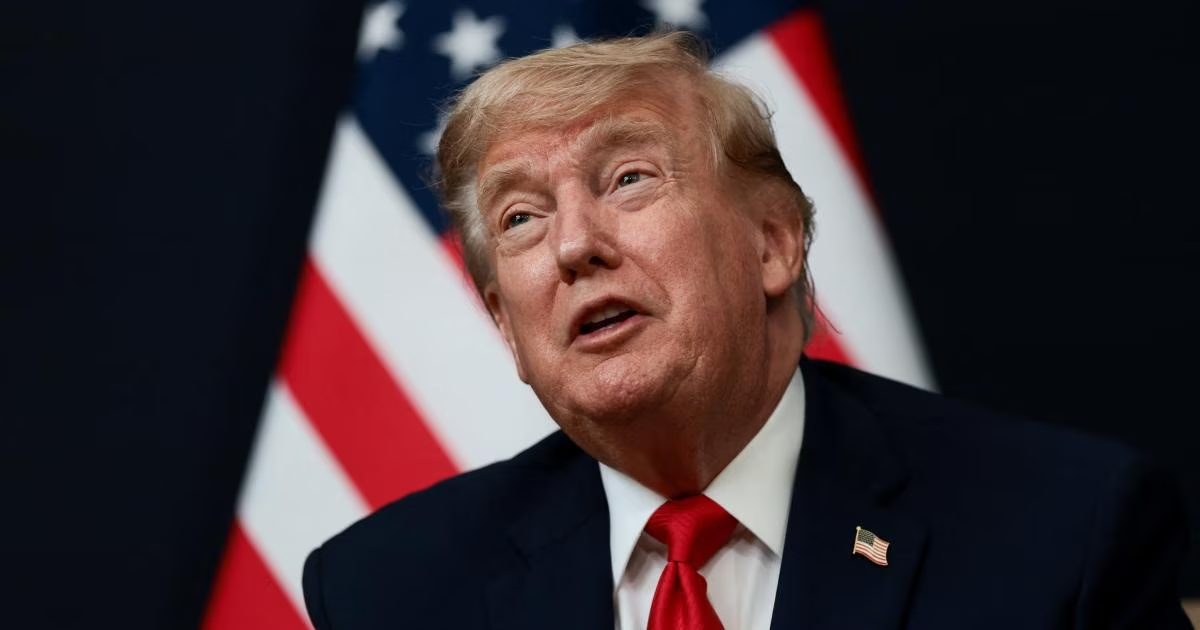
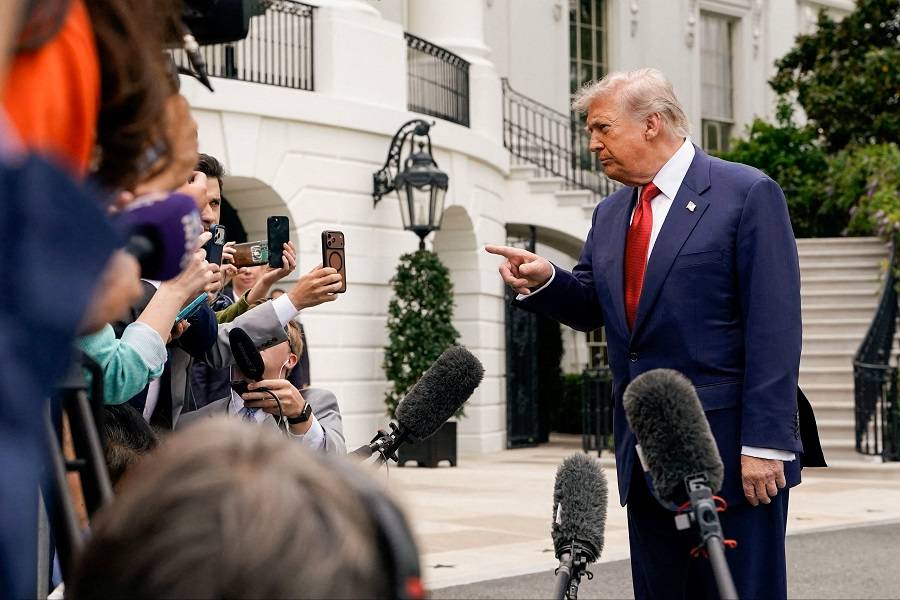
US President Donald Trump revealed his desire to refer the agreement concluded with Iran to the US Congress for review, pledging to read the full text of the document to the media. Trump explained during statements made on the sidelines of the G7 summit held in the French city of Evian that the idea of involving parliament in this process now appeals to him to ensure full transparency.
The American President affirmed that he will not only publish the text of the agreement but will also hold an extensive press conference to read its provisions verbatim to journalists. Trump aims by this step to ensure that media coverage will be accurate and comprehensive, away from any interpretations that might tarnish the content of the understandings reached with the Iranian side.
Regarding the signing ceremony, the Swiss Ministry of Foreign Affairs announced that the memorandum of understanding signing ceremony will take place next Friday, June 19. The ceremony will be held in a luxurious hotel located on Bürgenstock mountain overlooking Lake Lucerne, a location carefully chosen due to its ease of security and difficulty of access for intruders.
Swiss sources indicated that the selection of this strategic location was based on proposals from international mediators including Pakistan and Qatar, in addition to the approval of the United States and Iran. The Bürgenstock complex is one of the historical sites that previously hosted major international events, the last of which was the peace conference on Ukraine in 2024.
Procedurally, official reports stated that the memorandum of understanding has already been signed electronically in preparation for the official ceremony. The electronic signing included both President Trump and his deputy J.D. Vance, and from the Iranian side, the Speaker of the Shura Council, Mohammad Bagher Ghalibaf, who also serves as the chief negotiator in this round.
J.D. Vance is expected to lead his country's delegation in Switzerland, while Ghalibaf will head the Iranian delegation to complete the protocol ceremonies. Vance told international media that the current document is general in nature and consists of only one and a half pages, noting the possibility of Trump personally attending the ceremony despite his commitments at the G7 summit.
In the context of parallel international movements, Chinese Foreign Minister Wang Yi held a phone call with his Pakistani counterpart Ishaq Dar to discuss the latest developments of the agreement. Wang Yi warned that the next phase of negotiations will be more complex and difficult compared to the first phase that led to the current memorandum of understanding.
The Chinese minister stressed the need for the United Nations Security Council to play a more effective role in the coming stages to ensure a final and sustainable deal. Beijing considered the current consensus a new starting point, not the end, affirming its readiness to cooperate with Islamabad to support regional stability.
At its core, this memorandum seeks to end the ongoing conflict in the Middle East, which has directly affected the security of international navigation. The issue of the Strait of Hormuz stands out as one of the most important unresolved issues, where its partial closure by Iran and the corresponding American blockade caused a suffocating global energy crisis.
During their consultations, the Chinese and Pakistani sides agreed on the importance of joint action to open vital maritime passages for international trade. The Pakistani Ministry of Foreign Affairs affirmed that securing the Strait of Hormuz is a fundamental pillar for the stability of the global economy and energy security, which has been severely affected in recent months.
Reports indicate that China, as Iran's largest trading partner and a close ally of Pakistan, played a pivotal behind-the-scenes role in bridging viewpoints. The economic and diplomatic pressures exerted by Beijing contributed to pushing the parties towards the negotiating table in Switzerland to end the political stalemate.
Despite the cautious optimism surrounding Friday's ceremony, observers point out that the technical details of the agreement still require in-depth discussions. Experts believe that Trump's sending of the agreement to Congress may open a new chapter of internal debate in Washington about the nature of the concessions made by both sides.
All eyes remain on Bürgenstock mountain on Friday, where the features of a new era in US-Iran relations are expected to emerge. The text of the agreement that Trump promised to read publicly will be the decisive factor in determining the seriousness of the parties in ending military escalation and returning to the diplomatic path.
In conclusion, this step represents a significant shift in the Trump administration's policy towards the Iranian file, moving from a policy of maximum pressure to seeking negotiated solutions. The biggest challenge remains how to transform this general memorandum into a comprehensive agreement that meets the aspirations of regional and international powers and ensures lasting peace.
I will send the agreement to Congress, this idea appeals to me, and I will hold a press conference to read the text verbatim to you.
Share your opinion
Trump intends to present Iran agreement to Congress and officially sign in Switzerland on Friday