





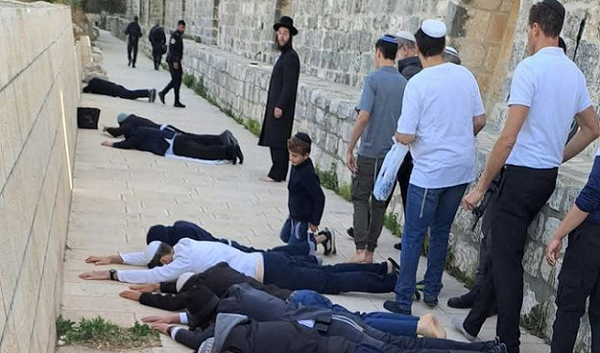
Sheikh Muhammad Hussein: Targeting facilities aims to withdraw the powers of the Islamic Endowments Department and impose Israeli sovereignty over Al-Aqsa Mosque. Sheikh Ekrima Sabri: Attacks on Al-Aqsa Mosque are no longer limited to extremist settler groups, but the occupation police have become a direct party to them. Maarouf Al-Rifai: Targeting distributed facilities reflects an attempt to tighten control over various aspects of Al-Aqsa within a policy to redefine the entity managing the mosque. Hatem Abdel Qader: What is happening is not limited to controlling facilities but coincides with continuous and unprecedented incursions into Al-Aqsa Mosque, in addition to provocative practices. Ahmed Al-Rifai: What is happening is not limited to targeting specific facilities only, but directly affects the powers of the Endowments Department and the Jordanian guardianship over Al-Aqsa. Ziad Abhais: The danger currently lies in reducing the role of the Islamic Endowments Department and gradually replacing it with the occupation police as the entity managing daily life within it, in preparation for establishing a Jewish administration. Ramallah – Exclusive to "Al-Quds" – The circle of warnings regarding what is happening inside the blessed Al-Aqsa Mosque is expanding, following the targeting of a number of facilities belonging to the Islamic Endowments Department, by breaking their locks and preventing their repair or re-operation, amid fears that these measures are part of a new phase in a continuous process that pressures the powers of the Endowments and limits its ability to manage the mosque's facilities and daily services, leading to a change in the existing reality. Officials and specialists confirm in separate interviews with "Al-Quds" that these continuous measures, ongoing for about four months, are accompanied by an escalation in repeated incursions into Al-Aqsa Mosque, and the performance of rituals within its courtyards, in addition to restrictions imposed on renovation and construction work, and harassment of workers in Al-Aqsa Mosque. They believe that these practices are inseparable from attempts to impose a new reality inside Al-Aqsa Mosque, directly affecting the role of the Jordanian guardianship and the endowment administration that has existed for decades, as part of a gradual process aimed at reshaping the administration of Al-Aqsa Mosque and gradually reducing the role of the Endowments, in exchange for expanding the presence of Israeli security entities that will eventually become a de facto authority, noting that this process is accompanied by steps aimed at changing the nature of the religious use of Al-Aqsa Mosque, which requires the necessity of a broader movement at the political, diplomatic, and legal levels to preserve the status quo. "Jerusalem Endowments": This is how the targeting of facilities began. An official source in the Islamic Endowments Department in Jerusalem, who preferred not to be named, explained in his interview with "Al-Quds" that the Israeli occupation police targeted about four months ago four facilities inside the blessed Al-Aqsa Mosque by breaking their locks and taking control of them, under "flimsy pretexts not based on any acceptable evidence," and then prevented the Endowments Department from repairing them or installing new locks on them. The source explains that these measures come within the context of a continuous policy aimed at undermining the powers of the Endowments inside Al-Aqsa Mosque, noting that the targeted facilities are still partially used; Dar Al-Hadith is used for teaching the Holy Quran and noble Hadith to women, while the Dome of the Chain is used as a headquarters for Al-Aqsa Mosque affairs employees, while guards inspect the Dome of Solomon daily, with the continued prohibition of closing its doors or re-securing them. The source indicates that the occupation police periodically inspect these facilities and take punitive measures against any party attempting to repair or secure them, including expelling those responsible for maintenance work or installing locks, in a step aimed at imposing a new reality inside Al-Aqsa Mosque and preventing the Endowments from exercising its normal powers. The source indicates that this policy is not limited to preventing the closing of doors, but extends to disrupting construction, agriculture, and maintenance work inside Al-Aqsa Mosque, so that any defect or damage occurring in its facilities is prohibited from being repaired, which reflects a clear attempt to weaken the role of the Endowments and reduce its administrative sovereignty inside Al-Aqsa Mosque. The Endowments are still adhering to their powers. The source confirms that the Endowments Department, despite these restrictions, still maintains its daily presence inside a number of facilities, such as Dar Al-Hadith and the Dome of Bab Al-Rahma, but the goal of these measures is to completely undermine its role and replace it with the de facto authority exercised by the occupation police inside the mosque. The source considers that these practices come within a broader "Judaization" policy that includes daily incursions and the performance of Talmudic rituals within the courtyards of Al-Aqsa. The necessity of action to stop these measures. The source calls for urgent Arab and Islamic diplomatic action, in addition to an active Jordanian role as the holder of the Hashemite guardianship, in order to stop these measures and restore matters to what they were before the targeting of facilities and preventing the Endowments from performing its duties. In the context of a broader plan, the Mufti of Jerusalem and the Palestinian Territories, Sheikh Muhammad Hussein, confirms that the targeting of a number of facilities of the blessed Al-Aqsa Mosque belonging to the Islamic Endowments Department and preventing maintenance and renovation work falls within a broader plan aimed at imposing control over the mosque and undermining the powers of the Endowments Department and the Hashemite guardianship over Islamic and Christian holy sites in Jerusalem. Hussein explains that four facilities belonging to the Islamic Endowments inside Al-Aqsa Mosque had their locks broken in recent months, while the competent authorities were prevented from repairing or renovating them, noting that these measures do not represent an isolated incident, but come within a long series of continuous violations against Al-Aqsa Mosque, its facilities, and its workers. Hussein indicates that the incursions carried out by settler groups into Al-Aqsa Mosque have become almost daily, and witness the practice of Talmudic and Torah rituals and ceremonies within its courtyards, in addition to chanting songs, performing dances, and raising flags, considering that these practices represent a direct violation of the sanctity of the mosque and the sacredness of the place. Hussein confirms that the restrictions also affect the construction committees and workers in Al-Aqsa by obstructing the periodic maintenance work necessary to preserve the historical and cultural landmarks of the mosque, which embraces Islamic artifacts dating back to successive centuries. Illegitimate interference. Hussein confirms that Al-Aqsa Mosque constantly needs renovation, construction, and maintenance work as a unique historical and cultural site, and that the attack on the offices of the competent authorities and the storage sites for maintenance materials constitutes illegitimate interference in the management of the mosque's affairs and properties. Officially supported targeting. Hussein believes that these policies come within a project supported by extremist Israeli figures and ministers who encourage incursions and support imposing more control over Al-Aqsa Mosque. The necessity for UNESCO to assume its responsibilities. Sheikh Hussein calls on international institutions, foremost among them UNESCO, to assume their responsibilities towards protecting Al-Aqsa Mosque and the holy city as part of the global human heritage, also calling on Arab and Islamic countries, governments, peoples, and institutions, to intensify their efforts to protect Al-Aqsa Mosque and confront the repeated attacks on it. Attempts to withdraw the powers of the Endowments. Hussein stresses that targeting the Endowments facilities aims directly to withdraw the powers of the Islamic Endowments Department and impose Israeli sovereignty over the mosque, affirming that the Endowments Department continues to perform its duties despite the challenges, with the support of the Palestinian people and the Hashemite guardianship led by King Abdullah II of Jordan. Hussein affirms that Al-Aqsa Mosque will remain a purely Islamic mosque for Muslims, due to its great religious and doctrinal status as the site of the Prophet Muhammad's (peace be upon him) night journey, the first of the two Qiblas, the second mosque built on earth, and the heart of Muslims around the world. Expansion of occupation police intervention. The head of the Supreme Islamic Council in Jerusalem, Sheikh Ekrima Sabri, confirms that the Israeli occupation authorities have escalated their measures inside the blessed Al-Aqsa Mosque by targeting four of its facilities, noting that these facilities have been subjected to assault and emptying, and preventing specialized employees from using them or benefiting from them in performing their religious and administrative duties. Sabri explains that one of the targeted facilities was designated for memorizing the Holy Quran, while another facility was designated for teaching the noble Hadith, while the third was used as a center for lessons and religious activities, in addition to another facility. Sabri indicates that the Israeli measures also included punishing the supervisor of Dar Al-Quran by expelling her from Al-Aqsa Mosque for six months without justification. Sabri affirms that the attacks on Al-Aqsa are no longer limited to extremist settler groups, but the occupation police have become a direct party to them by providing protection for the intruders and securing their practices within the mosque's courtyards, including displays that involve dancing, making noise, and provocation in its courtyards. Sabri considers that these practices represent a clear derogation from the powers of the Islamic Endowments Department, which has jurisdiction over the administration of Al-Aqsa Mosque, calling for empowering the Endowments to fully exercise its legal and natural role. Fears of reshaping the existing reality. The media advisor to the Governor of Jerusalem, Maarouf Al-Rifai, warns of Israeli steps aimed at emptying a number of facilities in Al-Aqsa Mosque belonging to the Islamic Endowments Department of their administrative and religious functions, under security pretexts, affirming that the goal goes beyond closing specific facilities to a broader project to reshape the existing reality in Al-Aqsa Mosque. Al-Rifai explains that these measures work to reduce the actual presence of the Jordanian Islamic Endowments Department inside Al-Aqsa, and weaken its ability to manage the daily affairs of Al-Aqsa Mosque, allowing the occupation police to expand as a de facto authority that controls the details of the place and re-distributes powers in an undeclared manner, as part of a gradual change to what is known as the status quo. Al-Rifai indicates that targeting facilities distributed in different parts of Al-Aqsa Mosque reflects an attempt to tighten control over various aspects of Al-Aqsa and not only specific locations, which falls within a long-term policy based on gradually transferring powers from the Endowments to the Israeli occupation authorities, in preparation for redefining the entity that manages the mosque and controls its daily administration. Direct pressure on the Hashemite guardianship. On the political level, Al-Rifai considers that these steps represent direct pressure on the Jordanian Hashemite guardianship over Islamic and Christian holy sites in Jerusalem, and an attempt to reduce its historical and internationally recognized legal role, serving the projects of Judaizing the holy city and strengthening Israeli control over Al-Aqsa Mosque. Meanwhile, Al-Rifai stresses that stopping these policies requires integrated action at several levels, and not just condemnations. Al-Rifai calls on Jordan to intensify diplomatic and legal action in international forums, and activate violation files before specialized institutions, in addition to strengthening financial and administrative support for the Endowments Department and enabling it to perform its role, and documenting all violations professionally and presenting them to the international community periodically. Al-Rifai also calls for a more effective Palestinian role by strengthening popular presence and steadfastness inside Al-Aqsa Mosque, unifying official, popular, and media efforts in confronting these measures, in addition to supporting Al-Aqsa Mosque guards and Endowments employees legally and through media. Activating the role of specialized institutions in Jerusalem. On the Arab and Islamic level, Al-Rifai calls for moving from condemnation to actual political and diplomatic pressure, activating the role of institutions specialized in Jerusalem, and providing sustainable financial support for projects related to protecting the Islamic presence in Al-Aqsa Mosque. The importance of real pressure on Israel. Internationally, Al-Rifai stresses the necessity of exerting real pressure on Israel to abide by international law and respect the historical and legal status quo of Al-Aqsa Mosque as part of the occupied Palestinian territories according to international legitimacy resolutions. He concluded that what is happening is not only related to administrative facilities, but is a gradual process targeting the mosque's identity, its administration, and the future of its guardianship. Targeting the Hashemite guardianship. The head of the Islamic-Christian Commission for the Support of Jerusalem and Holy Sites, Hatem Abdel Qader, warns of escalating Israeli attempts to impose new realities inside the blessed Al-Aqsa Mosque, affirming that the recent measures affecting a number of the mosque's facilities represent a direct targeting of the role of the Islamic Endowments Department and the Hashemite guardianship over Islamic holy sites in Jerusalem. Abdel Qader explains that the occupation authorities recently broke the locks of four facilities inside Al-Aqsa Mosque and prevented their re-closing or recovery by the competent authorities, considering that these steps come within a policy aimed at tightening control over parts of Al-Aqsa Mosque and gradually imposing Israeli sovereignty over it. Abdel Qader indicates that what is happening is not limited to controlling facilities, but coincides with continuous and unprecedented incursions into Al-Aqsa Mosque, in addition to provocative practices that include performing Talmudic prayers, religious rituals, and wedding ceremonies within its courtyards. Unprecedented targeting of Al-Aqsa. Abdel Qader affirms that these measures constitute an unprecedented targeting of the blessed Al-Aqsa Mosque, stressing that the Islamic Endowments is the only legitimate authority authorized to manage Al-Aqsa Mosque in its entire area of 144 dunams, based on the historical and legal Hashemite guardianship, and it was affirmed in the Wadi Araba Treaty, as was emphasized during the meeting that included King Abdullah II, Israeli Prime Minister Benjamin Netanyahu, and former US Secretary of State John Kerry. Abdel Qader indicates that Al-Aqsa Mosque, according to existing understandings, is an Islamic mosque designated for Muslims, and that tourist visits to it can take place normally without becoming a means of claiming rights or sovereignty within the mosque. Challenges facing the Authority and Jordan. Abdel Qader calls for international pressure on the Israeli government to stop its interference in the affairs of the Islamic Endowments, calling on Arab and Islamic countries to provide effective political and media support for the Hashemite guardianship. Abdel Qader considers that Jordan and the Palestinian Authority are facing these challenges on the ground without sufficient Arab support, referring to the agreement signed in 2013 between President Mahmoud Abbas and King Abdullah II, which affirmed the recognition of the Hashemite guardianship and its importance. Abdel Qader holds Israel responsible for the repercussions of the continuation of these policies, warning that continued violations in Al-Aqsa Mosque could lead to further escalation and an explosion of the situation in the region. Serious violation of the sanctity of Al-Aqsa and the authority of the Endowments. The head of the Preaching and Guidance Department in the Palestinian Ministry of Endowments and Religious Affairs and the monitor of violations of holy sites and mosques, Ahmed Al-Rifai, holds the Israeli occupation authorities and its police fully responsible for targeting four facilities belonging to the Islamic Endowments Department inside the blessed Al-Aqsa Mosque, affirming that breaking the locks of these facilities and emptying them represents a serious violation of the sanctity of the mosque and the powers of the authority responsible for its administration, which is the Islamic Endowments Department. Al-Rifai explains that the attack on these Islamic facilities comes within a continuous series of violations that Al-Aqsa Mosque is subjected to, including repeated incursions into its courtyards, restricting worshipers, preventing some of them from reaching it, in addition to attacking its workers. Violation of international norms and conventions. Al-Rifai considers that these measures constitute a violation of international norms, conventions, and laws related to the protection of places of worship and holy sites around the world. Al-Rifai indicates that what is happening is not limited to targeting specific facilities only, but directly affects the powers of the Islamic Endowments Department and the Jordanian guardianship over Al-Aqsa Mosque, considering that all facilities and establishments inside the mosque fall under the responsibility and administration of the Islamic Endowments belonging to the Hashemite Kingdom of Jordan. Al-Rifai affirms that the Palestinian Ministry of Endowments coordinates continuously with the Jordanian Ministry of Endowments and the Islamic Endowments Department in Jerusalem to follow up on these violations and work to stop them, stressing that the Palestinian and Jordanian sides adopt a unified position in confronting the repeated attacks on Al-Aqsa Mosque and its holy sites. Verbal positions are not enough. Al-Rifai calls on international institutions concerned with protecting heritage, holy sites, and places of worship to assume their responsibilities and take practical steps to stop the violations against Al-Aqsa Mosque, considering that merely verbal positions are no longer sufficient in the face of escalating attacks. Al-Rifai appeals to people of conscience around the world to intervene to protect Al-Aqsa Mosque and all other Islamic holy sites, foremost among them the Ibrahimi Mosque. The necessity of empowering the custodians and guards of Al-Aqsa to perform their duties. Al-Rifai stresses the necessity of empowering the custodians, guards, and workers of Al-Aqsa Mosque to fully perform their duties, and rejecting any measures that prevent them from protecting and managing the facilities of Al-Aqsa Mosque. Al-Rifai affirms that Dar Al-Hadith, religious schools, teaching centers, and all other properties of Al-Aqsa Mosque must remain under the supervision of the Islamic Endowments Department, and that any interference in its work or restriction of the powers of those in charge of it is considered a direct attack on its legal and administrative rights within the blessed mosque. An integrated strategy to change the identity of Al-Aqsa Mosque. The researcher in Jerusalem affairs, Ziad Abhais, confirms that the escalating Israeli measures inside Al-Aqsa Mosque, the latest of which was the targeting of some of its facilities, cannot be viewed as separate or temporary steps, but rather fall within an integrated strategy aimed at changing the mosque's identity and establishing a new religious reality in its place, leading to its transformation from a purely Islamic holy site to a shared holy site, and then to what extremist Jewish groups call "Temple Mount" over the entire area of Al-Aqsa Mosque. Imposing temporal division. Abhais explains that this strategy is based on four main pillars, the first of which is imposing the temporal division of Al-Aqsa Mosque and expanding its scope of application, which has been largely achieved in recent years. Imposing spatial division. The second pillar, according to Abhais, is the endeavor to impose spatial division, by focusing on specific areas within Al-Aqsa Mosque, especially the southwestern corner, then the eastern courtyard and the Bab Al-Rahma prayer hall, which are still within the scope of Israeli targeting with the aim of allocating parts of them to settlers permanently. Imposing Torah rituals and ceremonies. Abhais indicates that the third pillar is the imposition of Torah rituals and ceremonies inside Al-Aqsa Mosque, so that it gradually becomes a place where Jewish religious rituals are practiced regularly, including rituals related to the Torah narrative of the Temple, in an attempt to establish a new perception of the nature of the place and its religious identity. Reducing the role of the Endowments and replacing it with a Jewish administration. Abhais points out that the fourth pillar, which is the most dangerous in the current stage, is the change in the administration of Al-Aqsa Mosque, by reducing the role of the Islamic Endowments Department, which has exclusive jurisdiction over the affairs of Al-Aqsa Mosque, and gradually replacing it with the occupation police as the entity managing daily life within it, in preparation for establishing a Jewish administration that will manage the mosque as if it were a Jewish religious site. Restoring the deterrence equation. Abhais believes that confronting these policies requires restoring the deterrence equation at various levels, starting from adhering to the legal and political framework that recognizes the administration of Al-Aqsa Mosque by the Islamic Endowments, through the Palestinian popular presence, steadfastness, and popular uprisings, to various forms of pressure and confrontation that have previously contributed to limiting Israeli measures. Abhais affirms that Al-Aqsa Mosque is directly affected by the transformations witnessed by the Palestinian issue, but betting on ending the Palestinian presence or weakening the Palestinians' connection to the mosque will remain a losing bet. Abhais calls for a broader Arab and Islamic role in defending Al-Aqsa Mosque, as the mosque is a right for Muslims in general and not for Palestinians alone, by strengthening its presence in public awareness, intensifying popular, political, and economic efforts against the occupation, and ending the manifestations of normalization that give it more ability to impose its realities inside the blessed Al-Aqsa Mosque.

PALESTINE
Sun 14 Jun 2026 3:45 pm - Jerusalem Time
Targeting Al-Aqsa: Warnings of Gradual Changes Affecting the Status Quo
Tags
MORE FROM PALESTINE
Katz boasts about Gaza's destruction and announces a plan to establish military outposts in the northern Strip
Director of Jabalia Police and Other Officers Martyred in Israeli Massacre North of Gaza
Shilo: We call for the establishment of a “Friends of China Group Worldwide” to enhance media and intellectual cooperation and dialogue among civilizations
Share your opinion
Targeting Al-Aqsa: Warnings of Gradual Changes Affecting the Status Quo