






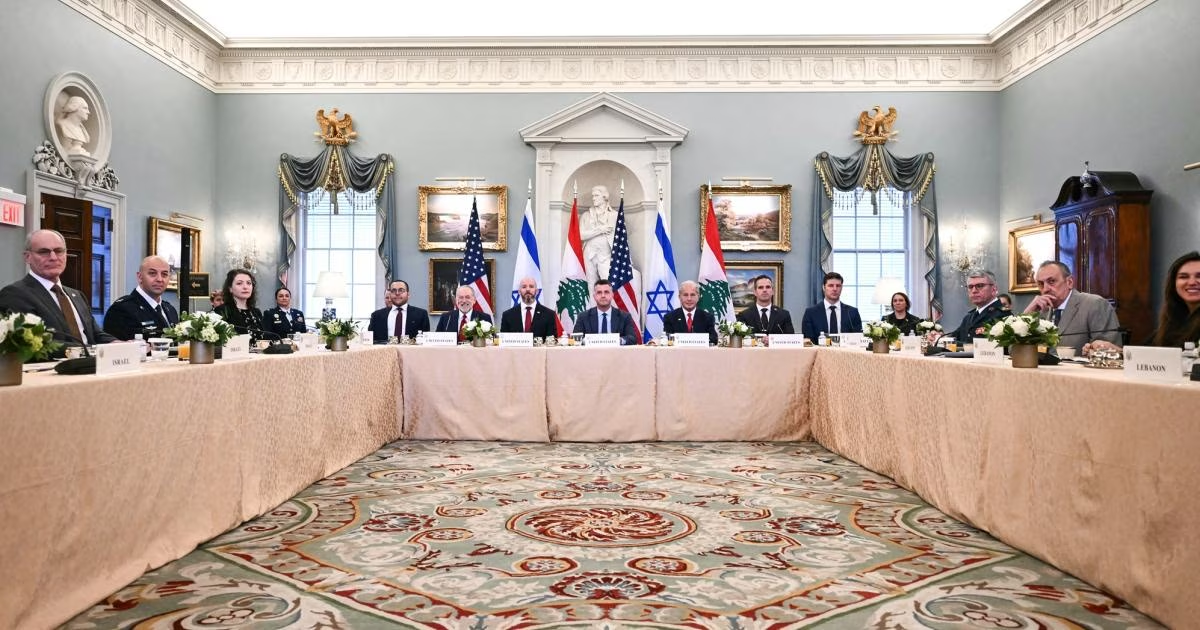
The US State Department announced in an official statement that the Lebanese and Israeli sides have reached an agreement to implement a ceasefire, concluding a fourth round of intensive negotiations hosted in Washington. This announcement came after two days of discussions aimed at containing the ongoing military escalation and solidifying the fragile understandings reached earlier this year.
The new agreement, sponsored and directly guided by the United States, includes the immediate establishment of experimental zones in southern Lebanon. Under this provision, the Lebanese Armed Forces will assume exclusive and full control over these areas, meaning the termination of any armed presence of non-governmental parties in those specified geographical ranges.
The US statement stipulated that for the ceasefire to continue, Hezbollah must commit to a complete and comprehensive cessation of all its military operations against the Israeli side. The understandings also stipulated the necessity of removing all elements of the group and its military installations from the area south of the Litani River, to ensure the border region is free of any armed manifestations outside the framework of the Lebanese state.
Both Israel and Lebanon affirmed during the talks that there are no mutual hostile intentions at present, with a commitment to continue direct negotiations to resolve outstanding issues. This commitment aims to transform the temporary calm into a sustainable security framework that prevents the region from sliding into a destructive comprehensive confrontation.
In drafting this agreement, the negotiating delegations relied on a technical security framework discussed in the Pentagon in late May. Those discussions focused on the implementation mechanisms for deploying Lebanese forces and ensuring the effectiveness of international and local oversight in areas to be cleared of militants.
For its part, the US administration reiterated its full support for the Lebanese and Israeli governments in exercising their national sovereignty over their territories. Informed sources indicated that Washington would provide the necessary logistical and technical support to the Lebanese Army to enable it to carry out its new tasks in the experimental zones stipulated in the agreement.
In a related context, Lebanese Prime Minister Nawaf Salam stressed that Beirut's primary demand remains the consolidation of a ceasefire throughout the country without exception. Salam clarified in press statements that the government seeks to protect civilians and stop the bloodshed caused by recent military operations in Lebanese villages and cities.
On the diplomatic front, US Ambassador to Lebanon Michel Issa expressed optimism about the course of the talks, describing the atmosphere as positive and constructive. Issa affirmed that there is a genuine desire among the parties to overcome technical obstacles, despite the significant field complexities imposed by the ongoing confrontations on the ground.
These political developments come at a time when the Lebanese arena is suffering from catastrophic humanitarian effects, with official statistics indicating thousands of martyrs and wounded and the displacement of more than one million people. International parties hope that this agreement will contribute to alleviating the severity of the humanitarian crisis and allow displaced persons to return to their homes under security guarantees.
Despite this negotiating progress, Hezbollah still explicitly rejects the principle of direct negotiations with Tel Aviv, considering it a form of unacceptable political concession. Lebanese authorities face a major challenge in balancing their international commitments in Washington with strong internal opposition from political and military forces associated with the party.
The two parties agreed to expedite the establishment of experimental zones where the Lebanese Armed Forces will have exclusive control over the land, excluding all non-governmental parties.



Share your opinion
Lebanese-Israeli Agreement in Washington on Implementing Ceasefire and Security Measures in the South