







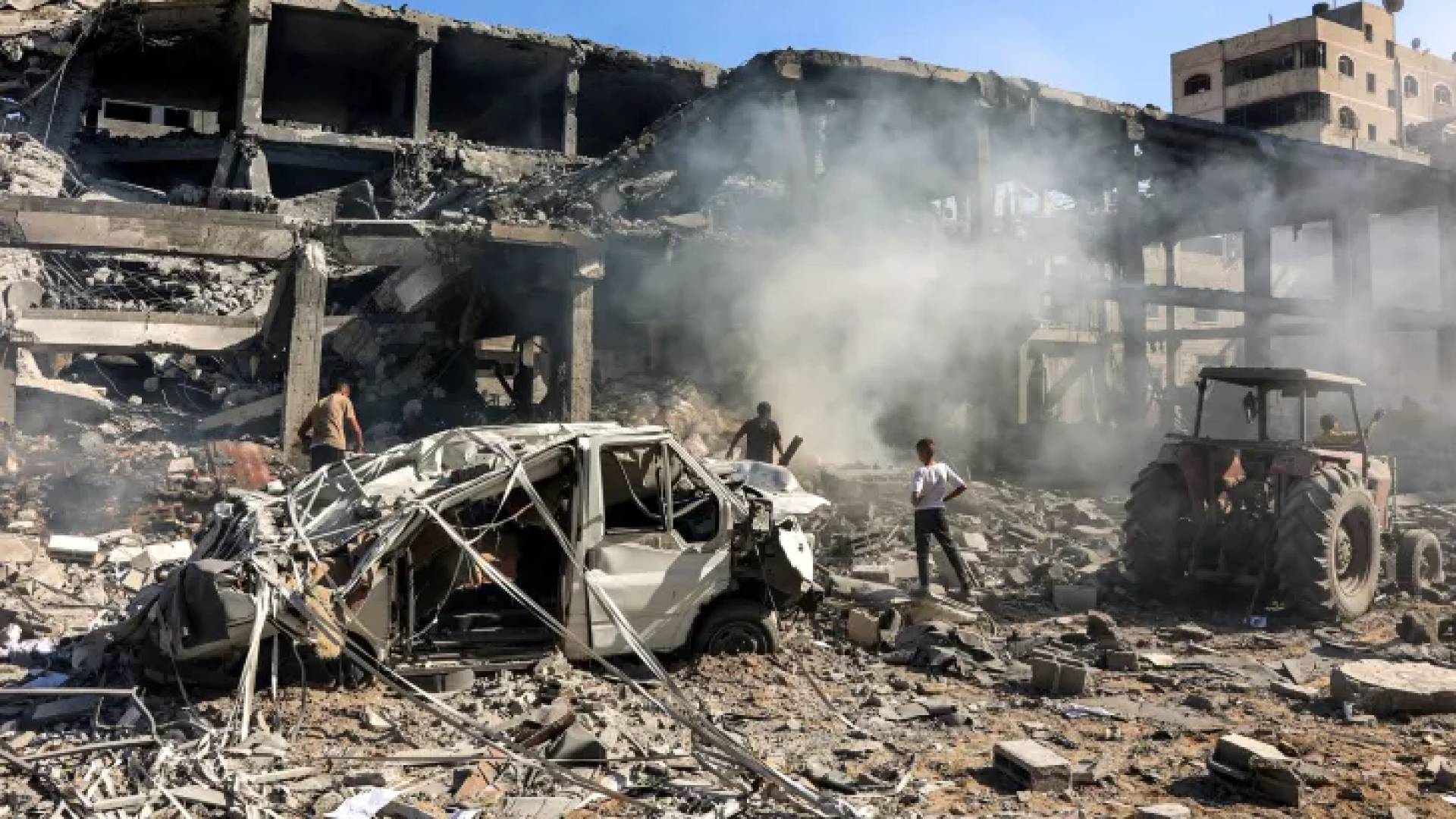
Amidst the rubble of destruction and the harsh conditions imposed by the siege on the Gaza Strip, a new hope has emerged for hundreds who lost their sight, as the Palestinian Ministry of Health announced the resumption of the national corneal transplant program. The Specialized Eye Hospital in Gaza City hosted these qualitative operations after a forced three-year hiatus due to successive wars and the collapse of the healthcare system. This step comes at a sensitive time when the Strip is suffering from a severe shortage of essential medicines and medical supplies.
Inside the operating rooms, whose equipment was not spared from the effects of the war, Dr. Hussam Dawood, a consultant in ophthalmology and eye surgery, led the first surgical operations, which were crowned with brilliant success. Medical sources reported that local teams were able to overcome the enormity of field obstacles and the scarcity of surgical instruments necessary to complete this complex medical procedure. This success represents a stark challenge to the policy of obstruction that the health sector has faced for many months.
Dr. Hussam Dawood affirmed that this case marks the actual launch of the national corneal transplant campaign, noting that preparing and maintaining surgical instruments was the most prominent challenge facing the team. He explained that the insistence on restoring this program aims to reduce the long waiting lists for patients living in almost complete darkness. These operations primarily rely on local expertise honed by years of successive crises.
Patient Beirut Al-Nakhalah, who was the first beneficiary of this program, described her feelings after regaining her sight as beyond description and cannot be reduced to words. Al-Nakhalah said that she did not expect such a complex operation to be performed inside Gaza under the current circumstances, especially after its complete cessation throughout the months of conflict. She added that the return of these operations brings life and colors back to thousands of patients who had lost hope of treatment abroad.
This medical achievement is rooted in the values of humanitarian solidarity that characterize Palestinian society in Gaza, as the transplanted corneas came as a donation from the family of martyr Mahmoud Abu Sisi. The family decided to donate their son's corneas to the Ministry of Health, in a noble step that gave two patients a new chance to see the world again. This stance reflects the extent of cohesion among the residents in the face of the policies of death and destruction surrounding them from all sides.
Martyr Abu Sisi's father expressed his humanitarian stance by referring to the psychological difficulty he initially faced, but he chose to give life to others as an ongoing charity for his son's soul. He affirmed that his son's martyrdom was a motive to help patients continue their lives and overcome their visual impairments. These individual initiatives are considered the main pillar upon which the national corneal transplant program is based, given the prevention of importing corneas from abroad.
Field reports indicate that the resumption of these operations goes beyond the purely medical dimension, to constitute a cry against the siege and the slow death policy pursued by the occupation. In light of the severe deprivation of the most basic treatment rights, Palestinians invent their own means of survival and continuity. These operations are a clear message about the ability of national cadres to innovate despite the lack of logistical capabilities.
Looking at the numbers, health statistics reveal a humanitarian catastrophe, with about 700 people in the Gaza Strip directly losing their eyes during the recent war. Among these, 600 injured people lost one eye, while nearly 100 people live in complete darkness after losing both eyes. Fears are growing that these numbers will increase amid the continued direct targeting of civilians in residential areas.
Health authorities in Gaza warn that thousands more, mostly children and youth, are at risk of losing their sight due to complex injuries from explosion shrapnel. Fire belts and heavy shelling cause direct injuries to the retina and cornea, requiring urgent surgical interventions that are not always available. Amid continued Israeli restrictions on the movement of medical supplies, local solidarity remains the only available window to save what can be saved.
These operations represent the beginning of the national corneal transplant campaign, and the biggest challenge was preparing surgical instruments given the current reality of hospitals.
Share your opinion
Light from the Heart of the Siege: Gaza Resumes Corneal Transplant Surgeries with Self-Effort and Community Solidarity