







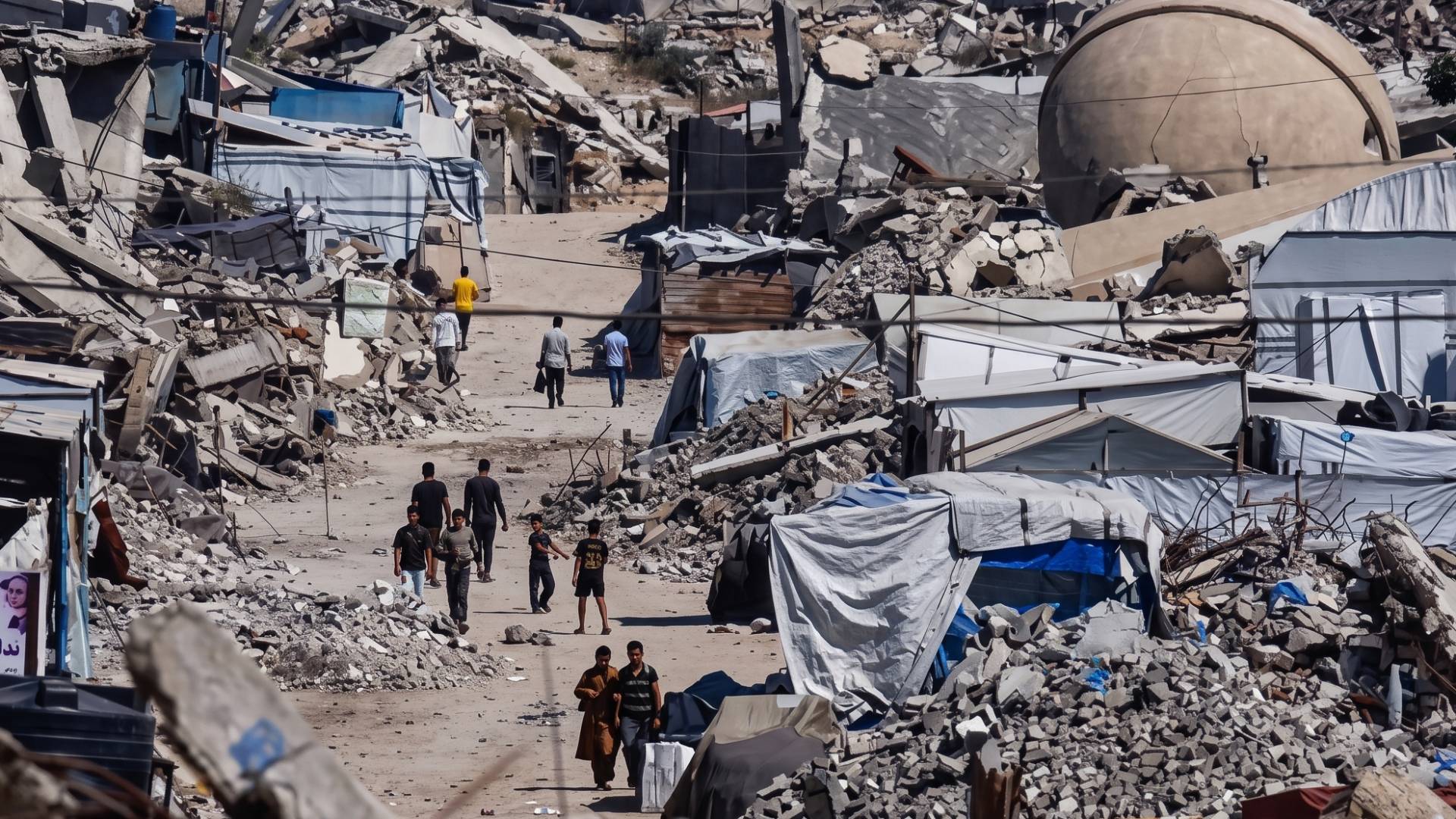
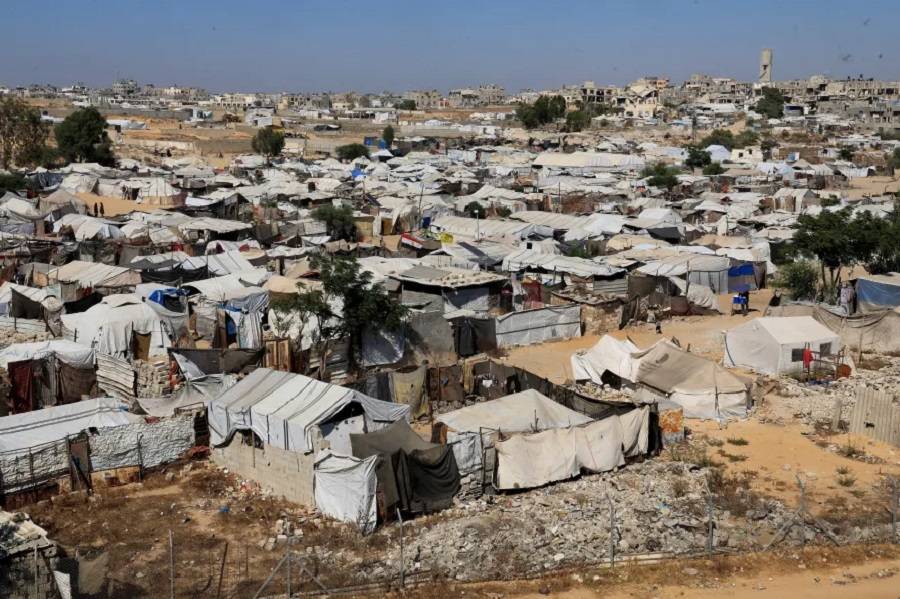
In the heart of the devastated Tel al-Hawa neighborhood west of Gaza City, children's voices echo the national anthem from inside dilapidated tents, declaring the continuation of the battle for awareness and education despite the surrounding rubble. The 'Al-Awda' field school has become a model for this resilience, housing over 1600 students crowded into nine plastic tents, each no larger than twenty square meters.
This school was established at the peak of the war in April 2024 and suffered the hardships of forced displacement twice; first from Rafah and then from the central part of the Strip, before settling in Gaza. Each time, the teaching staff dismantled the tents and carried them on their shoulders, preferring to save simple educational materials over personal belongings to ensure the continuity of teaching.
Students in these field schools endure harsh conditions, sitting on sand shoulder-to-shoulder under the scorching sun, intensified by the plastic covers. Teachers confirm that severe overcrowding sometimes leads to suffocation, in addition to the distraction of children burdened with arduous tasks such as fetching water and collecting firewood after school hours.
Officially, the Ministry of Education has adopted an alternative emergency plan that includes 'remedial promotion' to address the deep educational gap left by the war. These intensive courses aim to enable students to move between grade levels after undergoing assessments that determine their academic achievement level in the absence of stable formal education.
Official data indicates the presence of about 820 field schools and educational points distributed throughout the Strip, accommodating nearly 400,000 students from various stages. These efforts overlap between schools supervised by the Ministry, those managed by UNICEF, and learning centers affiliated with UNRWA that operate unofficially.
The extent of losses in the education sector appears catastrophic, with statistics indicating the martyrdom of over 19,000 male and female students, and the injury of more than 28,000 others since the beginning of the aggression. The educational system also lost 801 of its teaching staff, creating a significant void in the educational and academic expertise needed to manage the crisis.
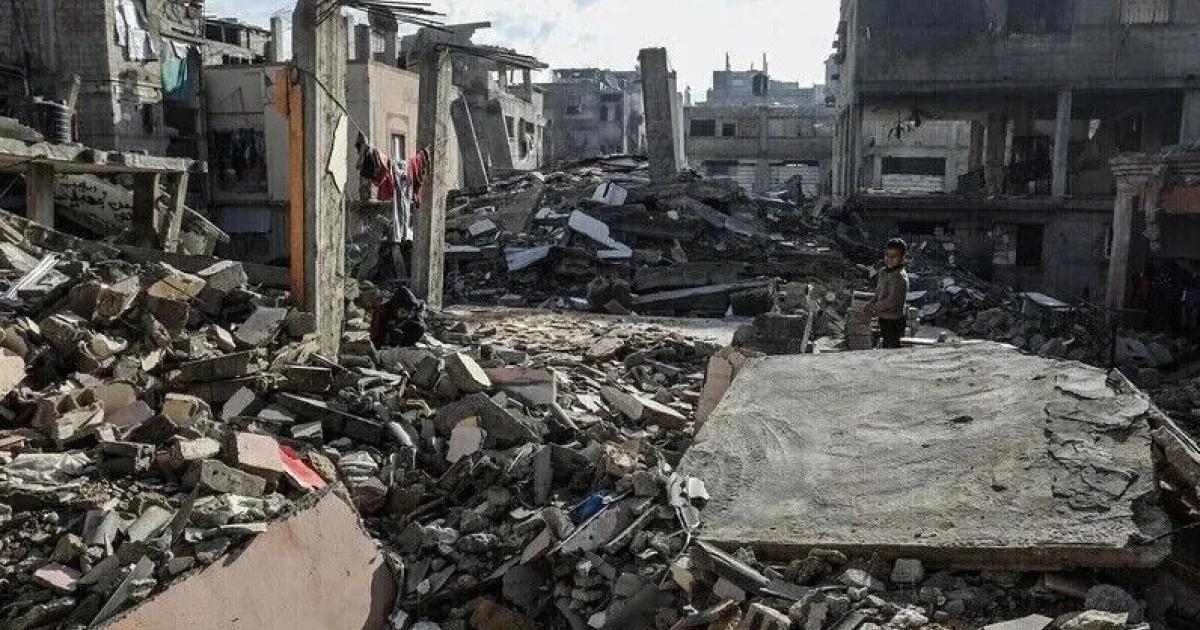
The damage was not limited to lives but systematically targeted infrastructure, with 179 government schools and 105 UNRWA schools suffering total or partial destruction. This targeting has made returning to traditional school buildings impossible in the foreseeable future, prompting families to seek costly and exhausting educational alternatives.
Higher education in Gaza faced a similar fate, as 95% of university campuses were damaged, and 195 university buildings were completely out of service. International organizations such as UNESCO estimate that restarting a minimum level of university education requires urgent funding exceeding 110 million dollars to repair what the war machine destroyed.
Economically, education has become an additional burden on families suffering from extreme poverty, as the prices of simple stationery have risen to unprecedented levels. Testimonies from parents confirm that the price of a single notebook has reached about two dollars, an amount beyond the means of families struggling to secure basic livelihoods in the absence of income.
Educational sources speak of the phenomenon of 'cognitive genocide' practiced by the occupation through targeting academic institutions and killing scholars and researchers. International law specialists believe that this behavior goes beyond material destruction to an attempt to dismantle national identity and deprive future generations of their fundamental right to knowledge and development.
Psychologically, children in Gaza face complex traumas resulting from loss and repeated displacement, which has severely affected their mental abilities and concentration. Psychologists point out that the absence of a safe school environment has driven many children into the streets, exposing them to behaviors charged with tension and suppressed violence due to continuous pressure.
Despite this bleakness, students insist on their dreams; the child Kinan, who spent months in water queues, dreams of becoming a lawyer to defend the rights of his people. And Karim, who sees his school tent as the first step towards his dream of becoming a doctor, reflecting a solid will that defies systematic attempts at ignorance.
Popular education experiences that emerged during the First Intifada are returning to the forefront in Gaza today, where education transforms from a mere institutional service into an act of sovereign resistance. These community initiatives aim to preserve collective consciousness and protect it from collapse, emphasizing that books and pens are tools no less important than any other means of resilience.
The reality of education in the Gaza Strip remains suspended between the rubble of schools and the aspirations of a generation that refuses to surrender to ignorance, amidst international calls for urgent intervention to save what remains. The continuation of the educational process under fire represents a clear message of defiance, but it requires real support to rebuild what the war destroyed and ensure children's right to a safe future.
The displaced rushed to save what remained of their household furniture, but the school administration only thought of saving what keeps education alive.

Share your opinion
Education Under Rubble.. Gaza Resists 'Cognitive Genocide' with Displacement Tents and Field Schools