







Dr. Dalal Erekat: "Fatah" as a liberation movement is historically required to restore its role and legacy with a modern vision that responds to international transformations and the aspirations of the new Palestinian generation. Awni Al-Mashni: The challenges facing the Palestinian people are great, and the conference does not have practical answers to this reality, and its outcomes will be vague phrases and traditional rhetoric. Abdul Ghani Salameh: The discussion of Palestinian frameworks, including the Eighth Conference, ending Oslo, needs clear alternatives because its repercussions will affect the future of the Palestinian cause as a whole. Dr. Raed Al-Dabai: The current stage reflects a gradual transition from managing the Authority to managing a national liberation project that requires restoring the liberation dimension of the "Fatah" movement. Majed Hdeib: "Fatah" is expected to move towards rebuilding the political system and reviving the role of the PLO as the comprehensive representative of the Palestinian people. Muhammad Hawash: The conference is responsible for developing a political program to deal with the Israeli project and providing effective tools for renewing leadership frameworks through comprehensive elections. Ramallah – Exclusive to "Al-Quds" – The Eighth Conference of the Fatah movement is being held today, in one of the most complex and sensitive political stages the Palestinian people are going through, amidst accumulated challenges that impose themselves on its agenda, starting from the escalating Israeli trends aimed at undermining the Palestinian Authority and attempts to end the Oslo Accords and expand settlements, and not ending with internal Palestinian crises, which puts the movement before a political and organizational entitlement that goes beyond rearranging the internal house to searching for practical answers for the future of the Palestinian national project.
Writers, political analysts, specialists, and university professors confirm, in interviews with "Al-Quds", that the conference faces a set of fundamental challenges, foremost among them formulating a political vision capable of dealing with rapid regional and international changes, and redefining the relationship with Israel in light of escalating annexation policies and ending the two-state solution, in addition to discussing the future of the Oslo Accords and the possibilities of dealing with attempts by the Israeli right to disavow or cancel it, in the absence of clear alternatives that could ensure the stability of the Palestinian political system and preserve national institutions from collapse.
According to writers, analysts, specialists, and university professors, the conference also faces an equally complex internal challenge, which is its ability to move from an electoral and organizational nature to producing real political and strategic outcomes that address the crises of division, rebuild popular trust, and develop a unified national program that strengthens Palestinian steadfastness, and balances between preserving the institutions of the Palestinian Authority and restoring the liberation dimension of the movement, in light of escalating Israeli pressures and declining opportunities for traditional political settlement.
Challenges of canceling Oslo Dr. Dalal Erekat, Professor of Diplomacy and Conflict Resolution at the Arab American University, believes that the Israeli Knesset's moves towards pushing for the cancellation of the Oslo Accords do not represent merely a legal or internal political step, but rather reflect an attempt to issue a practical declaration of the end of a transitional phase that has been used for decades to manage the Palestinian-Israeli conflict instead of resolving it, which puts the Fatah movement before a "historical review moment" for the future of its national role.
She explains that its coincidence with the convening of the Eighth Conference of the "Fatah" movement is not limited to rearranging the organizational structure of the movement, but is supposed to produce a new national vision that transcends the logic of managing the Authority, towards redefining the function of the Palestinian political system in light of a reality characterized by escalating settlements, annexation policies, field tensions, and attempts to undermine the two-state solution.
Erekat confirms that the expected outcomes of the conference must include reformulating the relationship with Israel as an occupying power and not a partner in a peace process, in addition to renewing national legitimacy through democratic paths that enhance the trust of the Palestinian street, and developing resistance tools, including political, diplomatic, legal, and economic paths, in addition to strengthening national unity and ending the division as a strategic loophole affecting the national project.
The importance of empowering youth and women Erekat emphasizes the importance of empowering youth and women within the movement and decision-making institutions, in addition to restoring the status of the Palestine Liberation Organization as the comprehensive framework and primary reference for the Palestinian national project.
The conference at a pivotal stage Erekat believes that the conference is being held at a pivotal stage characterized by deep regional and international transformations, with an Israeli government that openly adopts annexation and displacement policies, which forces Palestinians to move from a state of crisis management to building a comprehensive and long-term national liberation project.
Erekat confirms that the fundamental challenge lies not only in describing the risks, but in possessing the political will necessary to move from reaction to strategic action, by formulating a unified national strategy that combines political, economic, and social steadfastness, and restoring public trust through reform, transparency, and participation, and activating Palestinian diplomacy and the national narrative in the international arena.
The necessity of unifying Palestinian geopolitics Erekat emphasizes the necessity of unifying Palestinian geopolitics between the West Bank, Gaza Strip, and Jerusalem within a single national vision, and moving from crisis management to managing a comprehensive national liberation project, stressing that the Fatah movement, as a historical liberation movement that led the national project, is today required to restore this role and legacy with a modern vision that responds to international transformations and the aspirations of the new Palestinian generation.
Two contradictory concepts proposed by the conference Writer and political analyst Awni Al-Mashni believes that the Eighth Conference of the "Fatah" movement proposes two contradictory concepts; the first is a real opportunity for political and organizational review and drawing lessons from the previous stage with the aim of formulating new strategies, and the second is no more than a process of "recycling organizational elites" without a fundamental impact on the course of the movement or the Palestinian political system.
Al-Mashni explains that the method of preparing for the conference, in addition to the orientations of the majority of participants, indicates that it tends to be primarily an electoral conference, while the political dimension is dealt with as a protocol discussion or a "formal dialogue", which limits the possibility of producing real strategic outcomes.
Possibility of repeating outcome scenarios Al-Mashni believes that the expected outcomes of the conference do not exceed, at best, a general statement containing traditional phrases and repeated political clichés, which will not have a tangible impact on the course of political action after the end of the conference, noting that this pattern has been repeated in previous conferences without actual change in decision-making mechanisms.
Al-Mashni points out that Palestinian policies are actually drawn up by a limited group that does not await the outcomes of internal conferences to adjust its course, which makes the conference's impact on political decision weak or almost non-existent.
Al-Mashni believes that the convening of the conference amidst a rapidly escalating regional and international conflict, witnessing deep geopolitical transformations in the region and the world, does not seem like a calculated step, questioning the conference's ability to formulate policies or determine a strategic path without awaiting the results of this open conflict.
Al-Mashni believes that this timing reflects, in essence, that the conference is not political as much as it is an "electoral bazaar", in the absence of a strategic vision capable of dealing with regional changes.
Outcomes that may not provide real and practical answers Al-Mashni points out that the challenges facing the Palestinian people are great and are not limited to annexation decisions or ending the Oslo Accords, but also include an escalating economic crisis, a war of displacement and extermination in the West Bank and Gaza Strip, in addition to settlement expansion, and the conference's outcomes are not expected to provide real and practical answers to these challenges and this reality.
Al-Mashni believes that what will be issued by the conference will not exceed vague phrases and traditional rhetoric that will quickly fade after hours of its conclusion, considering that the current stage does not indicate a solution to the crisis as much as it reflects its deepening.
Canceling Oslo.. within a broader project of the Israeli right Writer and political analyst Abdul Ghani Salameh confirms that the escalating trends within the Israeli right towards disavowing the Oslo Accords, leading to an attempt to officially cancel them, come within the context of a broader project adopted by the ruling right based on what he describes as "correcting Israel's historical mistakes", considering that this trend is not limited to Oslo alone, but includes all files related to the Palestinian cause and the Palestinian presence.
The Israeli right and the attempt to get rid of "mistakes" Salameh explains that the Israeli right views a number of historical stations as "mistakes" that should be corrected, foremost among them the failure to displace the Palestinians who remained within the 1948 territories, and who have become, according to the right-wing Israeli vision, a growing demographic challenge.
Salameh points out that the Israeli right considers the continued presence of Palestinians in the West Bank and Gaza Strip after 1967 another mistake, in addition to the continued work of the United Nations Relief and Works Agency for Palestine Refugees (UNRWA) and the related file of the right of return, amidst continuous Israeli-American attempts to reduce or end the agency's role.
Salameh notes that the Oslo Accords occupy a central position in this context, as it is viewed within Israeli right-wing circles as a "historical sin" committed by Yitzhak Rabin and the left-wing current in Israel, which pushes the current government to try to backtrack on it or empty it of its content.
Canceling Oslo is not an easy step Despite this, Salameh stresses that canceling Oslo is not an easy step or a decision that can be settled by a vote in the Knesset alone, given that the agreement is linked to considerations that go beyond the Israeli interior, including Israel's long-term strategy, regional geopolitical balances, as well as American patronage and international and European guarantees that accompanied its signing, which makes any radical change in it subject to broader approvals and understandings.
Palestinian decisions on Oslo not actually implemented Regarding the Palestinian position, Salameh points out that official Palestinian institutions, foremost among them the Palestinian Central Council, have taken decisions in recent years related to reconsidering the obligations arising from Oslo, including stopping security coordination, but most of these decisions have not been actually implemented, noting that the Eighth Conference and its decisions in this context are also important.
Salameh believes that the Palestinian Authority faces a deep political and economic crisis that limits its ability to make fateful decisions of this kind, explaining that the discussion of Palestinian frameworks, including the Eighth Conference, the issue of ending Oslo requires clear alternatives, because its repercussions will affect the future of the Palestinian cause as a whole.
Salameh expects the current situation to continue during the next stage, so that the Oslo Accords remain formally in place without the implementation of its basic entitlements by any party, in the absence of a state of peace or comprehensive war, and stalled negotiations, until broader changes occur in regional and international power balances, including files such as the Russian-Ukrainian war, US-Iranian tension, and the rearrangement of the Middle East.
Salameh confirms that preserving the Palestinian Authority represents a national priority in the current stage, as it embodies the Palestinian political and entity identity, in addition to its security, social, and economic role in supporting the steadfastness of Palestinians on their land.
The conference facing central questions Dr. Raed Al-Dabai, Professor of Political Science at An-Najah National University, confirms that the convening of the Eighth Conference of the "Fatah" movement comes at one of the most sensitive political stages since the signing of the Oslo Accords, in light of increasing indications of the erosion of this agreement on the ground and what is being discussed about voting in the Knesset on canceling the agreement, despite it being under international and American patronage, reflects the escalation of the discourse of the extremist religious right within the Knesset and its tendency to deny the Palestinian existence and consider the entire land "the land of Israel."
Al-Dabai explains that this reality forces the conference to answer central questions related to the future of the Palestinian national project, forms of resistance, national unity, and strengthening steadfastness, in addition to redefining the relationship between the Fatah movement and the Palestinian Authority, the movement's identity, its internal system, and its political program for the next stage, as well as the future of the relationship with Israel at the political, security, and economic levels, in light of continued settlement, annexation, incursions, and attempts to weaken the Palestinian Authority.
The importance of restoring Fatah's liberation dimension Al-Dabai points out that the current stage reflects a gradual transition from managing the Authority to managing a national liberation project, which requires restoring the liberation dimension of the Fatah movement, in light of Israeli transformations that are moving towards ending the idea of a Palestinian state, in contrast to Palestinian efforts to arrange the internal house and strengthen the political system.
Al-Dabai believes that what is happening within the conference tends to prioritize the electoral and organizational dimension at the expense of the programmatic dimension, which makes it difficult to expect a radical breakthrough in the movement's political program, attributing this to the conference's structure, which is dominated by a functional character in its security and civilian aspects, in addition to the large number of candidates for membership in the Central Committee and the Revolutionary Council, as well as the leadership's conviction that the current circumstances are not suitable for major strategic changes in light of regional and international challenges and external reform pressures.
Fatah must adopt new policies Al-Dabai believes that international and regional interest in the conference's outcomes will be determined by the extent of the movement's ability to adopt new policies that meet the requirements of the stage, without a fundamental change in general strategies, but rather in working tools, programs, and implementation mechanisms.
Al-Dabai confirms that the conference's ability to address challenges is directly linked to the size and role of the Fatah movement within the Palestinian political system, its history, and its wide presence in society, explaining that the conference does not only discuss organizational issues, but faces a fateful question related to the future of the national project in light of Israel's attempts to obliterate the idea of a Palestinian state, settlement expansion, regional and international transformations, and the decline of young generations' trust in traditional political frameworks.
Al-Dabai confirms that the success of the conference will not be measured only by the results of internal elections, but by its ability to provide practical answers to the central question: How can the Palestinian national project be rebuilt in a stage where occupation policies aim to dismantle its political and geographical foundations.
A crucial and sensitive moment Writer and political analyst Majed Hdeib explains that the convening of the Eighth Conference of the Fatah movement comes at a crucial and sensitive moment in the history of the Palestinian cause, in light of two factors that strongly impose themselves on the Palestinian scene; the first is the escalating Israeli trends towards ending the political framework of the Oslo Accords, and the second is the war on the Gaza Strip and the accompanying political and field changes, amidst attempts to separate the Strip from the legal and political jurisdiction of the Palestinian Authority.
Fatah.. the backbone of the Palestinian political system Hdeib points out that the expected outcomes of the conference can be read within four main axes that include political, organizational, national, and institutional dimensions, noting that the Fatah movement is no longer read as merely a political organization, but as the backbone of the Palestinian political system, and the central player in the Palestinian national project, especially in light of the challenges related to the future of the Authority and the Palestinian cause.
The importance of Fatah redefining its political discourse Hdeib expects the Fatah movement to redefine its political discourse, by adopting a more stringent language towards the Israeli occupation, and moving from the concept of settlement based on traditional political dialogue to a path based on combining political, legal, and diplomatic confrontation, by strengthening Palestinian presence in United Nations institutions, especially international courts, foremost among them the International Criminal Court.
Reshaping power balances within the movement Hdeib suggests that the conference will witness a reshaping of power balances within the movement through the election of a new leadership for the Central Committee and the Revolutionary Council, reflecting the rise of a new organizational generation that seeks to form internal alliances and redraw the features of the post-President Mahmoud Abbas era, which may limit the influence of traditional or historical leaders in shaping the policies of the next stage.
Conference outcomes are the most important axis Hdeib considers the conference outcomes to be the most important axis, expecting the movement to move towards rebuilding the Palestinian political system, and reviving the role of the Palestine Liberation Organization as the comprehensive representative of Palestinians, in addition to the functional separation between the institutions of the PLO, the Palestinian Authority, and the Fatah movement, while strengthening popular resistance and expanding the tools of political and legal confrontation with Israel.
The importance of preserving the Authority's institutions Hdeib points to the importance of the institutional dimension, considering that preserving the institutions of the Palestinian Authority and preventing their collapse is a priority, in parallel with launching internal reforms to address the decline in popular trust in the movement and confront Israeli policies aimed at undermining the Authority and weakening the chances of establishing a Palestinian state.
Hdeib explains that two main currents have emerged within the Fatah movement recently; the first focuses on preserving the Palestinian Authority as an entry point for the state through the continuation of the negotiation process, and the second pushes towards restoring the logic of national liberation through popular resistance and intensifying action in international forums to politically and legally besiege Israel.
Despite this, Hdeib suggests that the dominance of what he described as the "Authority current" within the movement will continue, which makes the possibilities of launching new strategies that go beyond Oslo limited, even if the Israeli Knesset proceeds to cancel the agreement.
Hdeib expects the Fatah movement to redefine itself as a national liberation movement, by adopting a more stringent political discourse, with hints of disengaging from some security obligations, and holding Israel responsible for the collapse of Oslo, in addition to strengthening Palestinian presence in international institutions, and reviving popular resistance, while at the same time insisting on preserving the Authority and preventing the collapse of its institutions.
It is not necessary to link the convening of the conference with the cancellation of Oslo Writer and political analyst Muhammad Hawash stresses that attempts by parties of the ruling right in Israel to push for the cancellation of the Oslo Accords or to disavow its obligations are not directly linked to the convening of the Eighth Conference of the Fatah movement, considering that linking the two events lacks political accuracy, because Israeli calls to end the agreement are not new, but date back years, and have escalated more clearly in recent months by ministers in the Israeli government, foremost among them Itamar Ben-Gvir and Bezalel Smotrich.
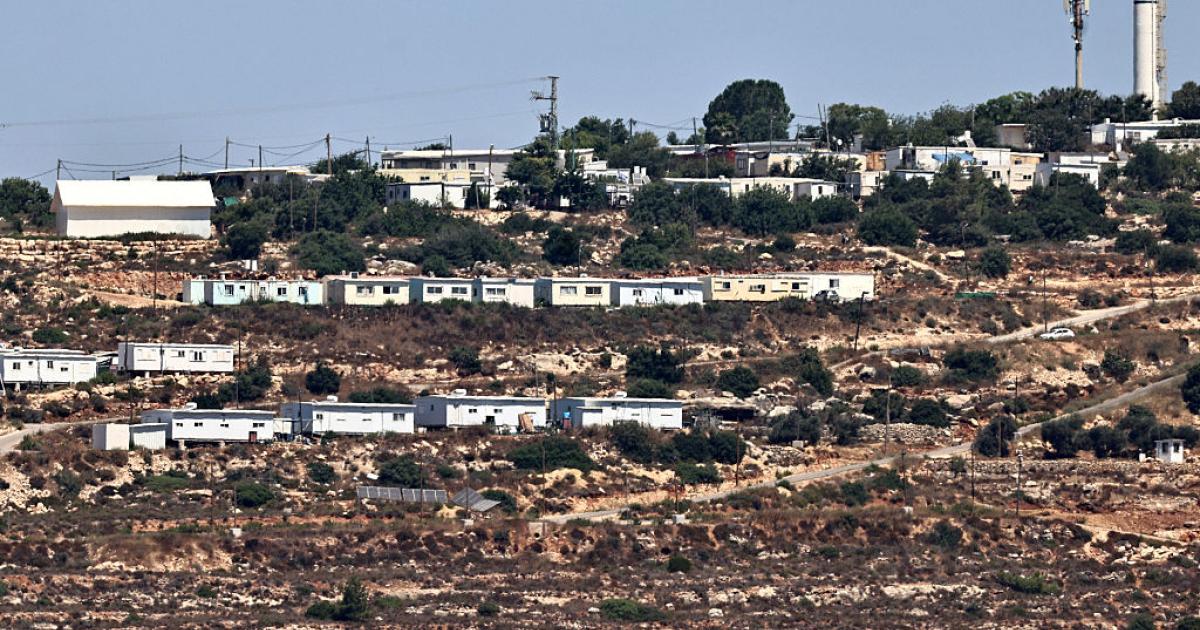
Hawash explains that the Israeli right's trends towards undermining Oslo are consistent with a continuous Israeli policy based on practically bypassing the agreement on the ground, by weakening the Palestinian Authority and preventing it from fulfilling its political and economic obligations towards Palestinian society, in addition to continuing settlement expansion, land confiscation, control over resources, and economic restrictions, including clearance funds and depriving Palestinian workers of working inside Israel.
Pushing Palestinians to abandon their national aspirations Hawash believes that these policies reflect an Israeli vision that seeks to push Palestinians to abandon their national aspirations related to the right to self-determination and the establishment of a Palestinian state, in exchange for keeping them as residents who have some individual rights without recognizing their national rights, in parallel with an attempt to control the largest possible area of Palestinian land in the West Bank, Jerusalem, and the Gaza Strip, and reducing Israeli responsibilities towards the residents.
Hawash stresses that the coincidence of Israeli calls to cancel Oslo with the convening of Fatah's Eighth Conference does not mean a causal relationship between them, considering that the issue goes beyond the Fatah movement to include all official and civil Palestinian institutions, frameworks, and political structures, in light of what he described as Israel's attempt, with American support, to obstruct any international accountability for its violations against Palestinians, whether in the United Nations or international courts.
Israel's reversal of the Oslo Accords Hawash rejects blaming the Oslo Accords for the current deterioration in the situation of Palestinians, confirming that the agreement – despite observations on it – set legal and administrative limits for the occupation, and was a transitional framework for ending the occupation within five years, but Israel reversed the agreement and the idea of political settlement after the assassination of Israeli Prime Minister Yitzhak Rabin and the late Palestinian President Yasser Arafat.
Hawash points out that the international community, despite its official adherence to the two-state solution, faces a challenge represented by broad American support for the right-wing Israeli government, despite shifts within American society that criticize Israeli policies towards Palestinians, in addition to European moves towards imposing sanctions on settlers involved in attacks against Palestinians.
Responsibility does not fall on Fatah alone Hawash believes that the Eighth Conference of the Fatah movement is responsible for developing a clear political program to deal with the Israeli project based on settlement expansion and undermining Palestinian rights, and providing effective tools to achieve this program, by renewing the leadership frameworks of Fatah, the Organization, and the Authority through comprehensive elections.
However, Hawash confirms that the responsibility does not fall on Fatah alone, but on all Palestinian factions and the Palestine Liberation Organization, by developing tools of steadfastness and political struggle, strengthening Arab and international partnerships, and preserving the possibility of implementing the two-state solution.
Hawash stresses that the Palestinian people face a project that targets their existence and national rights, which forces Palestinian forces to unite their efforts and build a political vision more capable of confronting Israeli policies, while developing tools for political and diplomatic action to protect Palestinian national rights and prevent their liquidation.
Share your opinion
The Eighth Conference.. Fateful Challenges and Questions That Need Practical Answers