







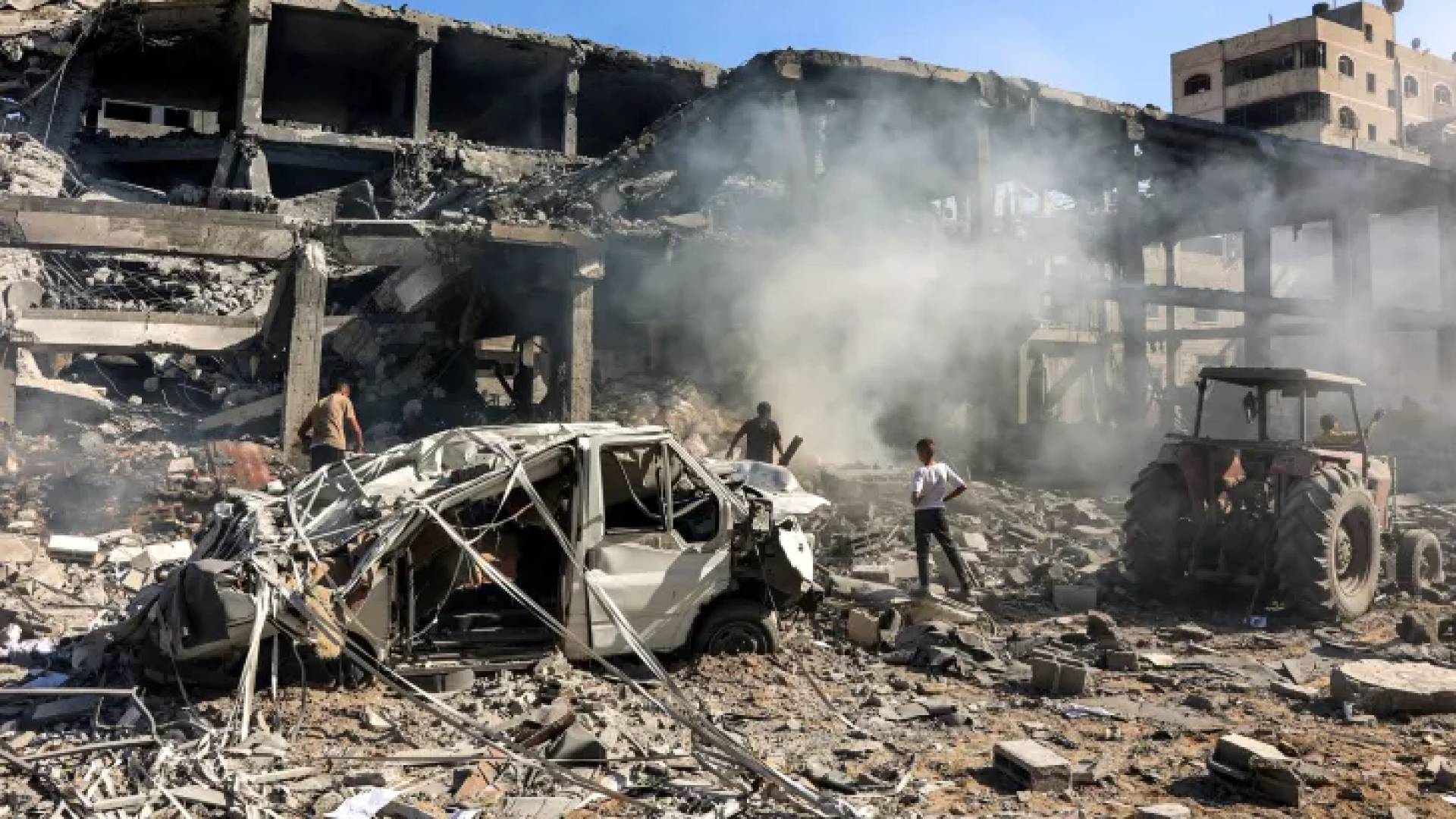
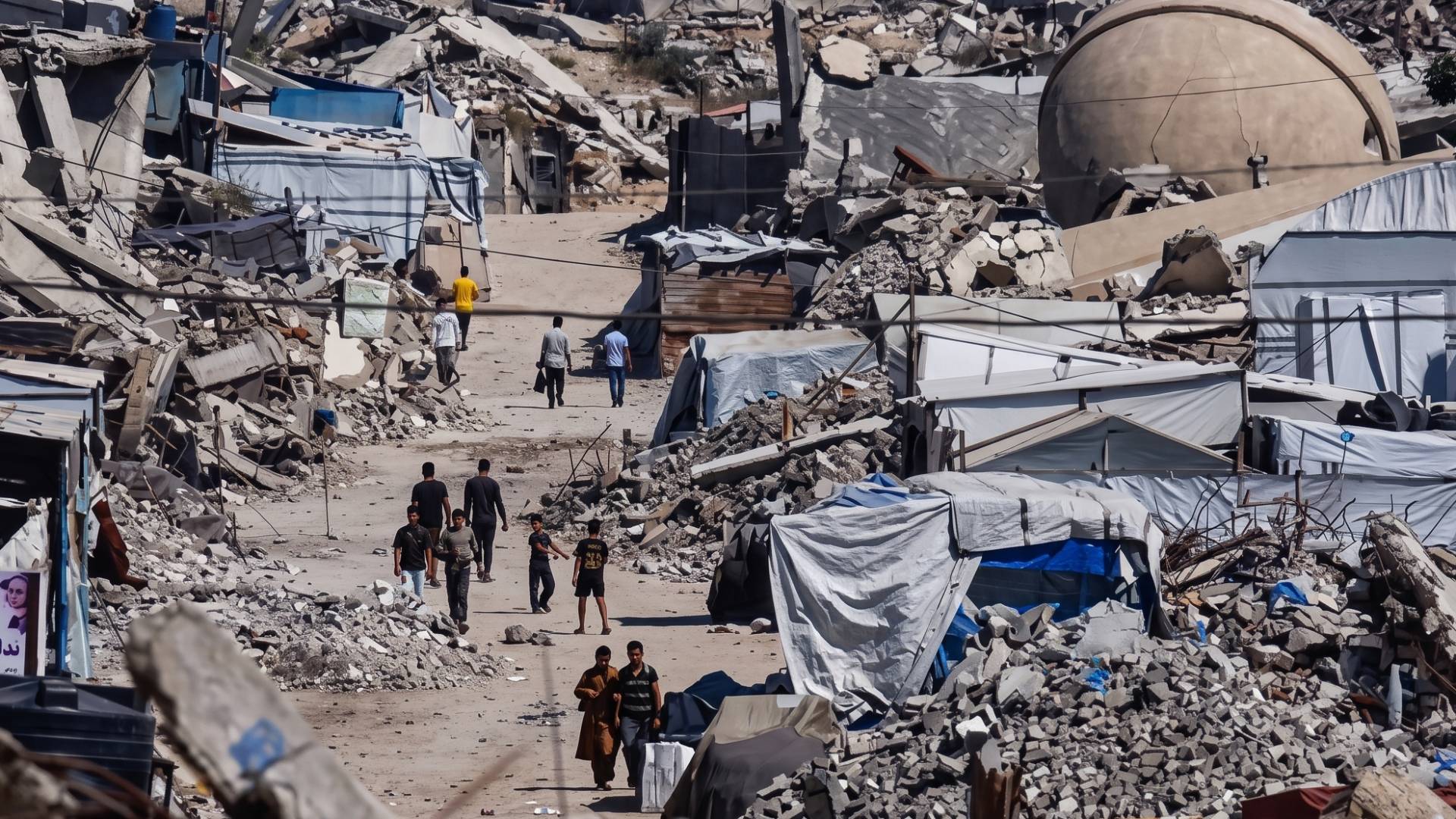
May 1st, International Labor Day, arrives in the Gaza Strip this year burdened with the weight of loss and destruction, as hundreds of thousands of workers and craftsmen have transformed from producers driving the economy to displaced persons searching for a meal in soup kitchen queues. Contractor Shadi Shuwaikh, who once managed a team of 60 workers, recounts how his professional dreams evaporated after 9 of his most skilled craftsmen were martyred and his home in the Shuja'iyya neighborhood was destroyed, leaving him now living in a tent that offers no protection from summer heat or winter cold.
The losses were not limited to lives and equipment but also extended to personal savings, which represented the last safety net for many families; Shuwaikh lost about 50,000 shekels hidden in his apartment, which was bombed by the occupation. Despite this bitter reality, he maintains contact with his remaining workers out of human loyalty, pinning his hopes on the start of the reconstruction process, which might revive the completely paralyzed construction sector.
In shelters, the tragedies of craftsmen are repeated; Jamil Arafat, a blacksmith who used to shape iron, now finds himself helpless in the face of closed doors to livelihood after his workshop and home in the Zeitoun neighborhood were destroyed. Arafat supports a family of 12, relying on meager aid that barely amounts to a few shekels, after his attempts to open a small street stall failed due to the insane rise in prices and the lack of purchasing power among citizens.
As for worker Abdullah Habib, displaced from the Shuja'iyya neighborhood, he embodies the forced unemployment imposed by the war after his home was demolished and he was injured in the shoulder. Habib is now forced to rely on his children, who roam the streets of Gaza selling and refilling water for the displaced, earning a meager income of no more than 15 shekels daily, an amount barely enough to secure daily bread and charge phones to communicate with relatives.
In the Tuffah neighborhood, Youssef Fattoum lives a double tragedy between losing his home and health problems that prevent him from practicing his former profession as a market vendor. Fattoum confirms that the nature of current markets lacks liquidity and the necessary capital to start any new commercial activity, which has made him almost entirely dependent on intermittent relief aid to secure the minimum needs of his family of six.
Field testimonies indicate that losing colleagues at work has become a deep wound in the souls of workers; Mamdouh Muhaysin, a professional construction worker, recounts how he lost three of his colleagues in a team of eight. Muhaysin, who previously earned 35 dollars a day, was forced to sell his remaining household furniture and personal phones to provide food for his children after all his financial savings ran out during the long months of war.
For his part, Sami Al-Amassi, head of the General Federation of Trade Unions in the Gaza Strip, revealed shocking figures reflecting the scale of the economic catastrophe, confirming that the unemployment rate has jumped to between 80 and 85%. Al-Amassi explained that the systematic targeting of economic facilities and agricultural lands by the occupation has led to the poverty rate among workers reaching over 90%, a historical precedent in the Strip.
According to union data, the number of unemployed workers in Gaza has risen to about 400,000, compared to about 200,000 before the outbreak of the war. This sharp increase is due to the complete halt of vital sectors that formed the backbone of the local economy, primarily the construction sector, which alone employed nearly 40,000 workers and craftsmen before its activity completely ceased.
The fishing sector was not immune to this collapse, as the number of working fishermen decreased from 5,000 to only 500 fishermen who risk their lives in an area not exceeding 500 meters at sea. This group faces continuous pursuit by occupation boats, making the fishing profession, which once provided food security for thousands, a source of constant danger and limited returns that do not meet basic needs.
In the agricultural sector, statistics indicate that more than 95% of agricultural lands and orchards located in border areas have been razed, reducing the number of agricultural workers from 35,000 to only two thousand workers. This systematic destruction of green spaces and agricultural facilities has caused thousands of families to lose their permanent livelihoods and contributed to deepening the food crisis and rising prices in local markets.
The industrial sector witnessed a similar decline, with the number of workers decreasing from 30,000 to about two thousand workers, due to the destruction of factories and workshops in industrial areas. Union sources reported that workers who find rare job opportunities are forced to accept very low wages and long working hours, in a desperate attempt to cope with the exorbitant cost of living, which has multiplied several times.
Initial estimates issued by union bodies indicate that more than 10,000 workers have been martyred since the beginning of the war of extermination, a number expected to increase with the ongoing recovery operations of the missing. Unions are currently working on launching a special digital platform to document data on martyred, wounded, and detained workers, to ensure the preservation of their rights and the documentation of crimes committed against the working class in Gaza.
Workers and union bodies in the Gaza Strip appeal to international institutions and donors for the necessity of launching emergency employment programs to save thousands of families from the clutches of hunger. Workers emphasize that relief aid, despite its importance, does not replace the provision of decent job opportunities that restore their dignity and enable them to support their families away from waiting for soup kitchen meals, which have become the only refuge for the majority of the Strip's residents.
The hope for reconstruction remains the only fuel that drives the remaining determination of Gaza's workers, who await the moment the aggression stops to begin rebuilding what the war destroyed. Despite the enormous scale of destruction, craftsmen and workers affirm their readiness to return to the field as soon as the necessary materials are available, stressing that their will to build is stronger than the machine of destruction that targeted all aspects of their professional and personal lives.
The Israeli aggression and the targeting of economic facilities have led to a near-complete collapse in the operational structure, with the poverty rate among workers exceeding 90%.



Share your opinion
Labor Day in Gaza: 10,000 Martyrs and Economic Collapse Pushing Thousands into Extreme Poverty