






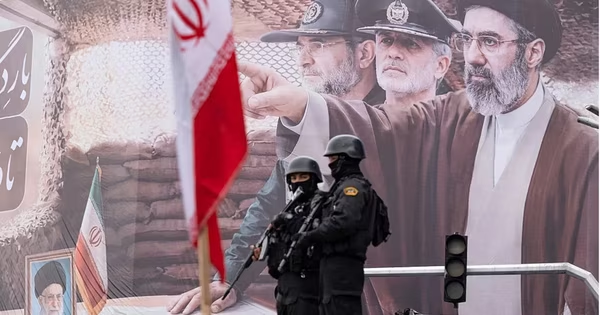
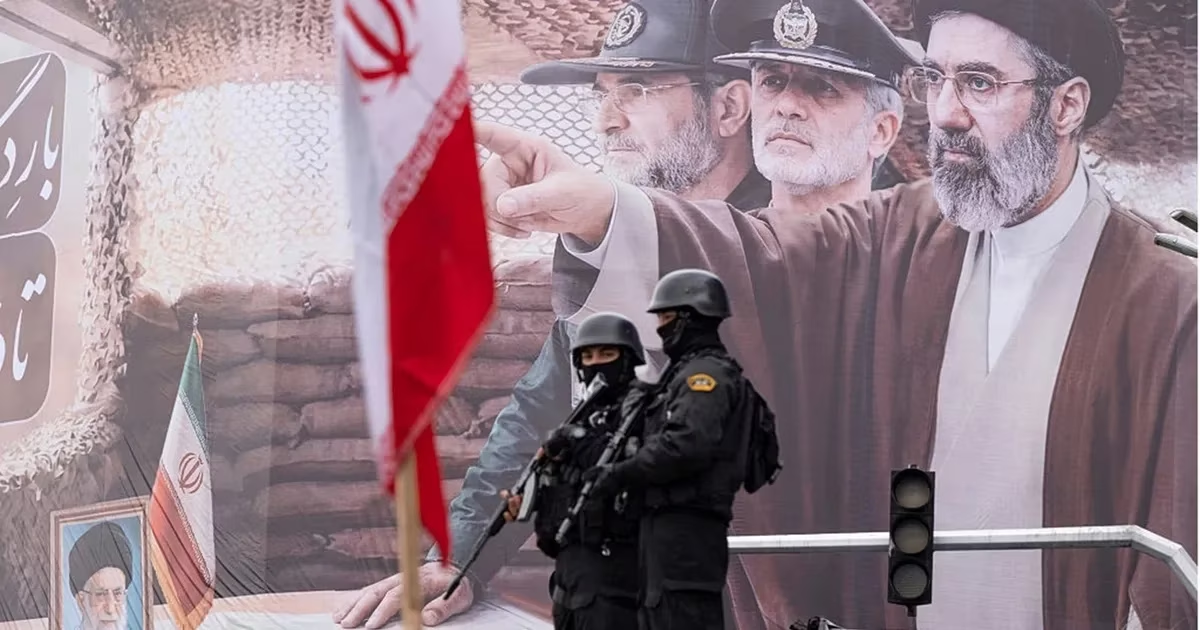
This open letter, addressed to His Eminence Sayyid Mojtaba Khamenei, the Supreme Leader of the Islamic Republic of Iran, comes at a highly complex regional juncture. The author begins by emphasizing the rejection of the aggression Iran is subjected to by Zionist powers, considering it a blatant violation of international law and an assault on a sovereign state and a neighbor in geography and history.
The letter points to the stark contradiction between the arduous diplomatic efforts made by the Kingdom of Saudi Arabia and the Gulf Cooperation Council countries to protect the region and Iran from the ravages of wars, and the Iranian response, which involved targeting vital civilian and economic facilities in Gulf countries with ballistic missiles and drones.
The author stresses that the scale of attacks launched by Iran against its Arab neighbors far exceeds what it directed towards the powers that actually attacked it. He believes that these policies have caused enormous human and material losses, affecting innocent citizens and residents in the region, necessitating a serious pause for review and accountability.
The new leadership in Iran inherits a heavy legacy accumulated over forty-seven years of political adventures described as 'reckless'. This legacy includes a long record of interventions in the affairs of neighboring countries and sowing discord in vast areas of the Islamic world, leading to unprecedented regional instability.
In a review of regional crises, the letter accuses Tehran of establishing parallel entities to states, as is the case with Hezbollah in Lebanon, which caused deep sectarian division. It also refers to the Iraqi arena, which witnessed the birth of dozens of Iranian-backed armed militias that committed crimes leading to the displacement of millions and the fall of hundreds of thousands of victims.
In Yemen, the Houthis, due to Iranian support, transformed from a peaceful social component into an armed group that contributed to destroying the country's capabilities and dividing its social fabric. This influence extends to Syria, where cross-border militias contributed to suppressing the aspirations of the Syrian people and committing grave violations over the past decade.
The letter touches upon the internal Gulf situation, accusing Iranian policy of sectarian incitement and planting subversive cells that targeted the security and stability of these countries. The author believes that these documented practices have brought Iran nothing but poverty and international isolation, despite the enormous wealth that should have been spent on the welfare of the Iranian people.
On the ideological front, the letter calls on the new leader for a corrective revolution within the Twelver Shia doctrine to purify it from extremism and superstitions that have been introduced into it. It strongly criticizes rituals that involve self-harm and distorting the image of Islam and the school of Ahl al-Bayt before the world, considering them a deviation from the correct legitimate objectives.
The article raises fundamental questions about the truth of the calls for Islamic unity launched by Tehran, considering that they clash with the reality of practices of excommunicating companions and impugning religious constants. It believes that unity cannot be achieved in the presence of inflammatory sectarian discourse that sows division in societies that were harmonious before external interventions.
Returning to the approach of the pure Imams, based on knowledge, reason, and moderation, is the only way out for Iran from its current crises. The author emphasizes that this initiative must emanate from the supreme leadership to be a sincere pioneering effort that history will preserve, and save future generations from futile sectarian conflicts.
The letter cites sayings attributed to Imam Ali ibn Abi Talib, may God be pleased with him, in which he declares his innocence from extremists, in reference to the necessity of disavowing extremist movements that use Shiism as a cover for political and subversive goals. This approach is what guarantees Iran's return as an active and respected member of the international and Islamic system.
The current historical moment requires courage in decision-making to stop the bleeding of Iranian wealth squandered on foreign militias. The Iranian people, who possess an ancient history and civilization, are more deserving of their country's resources to build a bright future away from policies of exporting revolutions and armed conflicts.
The letter concludes by calling for unity on truth and purifying souls from historical grudges that are exploited to perpetuate conflicts. It is hoped that Mojtaba Khamenei's leadership will be a turning point towards regional peace and peaceful coexistence among all components of the Islamic nation, despite their different doctrines and backgrounds.
The message at its core is a call for frankness and honesty in confronting bitter realities, away from traditional diplomacy. The supreme interest of the nation requires stopping interventions, respecting the sovereignty of states, and focusing on internal construction instead of external destruction, which is what the world expects from the Iranian leadership in its new phase.
The historical opportunity is available to you to save Iran, and to renew the school of Ahl al-Bayt and purify it from the heinous extremism and superstitions that have distorted Shiism over the past centuries.
Share your opinion
Open Letter to the Iranian Leader: Calls to Correct Political and Ideological Course