






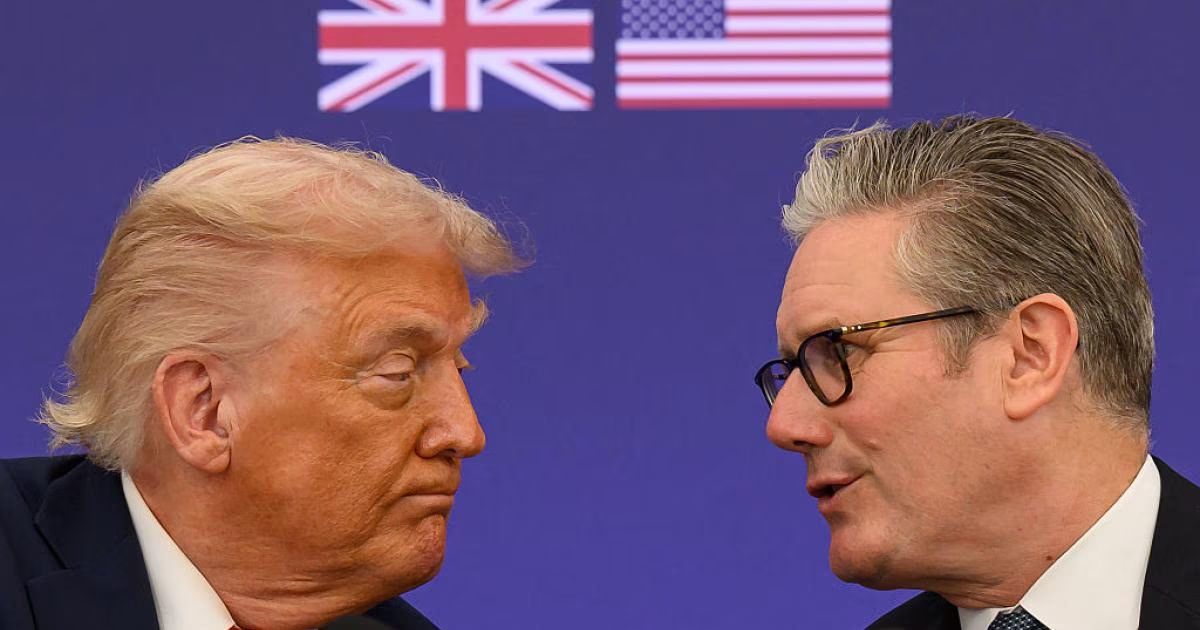
The historic relationship between the United States and the United Kingdom is facing its toughest test in decades, as Washington's war against Iran lacks the usual international cover. For the first time since the Vietnam War, London has chosen to distance itself from direct military involvement, angering US President Donald Trump, who has launched sharp and public criticism against his country's closest ally.
In striking remarks, Trump stated that British Prime Minister Keir Starmer is not like the historic leader Winston Churchill, indicating that today's Britain is no longer the country the world once knew. These statements reflect the extent of the rift between the White House and Downing Street, especially in the absence of the broad international alliances that characterized the wars in Iraq and Afghanistan.
For his part, Starmer justified his country's stance by emphasizing the need for a solid legal basis and a well-thought-out plan before embarking on any military intervention. The British Prime Minister affirmed that his country would not be drawn into a long-term conflict in the Middle East, recalling the 'Iraq phobia' that still casts a shadow over the political and public consciousness in Britain.
The crisis escalated with London's decision to prevent US forces from using British military bases in Cyprus to launch attacks against Iranian targets. This decision came after the Akrotiri base was targeted by a drone believed to be from Hezbollah, prompting Starmer to emphasize that British bases would not be a launching pad for offensive operations that would further inflame the region.
Despite this tension, the British government allowed the use of the 'Diego Garcia' base in the Indian Ocean and 'Fairford' in England for purposes Starmer described as 'specific defensive.' This step, according to official sources, aims to protect British lives and the joint defense of allies in the region without engaging in direct offensive operations.
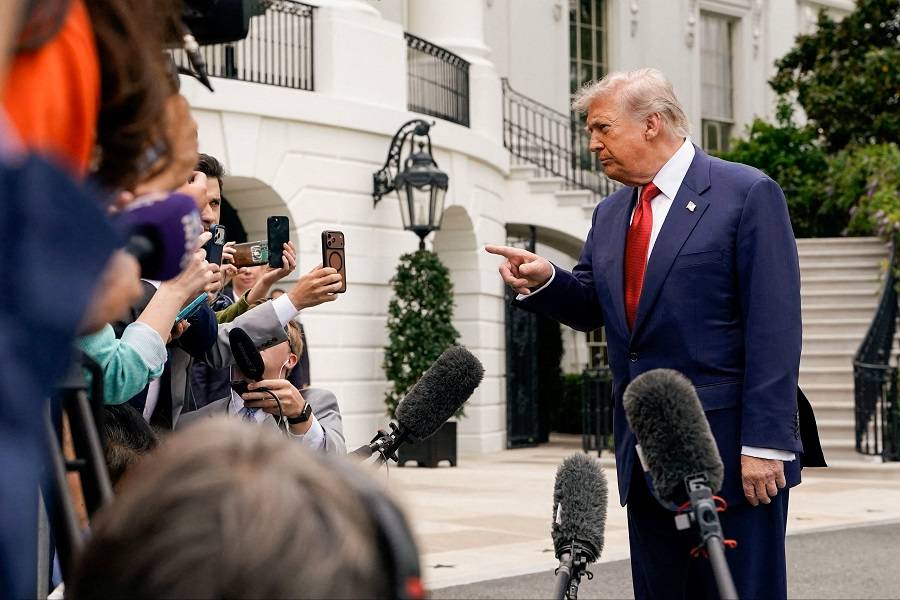
In a later development, President Trump rejected a British offer to send two aircraft carriers to the Middle East, considering the move to be too late and now worthless. Trump wrote on his 'Truth Social' platform in a sarcastic tone that Washington no longer needed British naval support, describing allies as having become a burden on American capabilities.
Reports indicate that the disagreement extends beyond the Iranian file to other strategic issues such as the future of NATO and the war in Ukraine. The issue of Greenland and Trump's concept of European security also emerge as additional points of friction that have eroded mutual trust between the two Western poles that historically formed the axis of the global order.
Domestically, opinion polls showed that the majority of Britons, up to 56%, support Starmer's decision to stay out of the armed conflict. This popular support gives the Prime Minister room to maneuver against American pressure, despite the potential decline in the 'special relationship' that has characterized the two countries since World War II.
Trump did not stop at criticizing the military stance but also attacked London's new economic policies, especially after Starmer's recent visit to Beijing. The US President considered British commercial rapprochement with China to be a significant danger, at a time when Washington is seeking to tighten the economic noose on its major Asian rival.
In response, Starmer countered Trump's previous criticisms regarding the role of British soldiers in Afghanistan, describing his statements as 'insulting and shocking.' Starmer recalled the British sacrifices, which included the deaths of hundreds of soldiers, affirming that the dignity of the British armed forces is not a subject for political bidding from any party.
Analysts believe that the era of historic pairings like 'Churchill-Roosevelt' or 'Blair-Bush' has effectively ended with the rise of the 'America First' movement. It appears that Britain has begun to seek strategic alternatives by strengthening European defense integration and reducing excessive reliance on the unstable American security umbrella.
Sources reported that German Chancellor Friedrich Merz, despite Trump's praise, maintained a cautious stance calling for a swift end to the war. This illustrates the US administration's failure to rally European consensus, even among powers Trump praises, leaving Washington in relative isolation in its latest war against Tehran.
The targeting of the Akrotiri base in Cyprus served as a wake-up call for London about the risks of involvement in the conflict, as Starmer confirmed that the attack occurred before the official British position was announced. This incident reinforced the British government's conviction that any ill-considered participation could make British interests direct targets in a war in which London sees no national interest.
In conclusion, it appears that the geopolitical map is undergoing a major reshaping, with London gradually moving away from Washington's orbit towards more independent choices. As the American-Israeli war on Iran continues, the question remains whether this fracture in the Anglo-American alliance is merely a passing storm or a radical and permanent shift in international politics.
Starmer is not Winston Churchill... The United Kingdom is no longer the country we know.

Share your opinion
Trump attacks Starmer: 'Historic Alliance' between Washington and London fractured over war on Iran