







Death has claimed the prominent Palestinian historian Walid Khalidi, who passed away at the age of nearly a century, leaving behind a vast intellectual legacy that led him to be described as the 'legitimate father' of contemporary Palestinian history. Khalidi was born in Jerusalem in 1925 to a distinguished scholarly family; his father, Ahmad Samih Khalidi, was a pillar of education in Mandatory Palestine and the dean of the famous Arab College.
The deceased received his higher education at the most prestigious international universities, earning his master's degree from Oxford University in 1951, and began his academic career as a lecturer at the Institute of Oriental Studies there. However, his national stances preceded his academic ambitions, as he resigned from his position at Oxford in 1956 in protest of British participation in the Tripartite Aggression against Egypt.
Khalidi is considered the true founder of the Palestinian history school that confronted the Zionist narrative with rigorous scientific tools and extreme professionalism. He published pioneering studies on the fall of the city of Haifa and the Zionist military 'Plan Dalet,' decades before the emergence of what became known as the 'New Historians' in Israel, who later confirmed the accuracy of his conclusions.
In 1963, Khalidi led efforts to establish the Institute for Palestine Studies in Beirut, making it the first specialized research center on Palestinian affairs worldwide. Under his supervision, the Institute successfully transformed into a global intellectual fortress, extending its activities to Washington and Paris, and issuing authoritative periodicals in Arabic, English, and French.
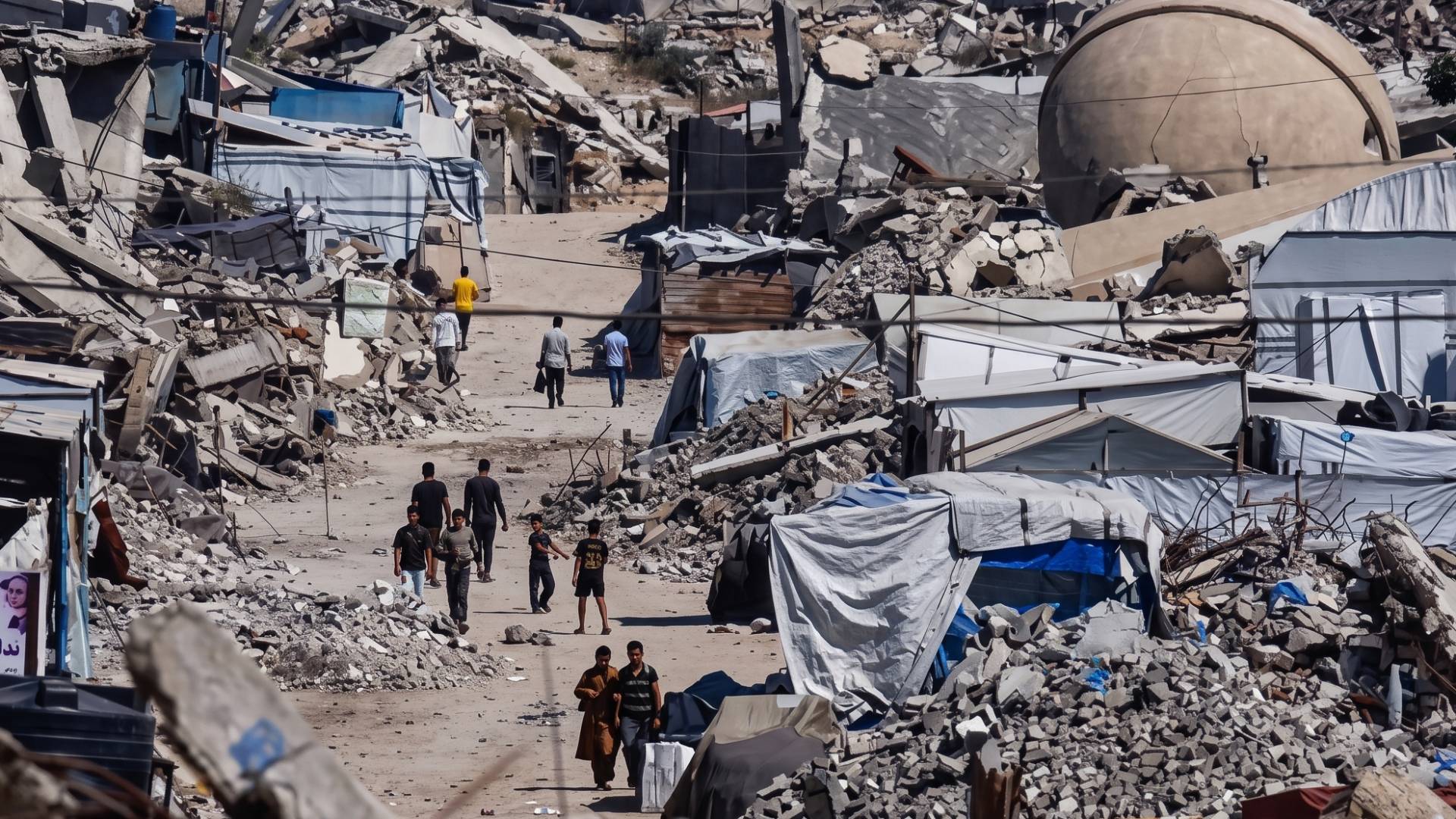
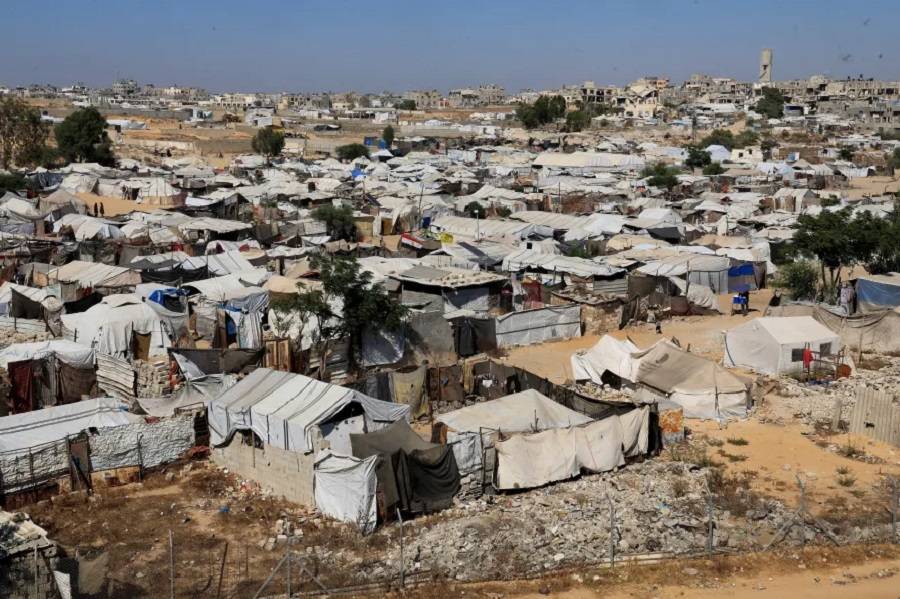
Khalidi did not limit himself to pure academic research but also worked to restore the presence of the Palestinian person and place in history through encyclopedic works such as 'Before Their Diaspora.' In his authoritative book 'All That Remains,' he documented the Palestinian villages destroyed by the occupation in 1948, immortalizing the names of their martyrs and the details of their stolen geography.
Khalidi believed that the conflict over Palestine was, at its core, a conflict over the entire Arab East, which was reflected in his writings on the Lebanese Civil War and the Gulf crisis. He believed that the absence of a 'moral compass' and a unified Arab center after the departure of Gamal Abdel Nasser led to the fragmentation of the region and the escalation of sectarian conflicts.
In his reading of the Arab reality, Khalidi warned against the erosion of the nation-state and the decline of secular Arab nationalism in favor of destructive ethnic and sectarian divisions. In his later proposals, he indicated that the failure to build strong federal or unitary institutions was one of the reasons for the collapse of major Arab projects in the twentieth century.
On the political front, Khalidi presented a strategic vision in the late 1980s calling for the establishment of a Palestinian state on the 1967 borders as the only possible solution for peace. Although the organization later adopted this vision, Khalidi remained aware of the complexities of reality that could lead to an open conflict with no immediate end in sight, given Israeli intransigence.
Khalidi's approach was characterized by combining Western research rigor with deep national belonging, which earned him wide credibility in international academic forums such as Harvard and Princeton. Through decades of teaching and research, he was able to shift the Palestinian narrative from the realm of emotion to the realm of documented historical facts that are beyond dispute.
Historians believe that Khalidi was not merely a conveyor of events but a maker of history by reshaping awareness of the Palestinian Nakba. He transformed '1948' from a mere memory of defeat into a comprehensive legal and historical file proving the systematic ethnic cleansing practiced by Zionist gangs against civilians.
The Institute for Palestine Studies, nurtured by Khalidi, represented a unique model of successful Arab institutionalism that withstood political upheavals and wars. The journal published by the Institute remained the primary reference for researchers worldwide, reflecting Khalidi's vision for institutionalizing Palestinian cultural and research work.
In his later years, Khalidi remained a keen observer of Arab transformations, expressing his concern about the rise of political Islam and the decline of reformist Arab thought. He believed that salvation for the Arab peoples and for Palestinians lay in restoring the Arab bond as the only effective alternative to confront the challenges of the era and the occupation.
Walid Khalidi left behind an entire generation of Palestinian historians who were educated by his books and methodology, even if they did not meet him personally. His works, such as 'The Pictorial History of the Palestinian People,' remain a living testament to the civilization of a people that the occupation tried to erase from the map and from human memory.
The passing of Walid Khalidi represents a tremendous loss for Arab thought, but his legacy will remain a beacon for all those seeking truth in the history of the Arab-Israeli conflict. Khalidi proved over a century that the pen and the document are weapons no less important than any other means of struggle in the battle for survival and freedom.
History is made by the historian; and Walid Khalidi became one of the great makers of the history of that transformative moment in the history of Palestinians and Arabs: the year 1948.



Share your opinion
The passing of Walid Khalidi.. The legitimate father of modern Palestinian history and the faithful guardian of memory