





Gaza today is no longer merely a news headline or a battlefield of military confrontation. It has become a harsh mirror exposing the magnitude of political paralysis, the absence of unified decision-making, and the confusion surrounding crisis management at the most dangerous moment in the modern history of our people. The devastation, starvation, and collapse of essential services endured by its population have exceeded all limits of tolerance and can no longer be addressed with a mindset of waiting or political ambiguity.
Within this exceptional reality, the formation of the Administrative Committee for Gaza emerged as an emergency response imposed by the conditions of war and aggression, and by the near-total breakdown of the ability of official institutions to operate on the ground. Ignoring this reality, or bypassing it through rhetorical political discourse, serves neither Gaza nor its people. Instead, it opens the door to a dangerous administrative vacuum one for which ordinary citizens alone bear the cost.
The most serious threat facing Gaza today is not only the machinery of war, but the vacuum itself: a vacuum of decision-making, a vacuum of administration, and a vacuum of political courage. In times of catastrophe, a vacuum is not a neutral position; it is a national danger that threatens social cohesion, deepens collapse, and turns people’s suffering into an arena for political rivalry and internal conflict.
From this standpoint, any organized framework that seeks to manage the minimum requirements of daily life during this critical phase deserves responsible support—not pre-emptive suspicion or political demonization. In moments of emergency, politics is not measured by the purity of slogans, but by its capacity to protect people and prevent comprehensive collapse.
Accordingly, I hereby affirm my clear and explicit personal support along with that of the Shawwa family, and many Palestinian families and clans for the Administrative Committee for Gaza and its members, as a temporary national framework imposed by necessity. Its purpose is to protect society, provide essential services, and preserve civil peace. It is neither a permanent political project nor a substitute for national legitimacy.
This support does not constitute an open-ended mandate, nor does it grant cover for any deviation from the committee’s service-oriented mission. Rather, it is conditional upon full transparency, strict adherence to a non-factional character, accountability to the public, and a clear declaration that the committee’s mandate is limited to the emergency phase and ends immediately once conditions allow for the full resumption of national institutions.
Conversely, abstract opposition that is not accompanied by practical and implementable alternatives cannot be considered a responsible national position. Leaving Gaza without effective administration under any political pretext amounts to indirect participation in deepening the suffering of the population and prolonging chaos.
The primary responsibility also lies with all Palestinian factions, whose duty first and foremost is to manage the crisis. What is required today is a courageous and unified political decision that provides temporary national cover for administering people’s affairs, establishes a serious path toward ending division, restores institutional unity, and places Gaza at the center of Palestinian national priorities.
Gaza does not need additional statements; it needs responsible administration and clear decisions. It does not need competition over authority, but rather a genuine national partnership worthy of the scale of sacrifice. Every delay in this regard imposes an additional burden on a people exhausted by war and subjected to costs beyond endurance.
In conclusion, we state this with absolute clarity; those who choose hesitation or obstruction at this decisive moment bear national and moral responsibility before their people and before history. Managing Gaza today is not a political option open to debate; it is an urgent national duty. A vacuum is not a position it is a crime against the people. Gaza, which has endured and resisted under aggression, deserves decisions commensurate with its sacrifices no less.
At this critical juncture, it is also our duty to extend sincere appreciation to all Arab, Islamic, and international states that have contributed to reaching this decisive moment in Palestinian history.

OPINIONS
Thu 15 Jan 2026 10:25 am - Jerusalem Time
The Decisive Moment: Between Administrative Responsibility and the Danger of a Vacuum
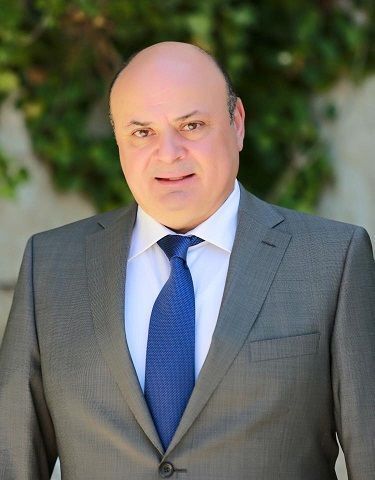
Azzam Abdulkarim Rashdi Shawwa
Opinion Writer
Share your opinion
The Decisive Moment: Between Administrative Responsibility and the Danger of a Vacuum