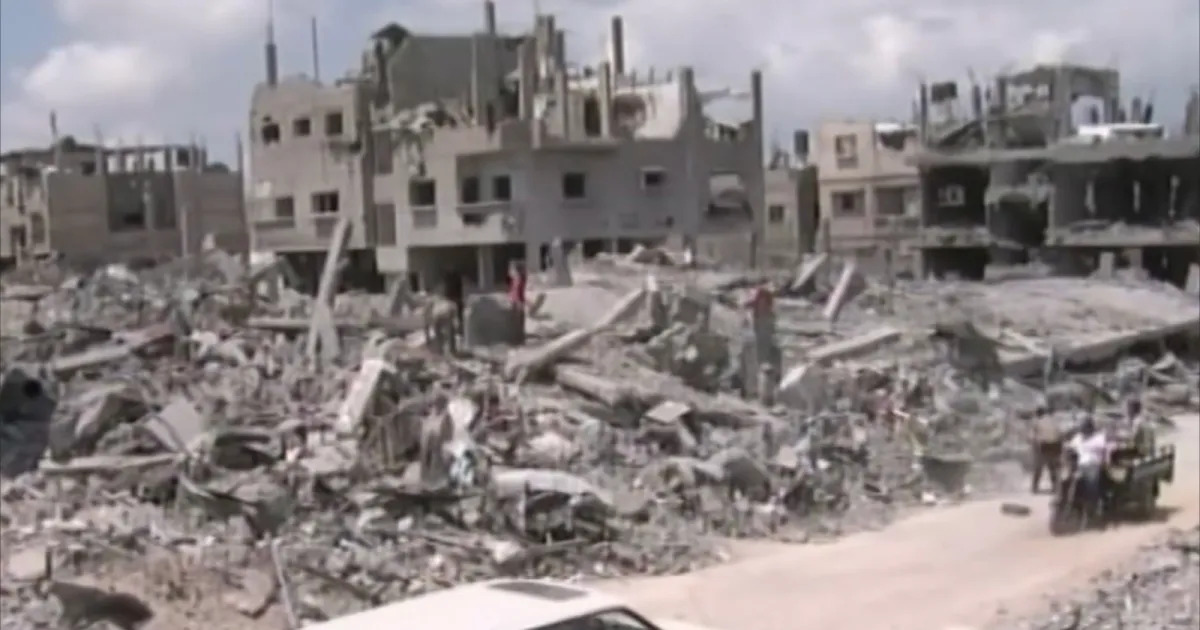







In a report published by the Israeli website "Regional Thinking Forum," writer Eliezer Gluck compared the two plans prepared by international entities for the reconstruction and management of the Gaza Strip in the coming years.
The writer mentioned that the first plan appeared in the form of a report in The New York Times in May 2024, where the newspaper revealed a meeting that brought together a group of businessmen and representatives of international institutions from the Middle East, Europe, and the United States in December 2023, aimed at envisioning the future of Gaza.
Gluck clarified that the details of that plan were not disclosed in The New York Times report, but in May 2025, Israeli media reported that the government of Israeli Prime Minister Benjamin Netanyahu - wanted by the International Criminal Court - was considering it as a potential option for Gaza's future.
As for the second plan, it emerged in early September 2025 in the form of a presentation in English, which is a revised version of the first plan, according to the writer.
Gluck quoted a report on the Hebrew website Ynet, stating that the administration of U.S. President Donald Trump is currently studying this plan, while the previous plan had been presented to former President Joe Biden.
The writer questions in this context: What distinguishes the current plan from its predecessor? Why was it published now? What are its goals?
The first plan was the initial document, according to the writer, titled "From Crisis to Prosperity - A Plan to Transform the Gaza Strip from a Tool in Iran's Hands to a Hub of Moderation," noting that the declared goal was to place Gaza within the Middle East project based on the Abraham Accords, making it part of the overall battle against Iranian influence in the region.
The writer noted that the document focused on Gaza's role in the regional and geopolitical context, considering that the strip obstructs the "regional moderation project" and poses a threat to the U.S. vision for the global supply chain from India through the Middle East to Europe.
According to the writer, the document presented three phases for this transformation: the immediate phase (12 months): targeting the "cleansing" of the strip from the Islamic Resistance Movement (Hamas), and establishing "safe zones" under Israeli supervision, with Arab countries financing humanitarian aid and overseeing the local Palestinian authority in these areas.
The intermediate phase (5-10 years): includes the establishment of a multilateral body to oversee the reconstruction of Gaza, applying a "Marshall Plan" model for disarmament and social change, under Israeli protection.
The long-term phase: Israel becomes the supreme security authority in the strip, while local authority transitions to Palestinian administration after proving the ability to disarm, with subsequent joining of the Abraham Accords.
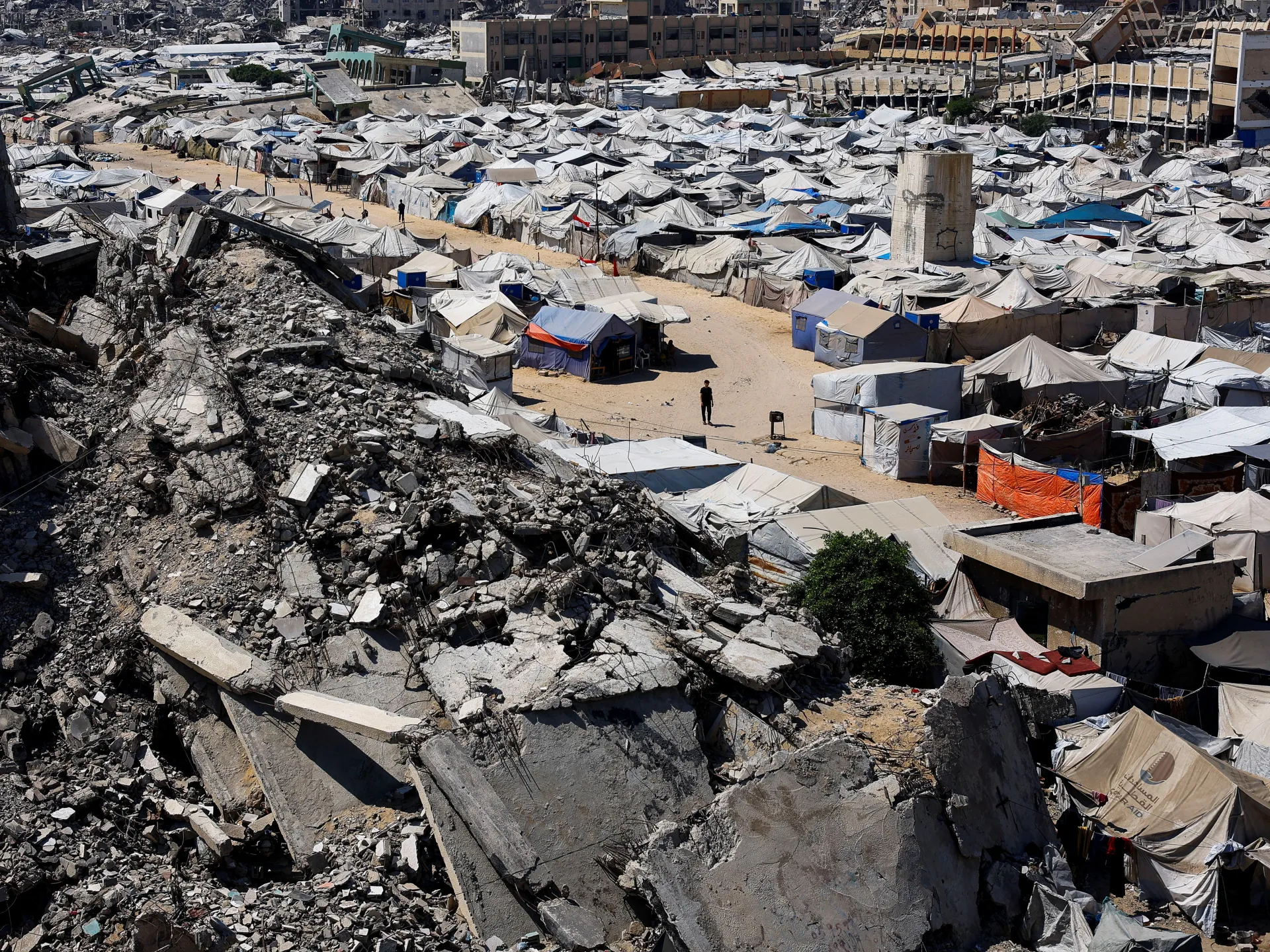
The writer pointed out that the plan exploits the destruction in Gaza as an opportunity to rebuild the strip, replacing refugee camps with "modern cities," achieving economic and political gains that could benefit Israel, Arab countries, and the United States.
The document also highlighted that the participation of Arab countries provides a model for potential military intervention in other areas such as Yemen, Syria, and Lebanon under the pretext of countering Iranian influence.
In the context of the first plan, the writer sees that the plan aims more broadly to build a new regional space that transcends the current conflict between Iran on one side and the United States and Gulf countries on the other, promising the people of Gaza an ideal vision of sovereignty and economic prosperity.
However, the document is merely - according to the writer - a plan that involves a degree of exaggeration and a tool used by the Israeli regime to justify its actions, as revealed by the history of its publication.
Reports related to the publication of the plan indicated that it was presented to the Israeli government in December 2023, but it was not published until late April 2024, a full year later.
It can be assumed - according to the writer - that the plan was published on behalf of the Israeli government or entities close to it, and that its context is the Israeli escalation against Iran.
The writer confirms that this formulation was particularly aligned with the Biden administration's vision, which sought, unlike the seemingly isolationist Trump administration, to maintain and enhance American hegemony in the world.
The second document: a purely economic pathway Gluck reported that the second document, published in September 2025, was titled the big fund "Reconstruction of Gaza, Accelerating Economic Growth and Transformation," and focused more on economic aspects, including financing models, projects to be implemented, and public-private partnership mechanisms to finance reconstruction.
The writer noted that the document emphasized that Gaza's economic value has dropped to zero since


Share your opinion
Israeli site: Gaza reconstruction plans are not feasible