PALESTINE

Fri 08 May 2026 5:50 pm - Jerusalem Time

On their International Day.. Paramedics under the guillotine of fire and protection badges lose their immunity

On May 8, 2026, the world celebrates the International Red Cross and Red Crescent Day, an occasion commemorating the founder of the international movement, Henry Dunant. This anniversary comes at a time when humanitarian work faces unprecedented challenges due to escalating armed conflicts and natural disasters around the world.

This year, the international movement chose the slogan 'United in Humanity,' in an attempt to strengthen the resilience of volunteers and field workers who represent an integral part of the fabric of their affected communities. The slogan aims to highlight the vital role these individuals play in transforming feelings of human empathy into tangible support that preserves the dignity of victims.

Despite the slogans raised, the reality on the ground is brutally harsh, as the paramedic is no longer just a neutral relief element who arrives after the area is secured, but has often become a direct target of fire. In raging conflict zones, first responders find themselves facing the risk of death while trying to save others.

Humanitarian work is essentially based on the principle of neutrality and providing assistance based on pure medical need, away from any political or ethnic considerations. However, this principle faces severe tests in the field, where military operations intertwine with the humanitarian routes of ambulances.

Field sources reported that paramedics are forced to move in very narrow margins between adhering to professional duty and the imminent dangers threatening their lives. The environments in which they work do not always recognize the rules of international humanitarian law, making every rescue mission an adventure with unsafe consequences.

Data indicates that the Red Cross and Red Crescent emblems, which are supposed to grant international immunity, no longer provide adequate protection in modern warfare. The dividing lines between combat fronts and densely populated civilian areas have blurred, making medical and service facilities vulnerable to direct targeting.

In recent reports issued in May 2026, the international movement warned that humanitarian work is turning into something akin to a 'death sentence' for those who carry it out. Statistics revealed that 13 volunteers and staff from national societies were killed during the first four months of this year alone while performing their duties.

In the Palestinian context, Red Crescent teams were subjected to direct and systematic shelling by Israeli occupation forces in the Gaza Strip, leading to many ambulances being put out of service. Sources also recorded the martyrdom of a paramedic in southern Lebanon due to airstrikes, reflecting the widening scope of targeting medical personnel.

Paramedics work in harsh logistical conditions characterized by communication outages, destruction of vital roads, and a severe shortage of fuel supplies needed to operate vehicles. These pressures force them to make fateful decisions in a matter of seconds, such as prioritizing the wounded and choosing the least dangerous routes to reach hospitals.

Targeting ambulance crews is not just an assault on individuals; it is a devastating blow to local communities that rely entirely on these services for survival. Disabling a single ambulance can mean losing the chance of survival for dozens of injured people at critical moments in the conflict.

Despite their field resilience, paramedics remain human beings affected by the harsh scenes they witness daily, which necessitates providing sustainable psychological and professional support for these heroes. The required protection is not only material but also includes recognizing the sanctity of their role and providing the necessary resources for the continuation of their humanitarian mission.

In conclusion, the core message on this International Day remains that neutrality is not a passive stance or an escape from reality, but rather the only remaining tool to reach humanity. Protecting paramedics is, in fact, protecting the right to life and a guarantee of maintaining a glimmer of hope in a world torn apart by wars.

Humanitarian work should not turn into a death sentence, and international protection for paramedics has become a real test of global conscience.

ANALYSIS

Fri 08 May 2026 5:50 pm - Jerusalem Time

The Zionist Project in the Balance of History: Is Israel the Root of Crises in the Middle East?

Since the end of World War II, the West Asian region has not known peace from the burden of armed conflicts in which Israel has been a constant party. Since the Nakba of 1948, wars have followed, shaping a tragic reality, where the common denominator in most of these confrontations is direct or indirect Israeli involvement to strengthen the occupation's influence in the region.

In 1956, this aggression manifested in the Tripartite Aggression on Egypt, where Israel allied with Britain and France in response to the nationalization of the Suez Canal. Although international intervention halted the campaign, Israeli intentions to change Arab regimes and weaken rising regional powers had revealed their early face.

1967 marked a strategic turning point when Israel invaded the remaining Palestinian territories and occupied vast areas of Egypt, Jordan, and Syria. This war, which lasted only a few days, doubled the area of occupation and established a new colonial reality from which the region still suffers today.

Military ambitions did not stop there. In 1968, Israel launched an attack on Jordan in the Battle of Karameh with the aim of eliminating Palestinian resistance camps. Despite the military failure of the attack, it reflected Israeli determination to pursue the resisting Palestinian presence even outside the borders of the occupied land.

During the 1970s and 1980s, the occupation unleashed its wrath on Lebanon, culminating in the invasion of the capital Beirut in 1982. This invasion led to the establishment of a security belt in the south and the creation of a client authority under the name 'South Lebanon Army,' before the Lebanese resistance succeeded in liberating the land and repelling the occupation and its agents.

Historical readings indicate that Israel was the biggest beneficiary of the first Gulf War between Iraq and Iran in the 1980s. The war, which drained the resources of two powerful countries, contributed to neutralizing two potential threats to the Zionist entity and ignited sectarian tensions that continue to tear apart the fabric of the region.

In the 1990s, with Iraq's invasion of Kuwait, a new chapter of interventions serving Israeli interests began to emerge. Decision-making circles in Tel Aviv considered that Iraq, despite its exhaustion, still posed an existential threat to their project, which led them to continuous incitement against Saddam Hussein's regime.

Israeli incitement reached its peak by pushing the neoconservative administration in the United States to invade Iraq in 2003. That war was based on flimsy pretexts about weapons of mass destruction, but the real goal was to dismantle Iraqi power and ensure Israel's qualitative superiority in the region.

In parallel with these regional wars, the systematic Israeli war against the Palestinian people continued through policies of displacement and arrest. Since the Nakba, land confiscation and settlement construction have not stopped, in an attempt to erase Palestinian identity and replace the original inhabitants with settlers.

The Iranian Revolution of 1979 represents the most prominent challenge to the Zionist project, as Tehran transformed from a strategic ally of the Shah to a key supporter of the resistance. This shift changed the balance of power, especially with Iran's support for resistance movements in Lebanon and Palestine, which disrupted Israeli and Western calculations.

After neutralizing most Arab countries through peace agreements or secret understandings, Iran remained the only steadfast regional adversary. With the failure of internal sabotage attempts, Israel began pushing for a direct military confrontation, exploiting the presence of American administrations that fully align with Zionist demands.

Sources reported that the Israeli Mossad played a pivotal role in convincing the White House of the feasibility of an attack on Iran, claiming that targeting the leadership would lead to a popular revolution. However, the reality after two months of the outbreak of the confrontation shows a complex global crisis with no end in sight.

Today, questions are increasing in Western societies about the nature of Zionism and the roles governments play in supporting Israel. Many have come to realize that the 'Palestinian problem' is merely a symptom of a larger disease, which is the settler-colonial project that seeks absolute hegemony.

Israeli vision does not stop at the borders of Palestine but extends to include the ambitions of 'Greater Israel' from the Nile to the Euphrates. The extremist statements of some Israeli politicians reveal expansionist intentions that may target countries such as Turkey and Pakistan, making Israel the central problem threatening global peace.

The real problem lies in the Zionist idea, which has been translated into a state with a racist colonial project whose goal is to dominate the entire region.

ISRAELI AFFAIRS

Fri 08 May 2026 5:50 pm - Jerusalem Time

Details of the Mossad and Washington's Secret Plan to Overthrow the Iranian Regime and the Reasons for its Sudden Failure

Hebrew press reports revealed exciting details about a secret joint plan between the Israeli Mossad and the US Central Intelligence Agency (CIA), which aimed to undermine and overthrow the Iranian regime. Sources indicated that these moves came after the military escalation that began on February 28, where a comprehensive strategy for direct field intervention was developed.

According to "Israel Today" newspaper, the plan primarily relied on mobilizing thousands of Kurdish fighters from Iraqi territory towards the Iranian interior. Analysts described this operation as overly ambitious, as it sought to change the political map in the region through armed force and ethnic alliances.

The strategic goal of this move was to control the Kurdish areas within Iran, inhabited by about eight million people. The plan was to arm these groups and push them to advance eastward, coinciding with movements by armed militias belonging to other minorities from various border areas.

Sources indicated that the operations were designed to tighten the noose on the capital Tehran through a coordinated infiltration of opposing ethnic and political minorities. Reports considered that this operation aimed to create a state of comprehensive chaos that would allow for the rapid collapse of the Iranian regime's security structures.

In the context of comparison with previous intelligence operations, sources noted that the "Pager" operation, which was carried out previously, seemed fictional before it happened, which made the planners confident in the success of the invasion of Iran. Reports confirmed that the US Central Intelligence Agency was not just an observer, but a full partner in all stages of logistical and field planning.

The plan also included uniting all Kurdish parties under one political and military platform aimed exclusively at overthrowing the regime in Tehran. In parallel with these preparations, the Israeli army had already begun carrying out airstrikes targeting bases belonging to the Iranian Revolutionary Guard in border areas to facilitate the crossing operation.

Despite the precision with which the plan was described, it faced unexpected political obstacles at the last minute, leading to its freezing. While international news reports were broadcasting news of the start of the attack, high-level diplomatic contacts took place between Ankara and Washington to change the course of events.

Sources reported that Turkish President Recep Tayyip Erdogan made an angry phone call to US President Donald Trump, warning of the repercussions of this attack. Erdogan convinced the American side of the necessity of abandoning the idea of supporting the Kurdish attack, due to its catastrophic effects on regional stability and Turkish national security.

Turkish pressure was not the only factor, as Doha entered the crisis through a phone call from the Emir of Qatar to the US President. Qatari-American talks focused on the need to stop targeting Iranian energy facilities, which contributed to protecting the Revolutionary Guard's economy from imminent total destruction.

These diplomatic interventions directly led to a slowdown in the pace of planned military operations and stopped the Kurdish advance that was supposed to start from the Iraqi border. According to analysts, these calls were crucial in saving the Iranian regime from a simultaneous internal and external military confrontation.

Despite the failure to implement the plan, Hebrew sources question the possibility of its revival in the near future. Senior military commanders in Tel Aviv indicate that coordination with Washington remains at its highest levels and has not been affected by the sudden retreat from carrying out the operation.

Officials denied any real tension in relations between the United States and Israel as a result of this setback, stressing that the strategic alliance is stronger than it was. However, experts acknowledge that Kurdish forces and allied militias will need additional time to reorganize their ranks and prepare for a potential round of confrontation.

Questions remain about the ability of regional parties to prevent such plans in the future amid continued intelligence incitement. Reports indicate that the current failure does not necessarily mean that the Mossad and CIA have abandoned their ultimate goal of changing the Iranian regime, but may be merely a tactical postponement.

In conclusion, this incident highlights the complexity of managing regional conflicts, where intelligence interests intertwine with the political calculations of major powers. The Kurdish front and the Iranian-Iraqi border remain a potential flashpoint that could erupt at any moment if the option of direct military escalation is decided upon again.

The plan was ambitious and excessive, involving a Kurdish invasion from Iraq into Iran with thousands of fighters to reach Tehran.

ISRAELI AFFAIRS

Fri 08 May 2026 5:50 pm - Jerusalem Time

Trump Imposes De-escalation Rhythm: Behind the Scenes of US Pressure to Prevent Israel from Obstructing the End of the War

Hebrew press reports have revealed decisive directions within the US administration, led by Donald Trump, to end the state of war in the region, with an emphasis that Washington will not allow the Israeli government to interfere and thwart this diplomatic path. This vision is based on the noticeable acceleration in US moves, which have shifted from threatening to open the Strait of Hormuz by force to freezing military operations and returning to the negotiating table with Tehran.

Sources indicate that the American desire to contain the escalation is driven by complex economic calculations and pressures on global oil markets, in addition to strategic considerations that extend beyond the Middle East. Observers believe that the White House now views the continuation of the conflict without a prospect of decisive victory as a political and symbolic burden, especially amid escalating competition with other international powers such as China.

Within this trend, Trump seeks to formulate an initial agreement that ensures the resumption of safe navigation in the Arabian Gulf, paving the way for deeper negotiations on the Iranian nuclear file. This move aims to draft a common, concise statement of principles, followed by a month of intensive discussions to reach detailed understandings that end the current state of tension.

Analysts point out that the absence of Yemeni factions from the recent escalation scene was not a coincidence, but rather a result of broader regional understandings aimed at neutralizing parties to the conflict and preventing the expansion of the confrontation. This relative calm on the support fronts enhances the chances of success for the American endeavor to isolate regional issues and focus on a direct agreement with Tehran.

Despite this optimism, doubts arise about the nature of the potential agreement, as Israeli circles warn against overestimating expectations given the long history of Iranian negotiations characterized by procrastination. The essence of the current understandings revolves around the equation of easing economic sanctions in exchange for imposing strict restrictions on uranium enrichment operations and international monitoring mechanisms.

In a related context, the lack of coordination with Israel emerged as one of the most important features of the current phase, with military analyst Amos Harel pointing to Trump's disregard for Netanyahu in his recent statements. Despite the Israeli Prime Minister's attempts to suggest full coordination with the White House, field and political realities indicate a growing gap between the two sides.

Reports reveal that the US President's team categorically rejected a proposal submitted by Netanyahu during his last visit to Washington in February, which aimed to accelerate the overthrow of the Iranian regime. It appears that the idea of "regime change" promoted by the Israeli government has fallen off the American agenda in favor of de-escalation and containing Iranian influence through diplomatic channels.

Relations between Trump and Netanyahu are entering a sensitive phase, with Washington setting a clear ceiling for Israeli military actions in Lebanon to prevent a slide into a comprehensive regional war. Sources consider that the recent Israeli attacks on the southern Beirut suburb were merely calculated pressure messages, and do not reflect a strategic shift in the absence of an American green light for escalation.

Netanyahu, according to analyses, possesses tactical cards to destabilize, but lacks full strategic decision-making freedom given the White House's insistence on controlling the region's rhythm. This discrepancy is evident in statements from the Israeli army that hint at continued military operations despite implicit American directives for a ceasefire.

On the Gaza Strip front, observers believe that the Palestinian issue has receded in American priorities in favor of focusing on the Iranian file, creating a state of field and political stagnation. Reports claim that the Hamas movement is exploiting this international preoccupation to strengthen its field control and reorganize its ranks, despite the widespread destruction of its military capabilities during months of war.

Reconstruction plans in Gaza and the formation of an international force to manage the Strip face significant security and financial complexities, amid donor countries' hesitation and the lack of consensus on a political formula for the future. This ambiguity reinforces fears of a potential renewed explosion of the situation, especially with the approaching Israeli elections scheduled for next October, which could push towards a new round of escalation.

Sources confirm that Hamas still maintains a solid organizational capacity and field control, making any talk of its complete elimination an elusive matter in the foreseeable future. This reality poses a major challenge to the Israeli strategy that promised "complete victory," which now appears to be questioned even within security circles in Tel Aviv.

The increasing tension between Washington and Tel Aviv reflects a conflict of vital interests, as Trump sees ending foreign wars as a means to enhance his domestic standing and fulfill his election promises. In contrast, Netanyahu finds himself trapped between the pressures of the ruling right-wing coalition and the constraints of the US administration, which refuses to be drawn into military adventures with uncertain outcomes.

In conclusion, the region appears to be heading towards a phase of "forced calm" imposed by the US administration, awaiting the outcome of negotiations with Iran in the coming weeks. The question remains open as to Netanyahu's ability to adapt to these new realities, or whether he will resort to a sudden escalation to shuffle the cards and re-impose his agenda on the White House.

Trump seeks to cut his losses and end the war with Iran, at a time when Israel appears unable to stop him.

ARAB AND WORLD

Fri 08 May 2026 5:50 pm - Jerusalem Time

Martyrs and wounded in intense Israeli raids on southern Lebanon and a missile response from Hezbollah

Southern Lebanon witnessed a dangerous field escalation today, Friday, as Israeli airstrikes resulted in a number of martyrs and wounded in various towns. The Lebanese Ministry of Health announced the martyrdom of four citizens, including two women, as a result of targeting the town of Toura in the Tyre district, in an initial toll that is likely to rise as rescue operations continue.

Medical sources explained that the raid on Toura also left eight wounded, some of whose conditions were described as moderate, while civil defense teams and the National News Agency continue to monitor rubble removal operations. Rescue teams are making strenuous efforts to search for a missing girl believed to still be under the rubble of a house destroyed by the intense shelling.

In a related context, an Israeli drone targeted a motorcycle in the town of Houmine Al-Tahta, resulting in additional casualties and destruction at the site. These attacks come at a time when the occupation army has expanded its targeting to include populated areas deep in southern Lebanon.

For its part, the Israeli occupation army issued urgent warnings to the residents of seven southern villages and towns to evacuate immediately, which caused a state of displacement and anticipation among civilians. This coincided with the martyrdom of a Lebanese civil defense member after a raid targeted the area between the towns of Rashaya and Kfar Shuba.

On the opposing field, media sources reported the launch of a volley of rockets from Lebanese territory towards settlements and towns in northern Israel. Reports confirmed that air defense systems intercepted at least one out of three rockets that fell in open areas, which led to the activation of sirens.

Hezbollah announced in successive statements that it had carried out a series of qualitative military operations against gatherings and vehicles of the occupation army along the border. These operations included targeting a 'Merkava' tank with a guided missile on the outskirts of the town of Deir Seryan, where the party confirmed a direct hit that led to the destruction of parts of it.

Hezbollah also used suicide drones to target an Israeli military bulldozer in the town of Al-Bayada, in addition to shelling soldier gatherings with artillery shells. The party indicated that these operations come as a response to the continuous aggressions targeting southern villages and safe homes.

The Israeli army, for its part, admitted that two soldiers were injured during the field confrontations, indicating that the condition of one of them was serious as a result of a drone explosion in one of the border towns. The injured were transferred to hospitals for treatment, amid continued high security tension on the northern front.

Israeli warplanes launched a series of violent raids targeting the town of Mansouri, south of Tyre, followed by successive strikes on the town of Yahmar Al-Shaqif. The aerial bombardment was accompanied by intense artillery shelling that targeted the riverbed towards the town of Taybeh, causing extensive material damage to properties and agricultural lands.

In the Marjayoun district, Lebanese Red Cross teams were able to find the bodies of two young men who had been missing yesterday after raids targeted the town of Blat. Sources confirmed that the two young men were martyred as a result of direct shelling, thus raising the number of victims of the ongoing aggression during the past twenty-four hours.

Field reports indicate that the raids moved from the Nabatieh district to focus on the Tyre district and its surroundings, with the targeting of the towns of Jmaijmeh, Thaliqa, and Deir Antar. These Israeli military movements reflect an intention to expand the scope of operations despite talks of existing truce understandings, which places the region on the brink of a volcano.

The situation in southern Lebanon remains open to all possibilities, with a cautious calm punctuated by the sounds of explosions and intense overflights. The coming hours will determine the course of the field escalation amid the insistence of the parties to establish mutual deterrence equations on both sides of the border.

The Israeli enemy's raid on the town of Toura, Tyre district, resulted in an initial toll of 4 martyrs, including two women, and 8 wounded.

PALESTINE

Fri 08 May 2026 5:49 pm - Jerusalem Time

Displaced Gazans face gas shortage by burning plastic and cloth amid health and environmental risks

The humanitarian suffering in the Gaza Strip is escalating with the ongoing severe cooking gas crisis, as the shortage of aid entry has pushed thousands of displaced families towards primitive and dangerous options. Sources reported that the Israeli occupation continues to violate the provisions of the humanitarian protocol accompanying the ceasefire agreement, forcing residents to burn cloth, plastic, and waste inside camps to secure their daily meals.

In the Al-Zaytoun neighborhood, east of Gaza City, field sources confirmed that the occupation authorities are pursuing a policy of 'trickling' fuel and gas, ignoring the urgent need of millions of displaced people. This deliberate restriction has turned the food preparation process into an arduous journey fraught with health and environmental risks, in the absence of safe energy alternatives.

Residents tried to resort to using firewood as an alternative to cooking gas, but its prices witnessed a crazy increase, making it out of reach for the majority of families. The price of one kilogram of firewood exceeded $3, a huge amount for families who have completely lost their sources of income since the ongoing war on the Strip began.

The search for wood has turned into an adventure that could cost citizens their lives, as some are forced to head towards the eastern border areas near the Israeli army barracks. These attempts take place amid intense drone flights and direct threats of gunfire, making the acquisition of cooking fuel a price that may be paid with the blood of the displaced.

Field reports documented harsh scenes of families lighting fires using nylon and carpet pieces to prepare food, despite the thick smoke and toxic fumes emitted. These fumes cause severe health damage, especially to the elderly and children who already suffer from tragic living conditions inside dilapidated tents.

The displaced 'Abu Bilal' recounts part of this tragedy, noting that his family has not received its share of cooking gas for nearly two continuous months. He explained that he is forced to search daily for plastic and nylon remnants, confirming that the cost of preparing one meal using firewood can reach $13, which exceeds his non-existent financial capacity.

For her part, one of the displaced women mentioned that she spends long hours in front of fires burning plastic materials to provide food for her large family. She pointed out that families have started to differentiate between types of burnt waste based on the density of their smoke and its effect on the respiratory system, in a desperate attempt to reduce health damage to their children.

Medical sources warned of the catastrophic repercussions of inhaling these toxic fumes emitted from burning chemicals and cloth within population centers. This warning comes at a time when the health system is suffering from a near-complete collapse and a severe shortage of necessary medicines to treat chronic respiratory diseases that have begun to spread.

Despite more than six months passing since the announcement of the ceasefire, the reality on the ground indicates the continuation of the strict blockade and intermittent shelling. Israel continues to prevent the entry of sufficient quantities of basic materials and prefabricated homes, exacerbating the state of livelihood extermination that the residents of the Gaza Strip face daily.

We go around looking for a piece of wood or some nylon to get by, and preparing one meal costs us amounts beyond our means.

ISRAELI AFFAIRS

Fri 08 May 2026 5:49 pm - Jerusalem Time

Israel at its Centenary: Hebrew Investigation Warns of 'Theocracy' and Imminent Demographic Collapse

An extensive journalistic investigation broadcast by Hebrew media sources revealed grim scenarios awaiting Israel as it approaches its centenary, with estimates indicating fundamental shifts that could push the state to the brink of a 'theocracy'. The investigation predicts that the secular current will decline to become a minority, in contrast to a significant demographic rise of the Haredi community and Palestinian Arabs within the Green Line.

These predictions come at a time when fears are escalating within Israeli circles about what is known as the 'curse of the eighth decade', based on historical experiences of previous Jewish kingdoms that did not exceed this time period. Experts link these historical anxieties to the current political reality, which is witnessing sharp and unprecedented polarization threatening the internal cohesion of society.

The investigation, which came in two parts under the title 'When Israel Turns One Hundred', warned of an existential crisis that could hit the science and technology sectors if the emigration of elites continues. Analysts believe that the departure of tens of thousands of specialists due to the high cost of living and continuous security tensions will inevitably lead to the collapse of the economic pillars on which the state is built.

On the social front, the investigation observed the penetration of political division into Israeli families, where disagreements between the right and the left are now ravaging daily family relationships. Sources stated that some families have reached the stage of separation in following news or even in eating meals, as a result of the tension caused by the 'judicial coup' plan and the repercussions of the ongoing war.

In the city of 'Rehovot', the story of the Arieli-Melamed family stands out as a stark example of this fragmentation, where the right-wing supporting husband blames the protests for the dismantling of the army, while the left-wing wife believes that the current government is leading the country to the abyss. This division is no longer just a political debate, but has turned into a feeling of alienation that drives many to consider permanent emigration.

The education file represents one of the most serious challenges facing Israel's future, as the percentage of Haredi students has risen to more than a quarter of the total student population. The problem lies in the fact that most of these students do not study core subjects such as mathematics and science, and do not participate in the workforce or military service, making them an increasing economic burden on the state.

Professor Dan Ben-David, head of the 'Shoresh' Research Institute, warned that half of Israel's children are currently receiving an education similar to third-world countries. Ben-David stressed that this generation will not be able in the future to manage a developed economy, a technological army, or an efficient health system, which portends a decline in Israel's international standing.

Official data indicates a worrying increase in reverse migration, with more than 82,000 citizens leaving the country in 2024 alone. Most of these migrations are directed towards nearby countries such as Greece and Cyprus, in search of a more stable and less costly life, and escaping the 'widespread aggression and racism' in Israeli society.

In 2025, estimates indicate that the difference between those leaving and new arrivals will reach about 57,000 people in favor of those leaving. This demographic bleeding primarily affects the middle and productive class, which is the group that bears the largest tax burden and drives the vital economic engines in the country.

For his part, prominent Israeli historian Benny Morris reiterated his pessimistic predictions about the future of the Jewish state, noting that the demographic balance clearly favors Arabs. Morris believes that controlling an occupied people without rights cannot continue in the 21st century, and that the inevitable end is a state with an Arab majority.

Morris believes that Israel will witness its 'sunset' as a Jewish state to become a Middle Eastern state where the Jewish minority dissolves amidst a 'Palestinian sea'. He adds that Palestinians possess a long-term historical vision, and they realize that the numerical Arab superiority surrounding Israel will ultimately lead to their historical victory.

The investigation also highlights the decline in the quality of teachers and the low level of applicants for the teaching profession, which deepens social gaps between different groups. This educational deterioration coincides with the rise of religious forces seeking to impose their agenda on the public sphere, increasing the feeling among secularists that they are strangers in their own state.

Observers believe that the policies pursued by Netanyahu's and Ben-Gvir's far-right government have accelerated these disintegrative processes. The continuous wars and clashes with the judicial system have not only led to international isolation, but also to undermining confidence in the social contract upon which Israel was founded in 1948.

In conclusion, the investigation paints a picture of a state torn between two identities; one secular liberal that is fading and emigrating, and another religiously zealous that is growing and dominating. As Israel approaches its centenary, it appears that internal challenges and changing demographics pose a greater threat than the external military threats it faced in its early decades.

Israel will be embroiled in a real existential crisis if tens of thousands of secular technology workers despair and leave the country.

PALESTINE

Fri 08 May 2026 5:49 pm - Jerusalem Time

Cracks in the Arab System: The War on Iran Redraws Regional Alliances

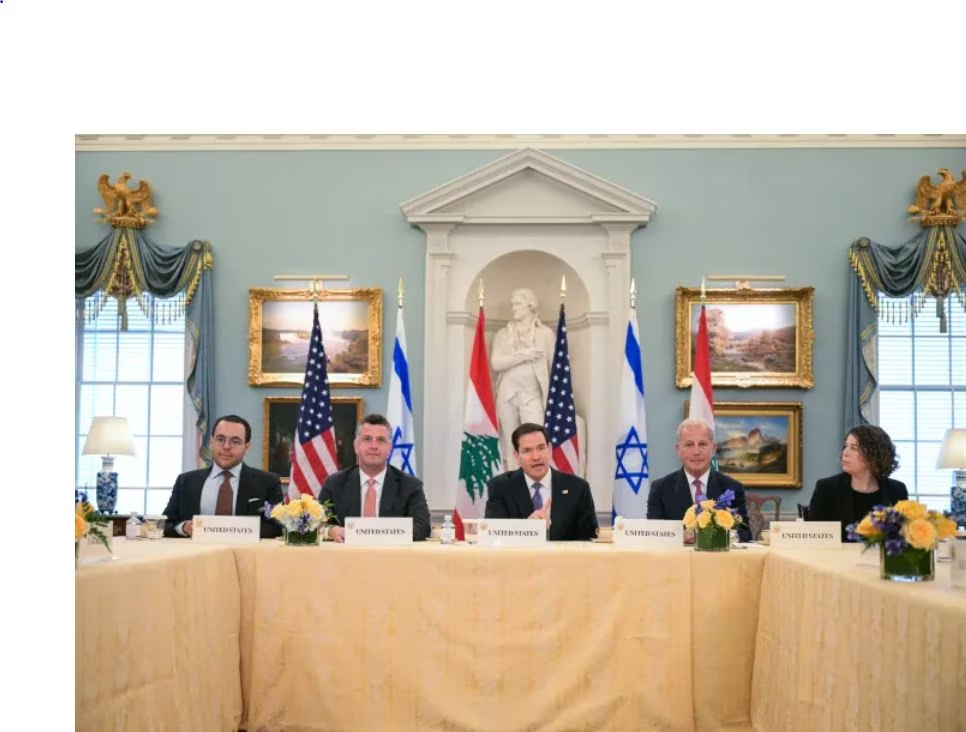
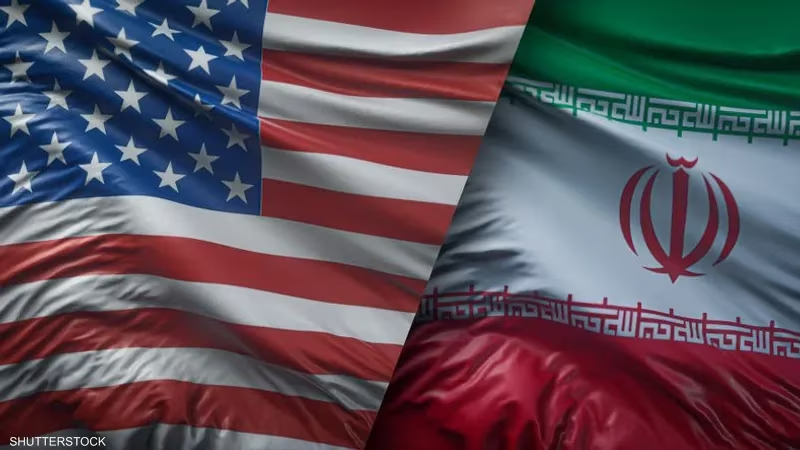
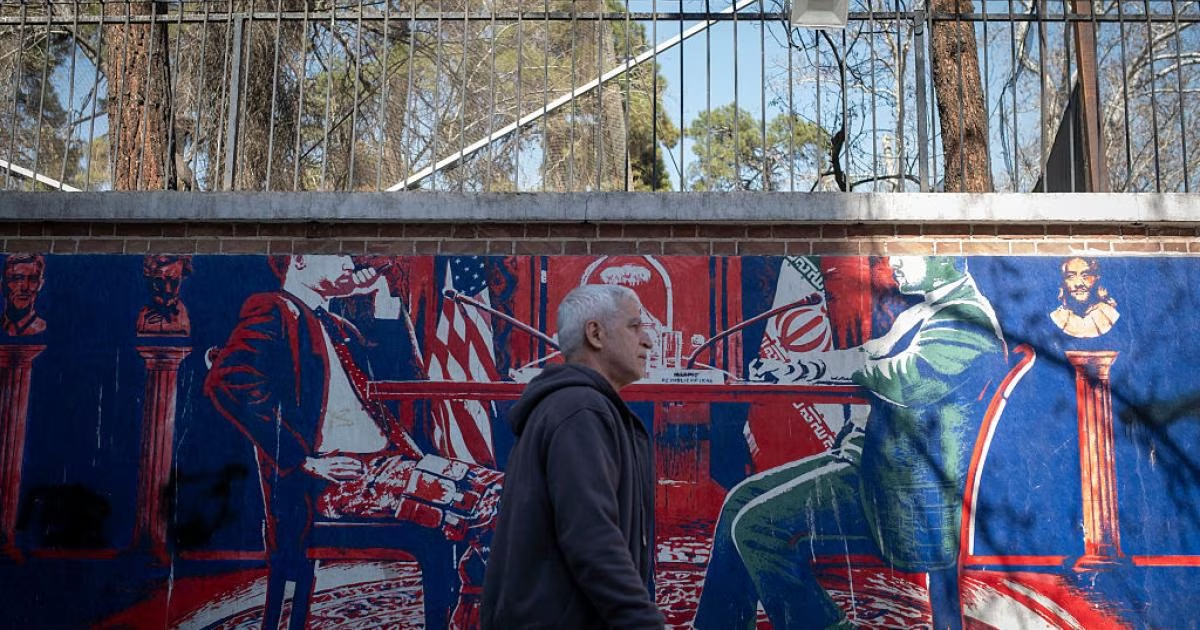
The past few hours have witnessed cautious optimism in international circles regarding the possibility of the United States and Iran reaching an agreement for a short period of intensive negotiations. These negotiations focus on fundamental points of contention, foremost among them the issue of opening the Strait of Hormuz, a development described by US President Donald Trump as surprising due to its direct impact on global trade and energy movement.

The ongoing war has exposed the fragility of the Arab system, which is already suffering from the repercussions of the Israeli war of extermination against Palestinians in the Gaza Strip. The severity of this exposure was exacerbated by the entry of supporting fronts from Lebanon and Yemen, placing Arab countries, especially Washington's allies outside NATO, in direct confrontation with severe economic and security damages that American guarantees failed to avert.

The most prominent surprise in this context is the announcement of the UAE's withdrawal from OPEC and OPEC+ organizations, coinciding with the Gulf Cooperation Council summit in Jeddah. This move, welcomed by Washington, revealed a deep rift between Abu Dhabi and Riyadh, and showed an Emirati desire to disengage from the collective oil commitments led by Saudi Arabia.

The repercussions did not stop at the oil file but extended to reports of a possible UAE withdrawal from the Arab League after sharp criticism from Emirati officials regarding the League's slow response to Iranian threats. This tension prompted shuttle visits from Egyptian President Abdel Fattah El-Sisi to try to contain the situation and prevent the collapse of joint Arab action.

On the military front, Western media sources revealed unprecedented security cooperation between Tel Aviv and Abu Dhabi, including the dispatch of the Iron Dome system and Israeli crews to operate it. Military aid also included providing the UAE with advanced weapons that had not yet entered active service in the Israeli army, making them a direct target for some Iranian attacks during the war.

These transformations prompted other Arab countries to reposition themselves strategically, with Egypt emerging as an active player in multiple regional files. Cairo announced its readiness to deploy military forces in Somalia, in a step aimed at confronting increasing Israeli movements in the strategic 'Somaliland' region, reflecting an intense struggle for influence in the Horn of Africa.

In Sudan, the government led by General Abdel Fattah al-Burhan accused both Ethiopia and the UAE of responsibility for attacks targeting Khartoum International Airport. These accusations come amid a state of severe regional polarization, where military and political interests intertwine between local powers and their supporting regional powers.

The diplomatic scene also witnessed remarkable movements, represented by an Egyptian-Syrian rapprochement embodied by the visit of Syrian Foreign Minister Assad al-Shaibani to Cairo. This rapprochement coincides with the formation of a new axis comprising Turkey, Saudi Arabia, Egypt, and Pakistan, in an attempt to create a balance of power capable of dealing with the repercussions of the war on Iran and Israel's expansionist ambitions.

Benjamin Netanyahu seeks through this war to complete the liquidation of the Palestinian issue and draw new borders that include parts of Lebanon and Syria. The declared Israeli project aspires to transform Israel into a 'superpower' leading an economic and military alliance extending from East Africa through the Gulf to India, to be an alternative to traditional regional systems.

The failure of the idea of collective security, upon which the Gulf Cooperation Council was founded in 1981, has become a reality after the recent war. Events have proven that absolute reliance on the American security umbrella did not achieve the desired deterrence but rather depleted the region's resources and left it exposed to increasing regional threats.

In conclusion, observers believe that the Arab system is going through a new 'sick man' phase, where division and reshaping processes are accelerating. While some Arab powers try to regain the initiative, concerns remain that any settlement between Washington and Tehran could lead to a new 'Sykes-Picot' that entrenches foreign influence at the expense of supreme Arab interests.

The rising importance of geography over technological superiority was not the only surprise; the war accelerated the enrichment of explosive elements in the Arab system exposed to the horror of extermination in Gaza.

PALESTINE

Fri 08 May 2026 5:49 pm - Jerusalem Time

Historian Omer Bartov: Israel Committed Genocide in Gaza and Zionism is an Ideology of Racial Superiority

In a striking intellectual and historical shift, Israeli-American historian Omer Bartov, one of the leading experts on the Holocaust and genocide at Brown University, announced his conclusion that Israel has effectively committed the crime of genocide in the Gaza Strip. This announcement came after two years of hesitation and research, during which Bartov documented his views in articles published by The New York Times, sparking widespread reactions in global academic and political circles.

In his new book, 'Israel: What Went Wrong?', Bartov argues that what is happening in Gaza is not merely an accidental malfunction or a temporary deviation from the state's path, but rather the product of an ideology that embraces racial and national superiority. He pointed out that Zionism, in its current form, has become an obstacle to Israel's transformation into a normal state, emphasizing that this ideology's capacity to produce genocide makes its continuation impossible and illegitimate.

Despite the sharpness of his criticisms, Bartov faces an internal struggle in defining his political identity, as he still refuses to describe himself as 'anti-Zionist,' even though his arguments directly lead to this conclusion. Observers attribute this hesitation to a deep Zionist upbringing that makes abandoning this label an act of betrayal or heresy in the Israeli consciousness, even for intellectuals living in exile.

Analytical readings of Bartov's positions indicate a gap between his belief in a 'pure Zionism' of the past and the current bloody reality. The historian assumes that a deviation has affected the path of a state once described as 'noble.' However, historical facts indicate that the roots of exclusion and dispossession began since the dawn of Zionism, and were not a product of the moment or solely linked to the rise of the far-right represented by Netanyahu and Ben Gvir.

The core of the crisis lies in the belief in the superiority of an ethnic or religious group between the river and the sea, which makes Zionism similar to previous totalitarian ideological systems that did not accept questioning their principles. Bartov asserts that Israel's continuation under this umbrella will prevent it from integrating into the context of normal states, especially since its practices in Gaza have shattered the moral barriers it had tried to hide behind for decades.

In conclusion, Bartov's stance represents a cry from within the academic establishment associated with Israeli identity, and a call to break the ban on criticizing Zionism as a political thought. The demand for the disappearance of this ideology is no longer an intellectual luxury, but a necessity imposed by human and legal reality after the atrocities witnessed in Gaza, which places the international and academic community before new challenges to confront definitions of racial superiority.

Zionism must disappear, and Israel under it will not be a normal state. If it is capable of causing genocide in Gaza, it will not be able to endure as an ideology.

PALESTINE

Fri 08 May 2026 5:49 pm - Jerusalem Time

Settler terrorism pursues displaced people of the Jordan Valley: Forced displacement under threat of deportation to Jordan

The journey of displacement undertaken by Bedouin families from the Ras al-Auja area in the Palestinian Jordan Valley was nothing but a transition from one suffering to another, even harsher. After the residents thought that their refuge in the village of Al-Awja, north of Jericho, would provide them with safety, they found themselves face-to-face with the same settlers who had displaced them from their original homes, initiating new chapters of systematic pursuit and intimidation.

Citizen Suleiman Zayed, one of the displaced from the Al-Auja waterfall community, recounts that settler threats did not stop at physical assault but extended to explicit messages demanding their final departure to Jordan. Zayed confirmed that settlers storm their new homes after destroying the surrounding fences, using drones to violate the privacy of families and instill terror in the hearts of children and women.

Field testimonies indicate that the attacks suffered by residents in their current displacement location are carried out by the same settler groups that attacked them in Al-Auja waterfall. This persistence in pursuit reflects a systematic plan aimed at tightening the noose on the Palestinian presence in the Jordan Valley areas, pushing residents towards successive migrations that end with the complete evacuation of the area for the benefit of settlement expansion.

Suffering is not limited to security threats but extends to the destruction of the economic livelihoods of these families, who primarily depend on livestock farming. The region recorded the loss of approximately 1,500 sheep last year, 400 of which belonged to the Zayed family alone, without these families receiving any compensation to enable them to withstand the impoverishment policies practiced against them.

In light of this bitter reality, the village of Al-Awja and its surrounding areas lack the most basic essential services and infrastructure necessary for human life. Families suffer from the absence of health centers, water networks, and electricity, making life in these areas a daily challenge, especially in medical emergencies that may lead to death due to the distance from the nearest hospital.

Education represents an additional burden on displaced families, as children are forced to travel a distance of up to 12 kilometers round trip to reach their schools. During this arduous journey, students are subjected to repeated attacks by settlers who ambush them and throw stones at them, which has led many children to refuse to go to school for fear for their lives.

Local sources confirm that what is happening in the Jordan Valley is part of a broader policy led by extremist ministers in the occupation government, aimed at changing the demographic reality in the West Bank. Methods of violence vary between direct assault, property destruction, prevention of grazing, and the use of modern technology to monitor and intimidate isolated Bedouin communities.

According to official data issued by the Wall and Settlement Resistance Commission, last April witnessed a dangerous escalation with 1637 attacks carried out by occupation forces and settlers. The commission clarified that settlers alone were responsible for 540 attacks directly targeting citizens and their property in various contact areas, with a special focus on Bedouin communities.

Since the beginning of the recent aggression in October 2023, forced displacement operations have accelerated to include more than 79 Palestinian Bedouin communities in the West Bank. These attacks have led to the displacement of more than 814 families, comprising over 4700 citizens, who found themselves homeless or without a source of livelihood after the destruction of their communities and the seizure of their grazing lands.

The steadfastness of Palestinians in the Jordan Valley remains dependent on the extent of support and assistance from official and human rights bodies to confront this fierce settlement offensive. Without strengthening the means of survival and providing international protection, these families will remain prey to displacement schemes that do not stop at geographical boundaries but pursue them in every inch they try to settle in.

If we had known that the forced displacement we were subjected to would be so humiliating, we would have died in our places instead of being displaced.

PALESTINE

Fri 08 May 2026 5:49 pm - Jerusalem Time

Under the slogan 'We Run for Freedom'.. The tenth International Palestine Marathon kicks off from Bethlehem and Gaza

The city of Bethlehem, in the southern occupied West Bank, witnessed on Friday morning the launch of the tenth edition of the International Palestine Marathon, which this year carries the slogan 'We Run for Freedom'. This edition comes after a forced two-year hiatus due to the repercussions of the ongoing Israeli war, with the marathon returning as a message of defiance and Palestinian determination to practice life and sports despite the restrictions.

The official events began at 6:00 AM with the start of the full race, covering a distance of 42.195 kilometers, from in front of the historic Church of the Nativity in central Bethlehem. Thousands of Palestinian runners participated in this event, alongside foreign solidarity activists, in a sporting demonstration aimed at highlighting the restriction of freedom of movement imposed by the occupation on Palestinians.

This year's edition was characterized by a unifying national character, as organized sources reported that a similar race simultaneously kicked off in the Gaza Strip for a distance of 5 kilometers. The Gaza race route began from the Wadi Gaza Bridge area heading north, in a symbolic step that emphasizes the unity of Palestinian geography despite the siege and destruction left by the aggression.

In Bethlehem, runners followed a long route passing alongside landmarks that highlight the reality of Palestinian suffering, as the race passed next to the Bilal ibn Rabah Mosque and the apartheid wall north of the city. The route also included passing through Aida Refugee Camp, the Jerusalem-Hebron road, reaching Dheisheh Refugee Camp and the old town of Al-Khader, before concluding at the Solomon's Pools archaeological site.

The general coordinator of the marathon, I'tidal Abdul Ghani, stated that the total number of participants exceeded 13,000 runners, reflecting a widespread desire to participate in this national event. She explained that among the participants were 2,523 runners from the Gaza Strip, in addition to about a thousand foreign participants who came from 75 countries around the world to support the Palestinian cause.

In addition to the on-site races, the marathon witnessed extensive virtual organization in several countries around the world between April 17 and 21. More than 5,000 people from 88 countries participated in the virtual edition, giving the marathon an international dimension that transcends the geographical boundaries imposed on the ground.

The race categories varied to include different distances suitable for all levels, starting from the full marathon and half marathon of 21 kilometers, down to the 10-kilometer race. A special race for families was also allocated for a distance of 5 kilometers, to ensure wide community participation including children and the elderly in this event.

On the organizational front, the race was supervised by a judging team consisting of 12 specialized judges, supported by an electronic control room and 12 observers distributed along the route to ensure accuracy. More than 100 volunteers also contributed to logistical organization operations, with 11 stations provided for distributing water and offering first aid and nutrients to participants.

This event is organized through joint efforts between the Palestinian Higher Council for Youth and Sports, the Palestinian Olympic Committee, and the Bethlehem Municipality. Through this event, the organizers aim to break the isolation that the occupation tries to impose on Palestinian cities, and to promote the Palestinian narrative through international sports.

This year's return of the marathon is conclusive evidence of the Palestinian people's determination to survive and develop despite the massive destruction left by the war and severe restrictions. The marathon is not just a sports race, but a cry of protest against the separation wall and settlements that suffocate Palestinian cities and villages and hinder their sporting and social development.

This event comes at a time when the West Bank is witnessing an unprecedented escalation since the outbreak of the genocide war in the Gaza Strip in October 2023. Occupation forces continue systematic killings and arrests, in addition to settlement expansion that devours vast areas of land through which the marathon route passes.

Official statistics indicate that the escalation in the West Bank has resulted in the martyrdom of at least 1,155 Palestinians and the injury of about 11,750 others since the start of the war. Arrests have also reached record numbers, exceeding 22,000 cases, making the organization of an event of this magnitude a major national achievement under these circumstances.

As for the Gaza Strip, the symbolic marathon was held over the rubble of destruction left by the genocide, which led to the martyrdom of more than 72,000 Palestinians. Despite the presence of more than 172,000 injured, the participation of more than two thousand runners in Gaza sent a strong message to the world about the indomitable will to live.

At the conclusion of the event, the organizing bodies honored the winners in various categories, emphasizing that the real victory lies in reaching the finish line despite all obstacles. The International Palestine Marathon remains an annual platform that brings the world together in the heart of Bethlehem, to affirm the right of Palestinians to freedom, independence, and movement without restrictions.

This year's edition is distinguished by national unity, as a simultaneous marathon was held in the Gaza Strip despite all challenges.

OPINIONS

Fri 08 May 2026 5:49 pm - Jerusalem Time

Netanyahu Obstructs Trump's Plan to End the War in Gaza for an Alternative Israeli Plan

Last week witnessed a back-and-forth in negotiations in Cairo between Palestinian factions and the representative of the Peace Council (Nikolay Mladenov), mediated by Egyptian intelligence, Qatar, and Turkey. These negotiations sometimes inspired optimism and at other times pessimism, to the extent that we, as observers, no longer know whether these negotiations will succeed and a breakthrough will occur, based on which Trump's plan will be fully implemented or not. The central focus of the negotiations was the settlement of Hamas's weapons in Gaza and the completion of the implementation of the first phase's provisions and the beginning of the implementation of the second phase's provisions of President Trump's plan to end the war in Gaza, which was announced in October last year and whose second phase was supposed to have ended at least eight months after its first phase began.

It is noticeable that the plan is stalled and not progressing after Israel recovered its prisoners from Hamas. It is also noticeable that Israel now claims that the obstacle is the factions' weapons and the factions' non-agreement in Gaza to that, knowing that the factions had expressed their approval of settling the weapons within the framework of a neutral committee and international supervision. This was discussed in Cairo recently, and a document was submitted by the mediators to this effect (a roadmap) stating that weapons would be handed over to the Palestinian police who would be deployed in Gaza under the supervision of an international committee, provided that the weapons be transferred to a third party, and they suggested Egypt. At the same time, Israel would dismantle the militias it formed and hand over their weapons to the international committee supervising the disarmament of Hamas, using the same mechanism by which it receives the factions' weapons. The remaining provisions of the first phase would be implemented, and the steps of the second phase of President Trump's plan to end the war would be carried out, expanding the entry of aid and shelter tools in preparation for the start of the reconstruction process under the supervision of the national committee formed by the Peace Council approximately four months ago, which has not yet been able to enter Gaza due to the Israeli ban.

The Al-Sharq Al-Awsat newspaper had reported that the Palestinian factions responded positively to the plan, but the factions handed the mediators a paper with five points, the most important of which is that the factions want international guarantees that Israel will practically cease fire and withdraw from the Yellow Line and allow the national committee to enter to manage the sector, take over governance from Hamas, manage the sector, and achieve the principle of one authority, one law, and one weapon, and thus begin the reconstruction process of the sector. The same newspaper mentioned that Israel's response to the (roadmap) document was negative, but Mr. (Nikolay Mladenov) and the mediators said that Israel agreed to the document but refused to provide any guarantees for a complete ceasefire in Gaza or withdrawal from the Yellow Line and wants, above all, to disarm Hamas and then negotiate the implementation of the remaining provisions of the plan. Here, the situation became complicated, and the scene began to suggest a return to intense war on Gaza after the Hebrew media reported the next day that Hamas refused to disarm and that Israel was preparing for renewed fighting in Gaza. All this is happening while the sector is practically witnessing a systematic change in the position of the Yellow Line every day, being advanced and its location changed, and it has become a threat to the lives of residents, many of whom have been forced to flee again. The matter did not stop there; we began to see systematic attacks by militias in multiple areas within cities with Israeli air cover, as if Israel has another plan opposite to President Trump's plan that it wants to implement, which is for the militias to take over governance in the sector, thereby undermining President Trump's plan. For this reason, we notice that Israel spares no effort in obstructing the implementation of any provision of President Trump's plan's stages, and it seems as if the plan has become a cover for Israel to implement a plan for militias to take control of Gaza in complete absence of many administrative details for managing civil affairs in Gaza.

It is noted in Hebrew reports that Israel exaggerates Hamas's strength in the sector, as if it considers it a renewing force to justify the continuation of the war and even the continued existence of the Yellow Line. This means maintaining the status quo, to say that what is beyond the Yellow Line is controlled by Hamas, and what is before the Yellow Line is controlled by militias and secured by them with Israeli cover and support, and this, of course, frustrates President Trump's plan. The Peace Council dispatched (Nikolay Mladenov) with a team urgently to Tel Aviv because it began to realize that Israel is obstructing the implementation of Trump's plan provisions and claiming that the factions reject the roadmap plan. Mladenov met with Netanyahu and discussed the completion of the first phase and the implementation of the second phase based on the proposed roadmap, and formally requested that Israel stop threatening to return to war in Gaza and discussed the issue of deploying a stabilization force in Gaza and allowing the national committee to manage the sector after taking over governance from Hamas. However, we believe that Israel may refrain from doing so and continue to obstruct Trump's plan.

The question now is whether President Trump's administration will allow Israel to continue undermining his plan and implement the alternative plan it is now weaving? And if it does not allow that, why is the Trump administration overlooking all the practical Israeli measures on the ground in the sector that are intended to sabotage President Trump's plan? And is this because Trump's advisors are preoccupied with the Iranian issue? The truth is that Israel is exploiting American preoccupation to the fullest extent with the Iranian issue and wants to impose a unilateral alternative plan to President Trump's plan in Gaza, and it is proceeding with its implementation in a frighteningly systematic way. If Trump's advisors do not quickly stop this course by pressuring Netanyahu to accept the implementation of all provisions of the second phase, the most important of which are Israel's withdrawal from the Yellow Line, acceptance of the deployment of an international stabilization force, allowing the national committee to access to manage the sector and achieve security and stability, and pressuring Israel to accept dealing with the mediators' document (roadmap).

I believe that President Trump's plan is on its way to failure at the hands of Israel to pave the way for its alternative plan, but I believe that the Trump administration's dereliction of the plan to end the war and its neglect to implement it by pressuring Israel will have serious repercussions that will fatally harm the United States' standing in the region. How will Trump achieve peace with Iran and his administration triumph if it is unable to achieve peace in Gaza? And here, Trump, who heads the Peace Council concerned with achieving peace in Gaza, will have no prestige and will remain like a puppet in the hands of Netanyahu, who draws the scene Israel wants in most regional files. I doubt that Trump will allow this because his political future and the future of the Republicans are dependent on achieving peace in Gaza and Lebanon and reaching an agreement that ends the war with Iran in favor of the United States and its agenda in the region.

PALESTINE

Fri 08 May 2026 5:48 pm - Jerusalem Time

Gaza's Exhaustion... The Tragedy Worsens and Displacement Plans Are Again Pushed to the Forefront

Awni Al-Mashni: The central goal of the war was not only related to Hamas's weapons or military capabilities, but rather to creating conditions that lead to displacement from Gaza

Samer Anabtawi: The issue of displacement is still strongly present within the political mindset of the Israeli government, with the aim of reducing the Palestinian presence in the Strip

Daoud Kuttab: The crisis of food and medicine shortages and the spread of diseases in the Strip comes within a systematic policy based on tightening the siege and weakening the ability of residents to survive

Suleiman Bisharat: The continuation of crimes against the residents of the Strip carries political, social, and economic dimensions to exhaust Palestinian society, leaving it fragile and susceptible to influence and control

Adnan Al-Sabah: The ceasefire agreement is a political deception aimed at moving Palestinians from the horrors of direct war to a stage of internal societal exhaustion

Labib Taha: Exiting the current crisis requires a genuine Palestinian consensus based on a comprehensive national program, dealing realistically with the transformations after October 7th

Ramallah - Exclusive to "Al-Quds"-

Amidst the ongoing Israeli war on the Gaza Strip, the scene of humanitarian tragedy deepens and becomes more complex day after day, with continued bombing and siege and the decline of basic necessities of life in various areas of the Strip, amidst fears that this comes within the context of the primary goal of the war, which is displacement.

Writers and political analysts, in separate interviews with "Al-Quds", believe that Israel, through its current policies, seeks to keep Gaza in a state of permanent exhaustion, by deepening humanitarian and economic crises and imposing a reality that limits the ability of Palestinians to steadfastness and stability, noting that the war is no longer only related to military confrontation, but has become part of a broader political and regional equation in which security and influence calculations, and the future of the Palestinian issue and the region, intertwine.

In parallel, the suffering of civilians is escalating with the expansion of poverty, displacement, and shortages of food, medicine, and basic services, amidst warnings of serious repercussions on the social and economic structure of the Strip. Calls are also rising for more effective Palestinian, Arab, and international action to stop the war, and to unite political and humanitarian efforts to save Gaza from an open crisis with no clear horizon.

Attempts to push for displacement

Writer and political analyst Awni Al-Mashni believes that the ongoing Israeli war on the Gaza Strip has not yet, from the Israeli perspective, achieved its true goals, pointing out that the continuation of bombing, siege, starvation, and military operations is primarily linked to an attempt to impose a new reality based on pushing Palestinians towards displacement and removing the Hamas movement from the political and military scene.

According to Al-Mashni, the Israeli reading of the war is based on the premise that the objectives of the military operation have not been fully achieved, explaining that the central goal of the war was not only related to Hamas's weapons or military capabilities, but rather to creating conditions that lead to the displacement of Palestinians from the Gaza Strip, either completely or to the minimum possible extent that allows for demographic and political change in the Strip.

Al-Mashni points out that Israel, despite realizing the difficulty of achieving comprehensive displacement of Palestinians, still seeks to utilize various war tools to achieve the greatest possible extent of this goal, by continuing to restrict residents, escalating killing and bombing operations, and deepening the humanitarian catastrophe that the Strip has been experiencing since the beginning of the war.

Al-Mashni explains that the second factor explaining the continuation of the war is Israel's endeavor to end the political and military existence of the Hamas movement, noting that the failure of this goal and the movement's continued presence and cohesion, despite the extent of destruction and siege, has caused the war to enter a state of open attrition without a clear resolution.

Al-Mashni links what is happening in Gaza to broader regional developments, considering that the war in the Strip cannot be separated from the ongoing conflict in the region, whether in Lebanon or Iran, explaining that there is a common denominator in Israeli policies based on trying to end what is known as the "axis of resistance" through the issue of "disarmament."

Al-Mashni points out that Israeli and American pressures take multiple forms in different arenas. In Lebanon, the issue of Hezbollah's weapons stands out, in Iran, pressures related to military and armament capabilities are prominent, and in Gaza, the demand for disarming the resistance is repeated, considering that this interconnectedness confirms that the war on the Strip is not isolated from the general regional scene.

Israel and the dilemma of not achieving goals

Al-Mashni believes that Israel faces a real dilemma in achieving its goals, noting that Hezbollah in Lebanon has managed to create field surprises that disrupted Israeli calculations, and Iran has shown, during recent confrontations, an ability to withstand and maneuver, while the Hamas movement in Gaza has managed to continue for more than two years despite the siege, widespread destruction, and genocide operations.

Al-Mashni emphasizes that the future of Gaza is directly linked to the results of the regional conflict as a whole, stressing that any settlement or solution in the Strip will not be separate from the outcomes of the broader confrontation in the region.

Absence of an effective Arab role

Regarding ways to stop the massacres and the worsening humanitarian situation, Al-Mashni believes that the fundamental crisis lies in the absence of an effective Arab role, in addition to the state of internal Palestinian division, explaining that the Arab world has become weak in influencing the issues of Lebanon, Gaza, and the Gulf, at a time when the Palestinian arena suffers from political division and internal tensions.

Al-Mashni stresses that stopping the war and ending the humanitarian tragedy in Gaza require an Arab stance that supports a unified Palestinian position, based on a political vision and unified Palestinian leadership, emphasizing that the absence of these two factors constitutes the core of the current crisis and gives the occupation an opportunity to continue its policies within the Strip.

Reshaping Palestinian reality

Writer and political analyst Samer Anabtawi believes that the continuation of Israeli crimes in the Gaza Strip confirms that the occupation has not stopped its war on the Strip, nor has it retreated from its political and military goals related to the Palestinian issue and the region in general, considering that what is happening in Gaza comes within a broader plan aimed at reshaping Palestinian reality and imposing new facts on the ground.

Anabtawi explains that the ongoing Israeli military operations, including targeting and assassinations and preventing the entry of basic materials, in addition to expanding what is known as the "yellow zone" and strengthening security dominance, reflect the continuation of the occupation's policy based on transforming the Gaza Strip into an "unlivable environment," by restricting residents and pushing them towards emigration and leaving their land.

Anabtawi points out that the assassinations and targeting that occurred in recent days represent a clear violation of the ceasefire agreement, stressing that the occupation has not even committed to implementing the first phase of the agreement, which reflects the absence of any real Israeli intention to move to subsequent stages of calm or political solutions.

Anabtawi notes that the issue of displacement is still strongly present within the political mindset of the Israeli government, and that the primary goal is to reduce the Palestinian presence in the Gaza Strip and push residents to leave, pointing out that the occupation is trying to use groups linked to it to contribute to restricting citizens within the Strip.

The pretext of disarmament

Anabtawi explains that Israel continues to justify its policies by linking all measures to the issue of resistance weapons, even though it has not withdrawn from the Strip and has not stopped its aggression, and at the same time demands disarmament, considering that this argument is used as a pretext for the continuation of military operations and punitive measures against the residents.

Anabtawi confirms that the occupation imposes strict restrictions on the entry of food and basic materials, despite understandings and agreements that specify the permitted quantities, pointing out that the process of introducing aid is practically subject to "Israeli mood," and there are also significant restrictions on the movement of patients who urgently need treatment abroad.

Anabtawi notes that Israel also obstructs the work of the technocrat committee responsible for managing the Gaza Strip, and does not allow it to enter or carry out its duties, in addition to disrupting any roles for the so-called "Peace Council" proposed by US President Donald Trump, considering that these policies aim to undermine any political or administrative project that could serve as an entry point for a solution or reconstruction.

Possibility of escalating targeting of Gaza

Regarding potential scenarios, Anabtawi suggests an escalation of targeting operations in the Gaza Strip, which may lead to a return of direct military confrontation, given the Palestinians' feeling of a lack of other options, warning that this will lead to more destruction and humanitarian suffering.

Anabtawi points out that the occupation is exploiting the world's preoccupation with the regional war and its repercussions to pass displacement projects in Gaza and the West Bank, calling for more serious Arab, Islamic, and international action, especially from the guarantor states of the agreement, to pressure the United States to compel Israel to implement what was agreed upon.

Anabtawi stresses the need to strengthen the unified Palestinian position towards the Gaza Strip, stop internal squabbles, and work on formulating a comprehensive Palestinian discourse aimed at supporting the steadfastness of the residents, and pressuring for the entry of aid, basic materials, and funds necessary for the reconstruction of the Strip.

A form of collective punishment

Writer and political analyst Daoud Kuttab emphasizes that the continuous Israeli policies in the Gaza Strip represent, according to international law, a clear form of collective punishment prohibited under the Geneva Conventions, affirming that the occupation has continued since 1967 to evade its legal obligations related to the protection of civilians during wars and armed conflicts.

Kuttab explains that the Fourth Geneva Convention explicitly stipulates the protection of civilian populations and criminalizes the policy of collective punishment, but Israel practically refuses to adhere to these standards, and Israeli courts do not exert any real pressure to force successive governments to respect the rules of international humanitarian law.

Israel does not distinguish between civilians and combatants

Kuttab points out that Israel deals with Palestinians as a single bloc without distinguishing between civilians and combatants, which allows it, from its point of view, to justify military measures, collective siege, and restrictions on residents under security pretexts, which has led to the exacerbation of the humanitarian catastrophe in the Gaza Strip.

Kuttab explains that the crisis of food and medicine shortages and the spread of diseases in the Strip are not side effects of the war, but rather come within a systematic policy based on tightening the siege and weakening the ability of residents to survive, noting that the entry of food and medicines through traders who pay large sums to what he described as "war merchants" has made the prices of basic goods beyond the reach of ordinary families.

Kuttab believes that this reality has created a state of sharp disparity within Gazan society, where access to food and medicine has become linked to financial ability, at a time when the majority of families suffer from loss of income sources and the collapse of economic and living conditions.

Kuttab calls on Palestinian officials to continue political and media action to demand an end to the siege openly and continuously, and also calls on civil society organizations to intensify popular and human rights pressure, holding the international community responsible for acting to compel Israel to abide by international treaties related to the protection of civilians and to stop policies that increase the suffering of the residents of the Gaza Strip.

Keeping the Gaza front open

Writer and political analyst Suleiman Bisharat confirms that the continuation of Israeli crimes in the Gaza Strip, amidst the worsening humanitarian conditions, the spread of diseases, and food shortages, reflects an Israeli trend based on keeping the Gaza front open and active, and not allowing stability to return to the Strip at the current stage, considering that Gaza is still – from the Israeli perspective – part of a broader regional equation linked to the future of the Palestinian issue and the arrangements of the Middle East.

Bisharat explains that Israel fought its war on the Gaza Strip within the concept of the "New Middle East," and therefore its vision towards the Strip is inseparable from the rest of the open regional files, whether related to Iran or the northern front with Lebanon or the form of new political alliances in the region.

Bisharat points out that Israel links any potential stability in Gaza to the outcomes of these files, which makes war, or the state of "no war and no peace," a continuous and existing option for it.

Bisharat indicates that the Israeli occupation seeks to exploit the time factor to impose new realities on the ground, by consolidating its military control over large areas of the Strip, which allows it to reshape the political equation for the future of Gaza.

Bisharat notes that Israel is working, according to this perception, to establish a reality that may include the continuation of military occupation for a long period, and perhaps the return of settlements to the Strip, citing the occupation's attempt to maintain control over between 50 to 60 percent of Gaza's area.

Preventing Palestinians from possessing a geographically connected entity

Bisharat explains that the Israeli vision is also based on preventing Palestinians from possessing any geographically connected political entity that could form the nucleus of an integrated Palestinian political system, clarifying that Israel, even if a ceasefire is reached in its current form, does not want to grant Palestinians a stable geographical area capable of political and administrative life.

Bisharat affirms that the continuation of crimes against the residents of the Strip is not only related to military objectives, but also carries political, social, and economic dimensions, aimed at exhausting Palestinian society and weakening its capabilities and economic and social structure, so that it remains fragile and susceptible to future influence and control according to the Israeli vision.

Exhausting Palestinian energies

Bisharat points out that the continuous state of instability leads to the exhaustion of Palestinian energies and the depletion of the economy, income, and infrastructure, in addition to targeting the environment that supports Palestinian resistance, considering that Israel seeks through this to prevent the re-formation of any Palestinian force that might represent a future threat to it from the Gaza Strip.

Regarding potential scenarios, Bisharat suggests that the Gaza file will remain open unless the Israeli vision related to the war on Iran and the northern front with Lebanon, in addition to Israel's project in the West Bank, becomes clear, considering that this scenario is the most likely in the current stage.

Bisharat points to another scenario, which is the possibility of reaching a comprehensive political deal involving the United States, Iran, and a number of regional countries, which could later open the door for formulating a new vision for the future of the Gaza Strip, but he stresses that this path is still unclear in its features and results, and may require a long time to mature politically.

Political deception

Writer and political analyst Adnan Al-Sabah explains that what has been promoted since the ceasefire agreement in October last year was nothing but a "political deception" aimed at moving Palestinians from the horrors of direct war to a more dangerous stage based on siege, starvation, and the internal exhaustion of Palestinian society, warning that the continuation of the current reality is leading the Strip to further collapse, chaos, and internal conflict.

Al-Sabah points out that the political moves that accompanied the "Trump plan," along with international decisions and agreements that were signed in a celebratory atmosphere, did not succeed in actually stopping the war, but rather contributed to reshaping its tools, so that it shifted from widespread bombing and direct massacres to a policy based on the gradual strangulation of the population through siege and preventing basic necessities of life.

Decline in the presence of the Palestinian issue

Al-Sabah notes that the war on Iran and the accompanying regional escalation in Lebanon and the region led to a decline in the presence of the Palestinian issue, especially what is happening in Gaza, from the forefront of international and media attention, stressing that many international media outlets have begun to treat the Strip as a marginal issue, while the world has been preoccupied with new crises and accelerating regional tensions.

Al-Sabah explained that the occupation, since that stage, has adopted a different policy in managing the war on Gaza, based on continuous bombing and shelling, in addition to deepening the siege, starvation, thirst, and expanding the circle of disease and homelessness, as well as targeting police elements and agencies that could contribute to a minimum of internal stability.

A permanent state of insecurity, chaos, and fear

Al-Sabah affirms that these policies aim to keep Palestinian society in a permanent state of insecurity, chaos, and fear, pointing out that the occupation also works to encourage groups and gangs within the Strip to carry out actions that would undermine social cohesion, weaken resistance, and confuse citizens.

Al-Sabah believes that the ultimate goal of these measures is to push Palestinians, under the pressure of hunger, fear, and harsh humanitarian conditions, to accept the political dictates imposed on them, stressing that the continuation of international isolation and global preoccupation with other issues will give the occupation more space to implement its projects and prolong the crisis.

Restoring unity and strengthening internal cohesion

Al-Sabah warns that the next stage may witness an escalation in the state of internal Palestinian conflict if the current conditions continue, as the occupation seeks to create a reality of divisions and internal confrontations that weaken the Palestinian issue and give Israel additional time to consolidate its policies on the ground.

Al-Sabah emphasizes that confronting these dangers requires restoring Palestinian national unity and strengthening internal cohesion, in addition to rebuilding Arab, Islamic, and international solidarity with Gaza and the Palestinian issue, stressing that the absence of a unified Palestinian position will lead to a "real catastrophe" that threatens the Palestinian people and their national cause.

The occupation has become "unrestrained"

Writer and political analyst Labib Taha explains that the continuation of Israeli crimes against Palestinians in the Gaza Strip is primarily due to the absence of any force capable of deterring Israel or imposing costs on it, whether militarily, economically, or politically, pointing out that the occupation has become "unrestrained" in Palestine and the region, which has allowed the continuation of killing, destruction, and genocide without anything to limit or stop it.

Taha affirms that the war of extermination on the Gaza Strip has not ended yet, but only its pace has changed, noting that the people of the Strip have entered a "maze" that does not seem to have a near end in the absence of real indications of the imminent end of the escalating humanitarian tragedy.

Regional and international preoccupation with other issues

Taha stresses that regional and international preoccupation with other issues has contributed to the decline of interest in what is happening in Gaza, explaining that the United States is preoccupied with other regional issues, most notably the Iranian file, while Arab countries suffer from their internal crises, which has been reflected in the extent of political action towards the war.

Taha believes that exiting the current crisis requires a genuine Palestinian consensus based on a comprehensive national program aimed at ending the occupation and getting rid of the effects of destruction and war, calling for a realistic approach to the political and geopolitical transformations that the region has witnessed after October 7, 2023.

Significant change in the world and the region

Taha points out that the world and the region have changed significantly, and the priorities of international and regional powers are no longer as they were before, which necessitates a review of Palestinian political discourse and national work mechanisms, away from adhering to traditional slogans or prioritizing factional and personal interests over the supreme national interest.

He affirms that the continuation of internal Palestinian division serves multiple parties that benefit from the continuation of the status quo, explaining that Israel is among the most prominent beneficiaries of the state of Palestinian fragmentation and conflicting internal political programs.

Taha points to the existence of parties and groups within Gaza that benefit from the continuation of the crisis, including traders, monopolists, and other parties, considering that the intertwining of interests and the continuation of the state of division contribute to prolonging the humanitarian tragedy experienced by citizens in the Strip for years, under unprecedented humanitarian conditions.


OPINIONS

Fri 08 May 2026 5:45 pm - Jerusalem Time

Washington Hosts New Round of Lebanese-Israeli Negotiations Amid Escalating Bombardment and American Pressure

Washington – Said Arikat – 8/5/2026

While Washington seeks to market a new round of negotiations between Israel and Lebanon as a step towards "stability," field realities reveal that these talks are taking place amidst bombardment, pressure, and a stark imbalance of power. A US State Department official announced on Thursday that the United States will host the third round of talks between representatives of Israel and Lebanon at the ambassadorial level on May 14 and 15, with unprecedented participation from military representatives from both sides.

According to Israeli media, the meetings will not be limited to discussing traditional security arrangements, but will directly address "concrete measures" to disarm "Hezbollah," a clear indication that Washington and Tel Aviv are trying to impose a political-security agenda that goes beyond merely establishing a ceasefire, aiming to reconfigure the internal Lebanese balance in a way that serves Israeli interests.

Despite the American desire to present these meetings as an entry point for future political normalization, Beirut refused to fully comply with US pressure aimed at holding a direct meeting between Lebanese President Joseph Aoun and Israeli Prime Minister Benjamin Netanyahu. Aoun affirmed on Monday that any such meeting remains out of the question as long as Israel continues its raids within Lebanese territory and maintains its forces in southern Lebanon.

This Lebanese stance reflects an understanding that any direct political engagement with Israel while military operations continue would be viewed internally as submission to American and Israeli dictates, especially since southern Lebanon is still under daily bombardment, while the buffer zone established by the Israeli army within Lebanese territory is expanding.

During the two previous rounds, held last month for the first time in decades, the parties discussed a general framework for a potential agreement that includes Israel's withdrawal from southern Lebanon, in exchange for a Lebanese commitment to disarm "Hezbollah" and strengthen state authority, leading to the normalization of relations between Beirut and Tel Aviv. However, this proposal seemed, to many Lebanese, closer to an attempt to impose the victor's terms by military force, rather than a balanced negotiation process between two states.

Beirut agreed to engage in these meetings in the hope of stopping the continuous Israeli strikes, but field realities quickly dashed these expectations. Just two days after the first round, a second meeting was held on April 23 with US President Donald Trump present, where Washington announced an extension of the truce for an additional three weeks. However, southern Lebanon did not experience any actual calm; instead, Israeli raids continued almost daily, under the pretext of targeting "Hezbollah" positions and elements.

In contrast, "Hezbollah" continued to target Israeli occupation forces within the "buffer zone," in addition to launching rockets and drones towards northern Israel, a scene that confirms the fragility of any agreement that does not address the roots of the conflict, but merely manages it securely to ensure Israeli superiority.

US policy towards Lebanon reveals a stark contradiction; on the one hand, Washington provides Israel with political and military cover to continue its strikes inside Lebanon under the slogan of "self-defense," and on the other hand, it claims to sponsor a negotiating process supposedly aimed at de-escalation. This contradiction has transformed American mediation into a tool of pressure rather than impartial mediation, especially with Washington's insistence on linking any Lebanese stability to the issue of disarming "Hezbollah," without any serious talk about ending the Israeli occupation or stopping repeated violations of Lebanese sovereignty.

The US administration also tried to separate the Lebanese file from its ongoing negotiations with Iran, at a time when Tehran sought to use its influence in Beirut as a bargaining chip within the broader regional negotiation. While Washington denied any direct link between the ceasefire in Lebanon and understandings with Iran, subsequent US pressure on Israel to extend the truce revealed the extent of the interconnectedness between the two tracks, and that Lebanon is still being used as an arena for settling regional and international scores.

Although Aoun's government is considered the least close to "Hezbollah" in many years, it recognizes the fragility of the internal Lebanese situation and the danger of pushing the country towards a new civil conflict. Therefore, Beirut is moving with extreme caution, trying to avoid an internal explosion with the Shiite community, which constitutes a broad popular base for the party, especially in light of the economic and institutional collapse that Lebanon is experiencing.

In contrast, Israel continues its scorched-earth policy in the southern border villages, where it has destroyed hundreds of homes and infrastructure under the pretext of their use by "Hezbollah." The scenes of destruction, which brought back memories of what happened in the Gaza Strip, sparked a growing wave of international condemnation, while the international community once again appeared unable to impose any actual commitment on Israel to stop its military operations.

Israel says the buffer zone is necessary to protect its northern settlements, but critics believe that this policy only reinforces "Hezbollah's" narrative based on resisting occupation and defending Lebanese sovereignty, which gives the party additional justifications for maintaining its weapons and strengthening its popular influence.

According to the Lebanese Ministry of Health, Israeli strikes have killed about 2,700 people since the outbreak of the latest confrontation, including dozens killed after the ceasefire began. The Israeli army, meanwhile, says it has killed more than 1,900 "Hezbollah" elements, including hundreds from the elite "Radwan" forces. Between these conflicting figures, Lebanese civilians remain the biggest losers in a war managed in the name of security, but which produces more destruction, division, and instability.

The ongoing negotiations between Lebanon and Israel reveal the extent of the structural imbalance in the American role in the region, as Washington is no longer a political mediator as much as it has become a direct partner in imposing the Israeli vision by force. The US administration talks about stability and peace, while giving Israel open cover to continue bombardment, incursions, and imposing facts on the ground. This model of "armed diplomacy" does not create real peace, but rather produces fragile coercive arrangements that quickly collapse with the first escalation. Moreover, ignoring the roots of the conflict, especially the Israeli occupation and violations, makes any talk about disarming "Hezbollah" seem selective and detached from the broader political and security context.

Israel is trying to exploit the current regional moment to reshape Lebanon militarily and politically, benefiting from Lebanon's economic collapse and unlimited American cover. But betting on imposing the equation of "security for sovereignty" carries enormous risks, because it pushes a large segment of Lebanese to believe that the state is being forced to concede under military threat. In a country based on delicate sectarian balances, any attempt to break the equation of internal power by external force may reproduce civil war in new forms. Therefore, American pressure to disarm "Hezbollah" without addressing the Israeli occupation seems like a recipe for exploding Lebanon, not for saving it.

A striking aspect of the current scene is that Lebanon has once again become an arena for the intersection of regional and international projects, while the independent Lebanese voice capable of imposing the real priorities of the people is absent. The economically exhausted Lebanese citizen is not much concerned with the struggle for influence between Washington and Tehran as much as he is concerned with stopping the bombardment and restoring a minimum level of stability and dignity. But the major powers view Lebanon only from the perspective of their security and strategic interests. Between American, Israeli, and Iranian calculations, the country turns into an open bargaining chip, while civilians are left alone to pay the price of wars, deals, and fragile regional balances.

OPINIONS

Fri 08 May 2026 10:27 am - Jerusalem Time

Between Escalation and Negotiation: Washington and Tehran's War Enters a Phase of Political and Economic Attrition

Washington – Said Arikat – 8/5/2026

News Analysis

Despite some exchanges of blows between American forces and Iran on Thursday, US President Donald Trump, in his latest statements after announcing the targeting of Iranian naval vessels, which he held responsible for attacking a US warship, insisted that the door to negotiation with Tehran remains open, while at the same time affirming that Washington "will not hesitate to respond forcefully to any threat to American interests." This combination of escalating language and negotiating rhetoric now summarizes the nature of the current confrontation between Washington and Tehran, where military messages intertwine with diplomatic efforts in a scene that reflects the complexity of a war that has entered its third month with no clear horizon for resolution.

As the war between the United States and Iran enters its third month, the region appears stuck between two contradictory paths: open military escalation threatening the stability of the Gulf and the global economy, and faltering diplomatic attempts seeking to prevent a major explosion. While US President Donald Trump's administration speaks of "significant progress" in negotiations with Tehran, it simultaneously continues to strengthen its military presence and impose economic and naval pressures on Iran, revealing that Washington still treats negotiation more as a pressure tool than an equal path to political settlement.

In this context, Iranian Foreign Ministry spokesman Ismail Baqaei announced that Tehran is reviewing the American response to the fourteen-point Iranian initiative, confirming the continued exchange of messages through the Pakistani mediator. Diplomatic leaks also spoke of Oman and Qatar entering the mediation line, in an attempt to bridge views on highly sensitive issues, including economic sanctions, freedom of navigation, and the future of Iran's nuclear program. This movement reflects a regional and international realization that the continuation of the confrontation has become a threat that extends beyond the Gulf to affect the entire global economy.

However, Trump's rhetoric remained the most expressive of the confusion within the American administration. The US President spoke of "very good talks" with Iran, before threatening again to launch "broader and more intense" strikes if Tehran backed down from what he described as concessions. This contradiction reflects the division within Washington between a faction that fears the repercussions of a long and costly war, and another that believes military and economic pressure may force Iran into a broad strategic retreat. However, experience over the past months has shown that the "maximum pressure" policy has not broken the Iranian stance, but rather pushed Tehran to use its cards of strength, foremost among them the Strait of Hormuz.

Despite sanctions and military strikes, Iran has succeeded in exploiting its geographical location to turn the Strait into a sensitive international pressure point. Although the United States possesses overwhelming military superiority, the crisis revealed the limits of this superiority when it comes to a maritime passage through which about a fifth of global oil trade passes. Therefore, Washington's decision to suspend naval operations aimed at protecting navigation in the Strait was an indication of a growing American realization that any open confrontation could quickly turn into a global economic crisis that would be difficult to contain.

Despite the US administration's talk of "significant progress" in the talks, field tensions continued. The US Central Command announced that an F/A-18 Super Hornet fighter jet disabled an Iranian oil tanker that attempted to bypass the naval blockade imposed on Iranian ports, while Tehran denied responsibility for the explosion that hit a South Korean cargo ship in the Strait of Hormuz, but then warned against ships crossing "without Iranian permission." These events reflect the continuation of brinkmanship, where each party tries to avoid an all-out war while continuing to impose facts on the ground that strengthen its negotiating position.

Among the notable developments in recent weeks were reports revealing Saudi Arabia's refusal to allow the use of its military bases and airspace in an American operation aimed at securing navigation in the Strait of Hormuz. However, treating this stance as a radical strategic shift might be an overstatement. Saudi Arabia, like the rest of the Gulf states, primarily acts based on pragmatic calculations related to protecting its internal stability and avoiding being drawn into a direct confrontation with Iran, especially given its awareness of the economic and security costs of any widespread war in the Gulf.

Moreover, the Saudi position does not necessarily mean a departure from the security partnership with Washington, as much as it reflects an attempt to manage regional balances with greater caution. Riyadh realizes that full reliance on American military power no longer guarantees stability, but at the same time, it has no interest in the collapse of the strategic relationship with the United States. Therefore, Saudi behavior appears closer to a policy of risk containment and avoiding escalation, rather than a radical reformulation of the regional order as some interpretations try to portray it.

In contrast, Israel appears to be one of the parties most apprehensive about any potential breakthrough between Washington and Tehran. The Israeli government believes that any agreement could lead to a reduction of pressure on Iran and redirect international attention towards the war in Gaza and the ongoing Israeli violations in the occupied Palestinian territories. For years, Tel Aviv has sought to solidify the image of Iran as the central threat in the region, benefiting from this atmosphere to justify its security and expansionist policies.

The current crisis has also exposed the fragility of the global economy in the face of geopolitical tensions in the Gulf. Rising oil prices, marine insurance, and shipping have led to disruptions in international markets, while major companies have begun to reconsider trade and energy routes. With the global economy slowing down and competition intensifying among major powers, Washington is more aware today that continuing the war with Iran could turn from a political pressure tool into an economic and strategic burden whose consequences are difficult to control, not only for the Middle East but for the international system.

PALESTINE

Fri 08 May 2026 10:27 am - Jerusalem Time

Supported by the UAE International Aid Agency.. "Hamid Air Bridge" concludes its missions by delivering 600 tons of aid to Gaza

A new Emirati aid plane, the last within the “Hamid Air Bridge” launched under the directives of Sheikh Humaid bin Rashid Al Nuaimi, Member of the Supreme Council and Ruler of Ajman, landed at Al Arish International Airport. The plane carried 100 tons of food aid and more than 3,200 food parcels, as part of the continuous humanitarian efforts carried out by the UAE within Operation “Gallant Knight 3” to support the Palestinian brethren in the Gaza Strip and alleviate their humanitarian suffering.

With the arrival of this plane, the curtain falls on the “Hamid Air Bridge,” after a humanitarian journey that lasted for about two months, during which 600 tons of relief and food materials were transported through continuous flights, in a scene that embodies a firm Emirati commitment to continue supporting Palestinians and enhancing urgent humanitarian response to mitigate the repercussions of the humanitarian crisis in the Gaza Strip.

The Emirati humanitarian aid team in Al Arish received the plane immediately upon its arrival, and the shipment was directly transferred to the Emirati humanitarian aid logistics center in the city, in preparation for its entry into the Gaza Strip according to approved mechanisms, ensuring its rapid delivery to beneficiaries and meeting the basic needs of affected families.

The “Hamid Air Bridge” comes as part of the humanitarian initiatives launched in cooperation with Operation “Gallant Knight 3,” with the aim of supporting the people of Gaza and enhancing urgent humanitarian response, by operating relief flights carrying food and relief aid to the city of Al Arish, in preparation for its transfer to the Strip.

PALESTINE

Fri 08 May 2026 10:27 am - Jerusalem Time

Committee to Protect Journalists Demands Washington Reopen Investigation into Shireen Abu Akleh's Assassination

The Committee to Protect Journalists (CPJ) has issued an urgent appeal to U.S. authorities, demanding the reopening of the investigation into the killing of Palestinian-American journalist Shireen Abu Akleh. The committee stated that the lack of tangible progress in the case, despite four years passing since the crime, represents a significant failure to protect an American citizen targeted while performing her journalistic duties.

In an official letter sent to Acting U.S. Attorney General Todd Blanche and FBI Director Kash Patel, the CPJ called for the resumption of stalled legal proceedings. The letter emphasized that Abu Akleh's killing by Israeli occupation forces in the occupied West Bank in 2022 requires a swift and impartial response from the U.S. government to ensure justice.

The Federal Bureau of Investigation (FBI) announced the opening of an investigation into the incident in November 2022, but the committee noted that this path has not yielded any real results to date. The CPJ described this delay as a 'dismal failure' reflecting laxity in dealing with a crime committed by a foreign army against a journalist who was clearly wearing a press vest.

The details of the crime date back to May 11, 2022, when Abu Akleh was covering an incursion by occupation forces into the Jenin refugee camp in the northern West Bank. Cameras documented the moments of her fatal injury and collapse, at a time when her colleagues were trying to reach her under a barrage of deliberate gunfire targeting media crews.

For its part, Israeli authorities tried from the outset to evade responsibility by blaming Palestinian gunmen, which independent investigations later refuted. Despite the Israeli occupation army admitting in September 2022 to a 'high probability' that she was killed by its soldiers' fire by mistake, it refused to take any punitive measures against those involved.

The CPJ quoted the family of the martyr Shireen Abu Akleh expressing deep disappointment over the inaction of successive U.S. administrations. The family believes that the absence of accountability gives a green light for the continued targeting of journalists in the field without fear of international legal consequences.

In a related context, an annual report by the Committee to Protect Journalists, issued last February, revealed shocking figures regarding the targeting of media professionals by the Israeli occupation. The report held Israel responsible for the deaths of two-thirds of the journalists who died worldwide in 2025, whose total number reached 129 journalists and media workers.

Despite the Israeli occupation army's repeated denials of deliberately targeting journalists, U.S. military testimonies have raised doubts about the integrity of previous investigations. Retired U.S. Colonel Steve Gabafics stated that Washington deliberately toned down the results of its own investigations into Abu Akleh's case to avoid a political clash with the Israeli government.

In a notable development, a documentary produced by an independent platform succeeded in identifying the Israeli soldier suspected of firing the fatal bullet that killed Shireen. The film, titled 'Who Killed Shireen?', revealed that the soldier is named 'Alon Skaggio,' a member of an elite unit of the occupation army that participated in the Jenin camp operation.

The film's producer, journalist Dion Nissenbaum, explained that Israel made strenuous efforts to conceal the soldier's identity and prevent American investigators from reaching him. Nissenbaum confirmed that Israeli authorities refused to provide the American side with any substantive information or allow an interview with the soldier to hear his testimony about the details of the shooting.

These renewed human rights demands place the current U.S. administration before a real test of the principles of justice and human rights it advocates. The case of Shireen Abu Akleh remains a symbol of the Palestinian journalistic struggle in the face of ongoing violations, amidst international and popular insistence on the necessity of ending the policy of impunity.

Continued impunity sends a dangerous message that journalists can be targeted without accountability.

ARAB AND WORLD

Fri 08 May 2026 10:27 am - Jerusalem Time

Harbingers of a Returning Confrontation: Accusations Exchanged Between Washington and Tehran Over Truce Violation in the Strait of Hormuz

Tensions between Washington and Tehran escalated suddenly following field violations of the fragile ceasefire agreement between the two parties. Field sources reported that the exchange of accusations regarding responsibility for initiating the escalation opens the door to the possibility of a full-scale military confrontation returning to the region, especially with both sides confirming their readiness to respond.

Iranian forces accused the American side of violating the calm by launching attacks targeting two ships in the Strait of Hormuz, in addition to shelling civilian areas deep in the country's south. Tehran affirmed that it did not stand idly by, but rather responded by directly targeting US Navy military vessels present in the region.

Meanwhile, official Iranian sources reported explosions resounding on the strategic Qeshm Island, located within the Strait of Hormuz, during Thursday night. Reports clarified that these explosions resulted from a direct clash and exchange of fire between Iranian armed forces and what it described as 'the enemy' at Bahman pier.

For his part, US President Donald Trump issued statements confirming that three American destroyers were subjected to an intense Iranian attack with missiles and drones. Trump explained that the warships successfully exited the Strait of Hormuz under fire, noting that American defenses shot down enemy targets with complete ease.

Despite acknowledging the clash, the US President considered that the ceasefire agreement remains politically in effect, and negotiations are ongoing. However, Trump issued a stern warning to Tehran, emphasizing that his country would deliver harsher strikes if the current American offer is not accepted quickly.

Observers believe that this escalation may be an attempt by the American administration to preempt any potential failure in the negotiation process. Estimates indicate that Washington seeks to extract quick concessions by exerting military pressure on the ground, exploiting the state of anticipation prevailing in Tehran's political circles regarding the nature of the upcoming response.

On the ground inside Iran, the governor of Minab stated that the targeting of Hormozgan province and southwestern areas did not result in human casualties. The local official confirmed no injuries among civilians, while assessment committees are still working to evaluate the material damage resulting from the shelling.

In the context of political analysis, informed sources in Tehran pointed to a deep crisis of trust regarding American promises, citing previous experiences. These sources considered that Washington pursues a policy of military escalation simultaneous with the negotiation table to impose its conditions, which the Iranian leadership rejects outright.

Currently, the dispute centers on a security agreement dedicated to securing navigation in the Strait of Hormuz, a path completely separate from the complexities of the nuclear file. Tehran insists on keeping the security of waterways away from any trade-offs related to its nuclear program, considering that linking the two files represents a تجاوزاً للخطوط الحمراء previously agreed upon.

The pace of mutual accusations and military movements in international waters suggests that the region has regained the features of a 'mini-war.' With the continued absence of direct communication channels and reliance on mediators, the possibilities of sliding into a wider confrontation remain, unless the repercussions of the recent Strait of Hormuz clashes are contained.

We will strike Iran with greater force than we did today if it does not quickly agree to the deal offered to it.

PALESTINE

Fri 08 May 2026 10:27 am - Jerusalem Time

Israeli plan to impose a buffer security zone in southern Lebanon through a 'scorched earth' policy

Media sources and field investigations have revealed a recurring military pattern adopted by the Israeli occupation army in southern Lebanon, aimed at altering the geographical features of border villages. These operations begin with evacuation warnings and military maps, and conclude with widespread demolition and bulldozing operations that have affected dozens of towns, large parts of which have been reduced to rubble.

Southern Lebanese villages have witnessed massive explosions, with the occupation admitting in reports issued in early April that it used approximately 570 tons of explosives to demolish what it described as 'strategic tunnel networks'. These violent operations were concentrated around the towns of Qantara and Taybeh, in a clear violation of the declared de-escalation efforts during that period.

Field monitoring recorded the occupation issuing seven warnings affecting more than 50 Lebanese towns, with these threats recurring in areas that the Israeli army designated as a 'red zone' on its maps. The occupation follows a fixed mechanism that begins with intimidation through warnings, then drawing military maps, leading to field implementation through comprehensive demolition and bulldozing.

Systematic destruction operations continued to include the villages of Shemaa, Bayada, Bint Jbeil, Khiam, Beit Leif, Naqoura, Houla, and Kfarkila. Official estimates issued by the National Council for Scientific Research in Lebanon confirm that the extent of the destruction exceeded all expectations within short periods, reflecting a desire to make these areas uninhabitable.

According to statistical data, more than 400 homes were destroyed in the first three days of the supposed truce alone, while the total number of completely destroyed residential units in various Lebanese areas reached approximately 18,000 homes. Reports also indicate that more than 32,000 other residential units have been damaged since the outbreak of border clashes last March.

Precise analyses of video clips and satellite images showed that Israeli operations reflect a deliberate geographical expansion rather than random strikes. In the city of Bint Jbeil, sources documented the demolition of about 70 homes at once in mid-April, which led to the erasure of entire neighborhoods from the urban map of the historic city.

Images taken from inside Lebanese cities showed the extent of the destruction that affected vital civilian infrastructure, including schools, government buildings, and mosques. Investigation teams were able to accurately identify the locations of the explosions in the village of Ainata and around Bint Jbeil by matching geographical features visible in the clips broadcast by occupation soldiers.

The attacks were not limited to residential buildings but extended to energy infrastructure and public services, with surveillance cameras recording Israeli bulldozers destroying solar panel clusters in the village of Qouzah. The town of Khiam also suffered a series of extensive destruction operations that heavily targeted its western side.

In a move with symbolic and political implications, the occupation army demolished the stadium of Bint Jbeil, the site where the former Secretary-General of Hezbollah delivered a famous speech in 2000 after the Israeli withdrawal. Observers believe that targeting this specific location comes within the framework of an attempt to erase the visual and political memory of previous Lebanese victories.

Field data indicate that the occupation seeks to replicate the experience of the 'buffer strip' in the Gaza Strip and apply it to southern Lebanon. Analysis of the clips shows that the targeting is concentrated in a border strip extending from the Mediterranean coast in the west to the Syrian border in the east, with a depth of up to 8 kilometers in some areas.

European satellite images from 'Sentinel-2' reinforced this hypothesis, revealing intensive activity by the military engineering units of the occupation army. The images clearly show extensive bulldozing operations aimed at creating a militarily exposed area, devoid of inhabitants and urban features, along the northern border of the occupied territories.

A new development emerged in leaked Israeli maps, where maritime zones and gas fields were included within the operational areas, including areas that had been allocated to Lebanon under the 2022 maritime border demarcation agreement. This indicates that Israeli ambitions extend beyond land borders to include Lebanese economic resources and maritime sovereignty.

The current scene brings to mind the era of the Israeli occupation of southern Lebanon between 1978 and 2000, where the security zone currently being formed is similar to the former 'security belt'. It appears that the occupation is trying to impose a new field reality that prevents residents from returning to their villages and secures northern settlements through a scorched earth policy.

Finally, the demolition operations have changed the face of vast areas such as Kfarkila, Taybeh, Ayta ash-Shab, and Mays al-Jabal, where entire neighborhoods have been turned into hills of rubble. These systematic operations continue amidst international silence, threatening the loss of rights of thousands of Lebanese families to return to their homes and lands that have been bulldozed and leveled.

The targeting is concentrated on border villages within a strip extending 4 to 8 kilometers deep, in an extension reminiscent of the buffer zone in the Gaza Strip.

ANALYSIS

Fri 08 May 2026 10:26 am - Jerusalem Time

Transformations of Hegemony in the 21st Century: From Military Colonialism to Utilitarian Welfare

The concept of hegemony is a cornerstone in understanding social and political frameworks throughout history, as human relations have never been outside the context of power balances and their resulting characteristics. With the advent of the 21st century, an intellectual challenge emerges in the necessity of redefining hegemony, as continuing to apply old concepts to a different reality leads to erroneous conclusions and costly consequences for nations and societies alike.

In the second millennium, hegemony manifested in its worst forms through expansionist ambitions and colonial movements that adopted the concept of 'protection' as their legitimate cover. The effects of that era still surface in African and Maghreb conflicts, as well as ongoing diplomatic tensions, as seen in Algeria's demands for an apology and compensation from France, which former colonial powers reject for fear of legal and material repercussions.

Attempts at geographical expansion according to the old mentality are now doomed to failure in the current era, regardless of a state's military power or political influence. This analysis applies directly to the statements made by the Israeli Prime Minister regarding the dream of 'Greater Israel,' as such orientations stir regional sensitivities and place their proponents in international and historical isolation, as they swim against the current of global civilizational development.

Dominance was not limited to international conflicts but extended to relations between genders through what is known as male hegemony, which prevailed for many centuries. In the first quarter of the current century, we observe a rise in feminist movements and associations advocating for equality, reflecting a global desire to dismantle traditional manifestations of hegemony and replace them with values of justice and the rejection of gender-based discrimination.

The compass in the third millennium points towards 'utilitarian hegemony,' where power is no longer measured by land area but by human and economic development indicators. The dominant state today is one that succeeds in eradicating poverty and unemployment and possesses a strong trade balance that removes it from the cycle of deficit and dependence, making citizen welfare the true measure of influence and sovereignty in the new international system.

The modern concept of hegemony is linked to the extent of states' ability to uphold the values of citizenship and coexistence, and to provide a safe environment that ensures human dignity and stability. In light of the digital revolution and accelerating climate challenges, the ambitious state becomes one that controls problems preventing happiness, transforming the concept of power from tools of military oppression to tools of technological and social construction.

In conclusion, it can be said that hegemony is a constantly changing mechanism that adopts new guises suitable for the spirit of the age and its current requirements. Political intelligence lies in capturing these transformations and avoiding adherence to outdated models that history has proven ineffective. True hegemony in the 21st century is a special kind of 'Bonapartism,' based on science, technology, and achieving a high quality of life for people.

A state that still believes in hegemony in the traditional colonial sense is merely wasting time, money, and resources and falling behind the third millennium.

ARAB AND WORLD

Fri 08 May 2026 10:26 am - Jerusalem Time

Bahraini-American move in the Security Council to end the closure of the Strait of Hormuz

The Kingdom of Bahrain and the United States of America have submitted a new draft resolution to the UN Security Council, aimed at addressing the escalating crisis in the Strait of Hormuz. The proposal directly calls on Tehran to immediately cease all attacks and threats targeting international navigation and trade in this strategic waterway.

This diplomatic move comes after Iranian authorities closed the strait early last March, a step that followed widespread military confrontations on February 28. This closure represents a direct threat to one of the world's most vital energy arteries, on which international markets critically depend.

The Permanent Representative of Bahrain to the United Nations, Jamal Al Ruwaiei, affirmed that the draft resolution enjoys broad support from countries in the region, including Saudi Arabia, the UAE, Qatar, and Kuwait. Al Ruwaiei explained in press statements that securing the strait is an utmost necessity not only for the stability of the Gulf states but also to ensure the safety of the global economy and avoid financial collapses.

The Bahraini diplomat stressed that recent field developments have proven the urgent need to keep the strategic passage fully open and secure for ship traffic. He indicated that the draft resolution seeks to enhance international collective action to confront security challenges that hinder the flow of essential goods and energy resources to various continents of the world.

The new proposal is based on the previous Security Council Resolution 2817, which earlier condemned Iranian attacks on countries in the region and demanded their immediate cessation. That resolution was approved by 13 member states of the Council, while Russia and China chose to abstain from voting at that time.

The current proposal includes explicit provisions demanding a halt to naval mine-laying operations that threaten commercial vessels and giant oil tankers. The text also addresses the rejection of imposing any illegal fees or arbitrary restrictions on navigation, considering them a blatant violation of international laws and norms governing the seas.

Among the humanitarian aspects of the draft resolution is the call for participation in UN efforts to establish a safe humanitarian corridor within the Strait of Hormuz to facilitate the movement of essential supplies. This provision is guided by the internationally guaranteed principle of freedom of navigation, to ensure that civilians and basic needs are not affected by the ongoing military conflicts in the region.

The Bahraini mission expressed its aspiration for constructive work with all members of the Security Council in the coming days to finalize the drafting of the resolution. This move aims to mobilize the greatest possible international support to ensure the implementation of the provisions and achieve a real breakthrough in the international navigation crisis.

In a related context, the Permanent Representative of the State of Qatar to the United Nations, Alia Ahmed Al Thani, affirmed that the continued closure of the strait has had devastating economic consequences. She explained in a joint media briefing with representatives of Gulf and American countries that the damage has affected all GCC countries and extended to global markets without exception.

The Qatari representative warned that the transformation of the crisis from its regional scope to a global crisis has become a tangible reality due to the strait's close link to logistical supply chains. She pointed out that the global energy sector is experiencing a state of severe confusion as a result of the disruption of export and re-export operations from this sensitive region.

Diplomatic reports revealed that approximately 20% of global oil and liquefied natural gas trade has been disrupted as a result of recent Iranian measures. This disruption has led to sharp price fluctuations and a breakdown in supply networks, putting global energy security at risk amid fears of a long-term economic recession.

Sources indicated the existence of a silent humanitarian crisis, with more than 20,000 sailors stranded at sea due to the halt in navigation. The powers signing the draft resolution considered this situation a real threat to international peace and security, necessitating immediate and decisive intervention by the Security Council to enforce legal order in the strait.

The Strait of Hormuz is important not only for the stability and prosperity of the Gulf region but for the entire global economy, and recent developments underscore the need for collective action.

ARAB AND WORLD

Fri 08 May 2026 10:26 am - Jerusalem Time

Trump Vows Bigger Strike on Tehran, Affirms Ceasefire Holds Despite Hormuz Clashes

US President Donald Trump confirmed that three US Navy destroyers successfully crossed the Strait of Hormuz, despite being subjected to a direct attack by Iranian forces. Trump clarified that the American ships sustained no damage, while the attacking force suffered heavy losses in lives and equipment during the engagement.

In a post on his 'Truth Social' platform, Trump described the details of the confrontation, noting that the destroyers crossed the strait under a barrage of heavy fire. He added that US forces managed to completely destroy the attacking Iranian ships, in addition to sinking a number of speedboats that attempted to intercept the American naval vessels.

The US President indicated that the destroyers' defensive systems easily shot down missiles and drones launched by Iran towards the ships. He mentioned that the Iranian drones burned in the air before falling into the sea, emphasizing that the United States possesses superior military technology capable of repelling any threat.

In statements to international media, Trump considered the attacks carried out by Washington in response to Iranian provocations to be merely a 'light strike' so far. Despite this escalation, he affirmed that the ceasefire agreement concluded between the two parties officially remains in effect, calling on Tehran to quickly sign a final agreement.

For its part, the Central Operations Room of the Iranian Armed Forces, 'Khatam al-Anbiya Headquarters,' accused the United States of a blatant violation of the ceasefire agreement. Iranian sources said that US forces targeted an oil tanker and a commercial ship while they were crossing the strait, which necessitated a direct military response from their side.

Iranian reports indicated that air raids targeted civilian areas in the south of the country, specifically in Bandar Khamir, Sirik, and Qeshm Island. The sources confirmed that these strikes were carried out in cooperation with some countries in the region, leading to a state of military alert on the Iranian coasts overlooking the Gulf.

In contrast, the US military announced counter-strikes targeting vital Iranian military facilities in response to what it described as unjustified hostile acts. The targets included missile and drone launch sites, as well as command, control, and intelligence centers that were overseeing operations in the strait.

Trump threatened Iran with a 'bigger' and harsher strike if it did not back down from its hostile behavior and adhere to international agreements. He explained that the three destroyers that crossed the strait would join the US forces stationed there, forming what he described as a 'steel wall' as part of the naval blockade plan imposed on Tehran.

Qeshm Island witnessed violent explosions, especially at Bahman Pier, during the intense exchange of fire between the two sides on Thursday night. The US Central Command confirmed that it had eliminated all incoming threats that attempted to target the destroyers during their routine journey through the international waterway.

Trump concluded his statements by emphasizing that Iran will never be given the opportunity to possess nuclear weapons, considering that its current behavior proves that it is 'not a normal country.' He warned that the United States would confront any future aggression with double force to ensure the security of international navigation and protect its interests in the region.

A normal country would have allowed these destroyers to pass, but Iran is not a normal country, and if they had the chance to use a nuclear weapon, they would do so without hesitation.

ARAB AND WORLD

Fri 08 May 2026 10:26 am - Jerusalem Time

Strait of Hormuz Crisis: 1500 Ships Stranded and Threats Paralyze Global Energy Movement

Global shipping is experiencing an unprecedented crisis with the continued closure of the vital Strait of Hormuz, as international reports confirm approximately 1500 ships remain stranded in Gulf waters. This crisis has caused severe disruptions in global energy markets, leading to successive jumps in fuel prices due to the halt in supply flow through this strategic passage.

The International Maritime Organization reported that the imposed shipping blockade has led to a near-complete paralysis in the movement of tankers that secure about 20% of the world's oil and gas needs. These field developments are a direct reflection of the war that erupted on February 28, making commercial navigation vulnerable to geopolitical conflicts.

In official statements, the Secretary-General of the International Maritime Organization, Arsenio Dominguez, revealed the extent of the humanitarian and logistical tragedy, noting the presence of about 20,000 seafarers trapped on board the stranded ships. Dominguez stressed that these crews perform vital tasks for the global economy, but they found themselves victims of complex political and military circumstances.

The international official explained that the maritime shipping sector represents the backbone of global trade, transporting more than 80% of consumed products. He warned that the continued disruption of passage through Hormuz threatens global supply chains in a way that may not be recoverable soon, especially with rising insurance costs and security risks facing tankers.

On the political front, US movements showed clear fluctuations, as President Donald Trump announced a plan for a naval operation aimed at escorting besieged ships and forcibly reopening the strait. However, Washington quickly backed down from this decision by suspending the operation, awaiting the outcome of diplomatic communications regarding proposals to end the war.

In an attempt to circumvent the blockade, shipping sources observed some LNG tankers resorting to concealment by turning off tracking and transmission devices while crossing the strait. According to data from the specialized company 'Kpler', five crossings by gas tankers were recorded in the past two weeks using this method to avoid targeting or detection.

Analyst Laura Page indicated that ship operators are exercising extreme caution given the enormous financial value of gas tankers and the limited global fleet available. This caution has led many companies to completely suspend their voyages or take long and costly alternative routes, exacerbating the energy crisis in consumer markets.

According to shipping records, the vessel 'Sohar' was the only one that risked crossing the strait between early March and late April, passing completely empty. By the end of April, some tankers associated with the UAE began attempts to cross loaded with cargo, taking advantage of periods of cautious calm or technical camouflage.

Among the ships that successfully crossed were the tankers 'Mubaraz' and 'Marwa', with navigation tracking data showing them turning off their broadcasting devices before entering dangerous areas. These ships reactivated their devices after long distances off the Indian coast or when approaching the Strait of Malacca, a clear indication of the extent of security risks in the Gulf.

Data from 'Bloomberg' and 'Global Fishing Watch' indicate that the tanker 'Mubaraz' had loaded its cargo from Das Island, UAE, before disappearing from radars for weeks. This pattern of 'grey' navigation has become the only option available to ensure some gas supplies reach major markets in China, Japan, and India.

In a dangerous field development, Chinese media sources reported that a Beijing-affiliated oil product tanker was subjected to an armed attack near the Strait of Hormuz early this month. This attack is the first of its kind to directly target a Chinese vessel, adding a new international dimension to the ongoing conflict and further complicating the maritime security landscape.

The attack on the Chinese tanker coincided with the confusion in the American position regarding navigation protection, as the incident occurred on the same day that Trump announced his military plan before retracting it. This security vacuum encouraged the escalation of hostile operations against commercial vessels, making the Strait of Hormuz a high-risk area globally.

International circles are currently awaiting the Iranian response to the proposed initiatives, amid fears that any further escalation could lead to a permanent closure of the strait. Informed sources confirm that ongoing negotiations primarily focus on ensuring a safe passage for stranded ships as a first step to build trust between the warring parties.

Amid this stalemate, other tankers such as 'Al Hamra' and 'Marigold' remain stranded inside the Gulf after their navigation signals were disrupted days ago. The fate of thousands of seafarers and the global economy remains dependent on the success of diplomatic efforts to defuse the crisis and reopen the world's most important energy artery.

We have about 20,000 crew members and about 1500 ships trapped due to geopolitical situations beyond their control.

PALESTINE

Fri 08 May 2026 10:26 am - Jerusalem Time

Spain Honors Albanese with Order of Merit and Escalates Diplomatically Against Israel Over Detention of Activists

The Spanish capital, Madrid, has witnessed intense diplomatic moves reflecting the depth of the crisis with Tel Aviv, as Prime Minister Pedro Sánchez announced the awarding of the Civil Order of Merit to the UN Special Rapporteur on the situation of human rights in the occupied Palestinian territories, Francesca Albanese. This high honor comes in recognition of her continuous efforts to document Israeli violations in the Gaza Strip, despite the international pressures and sanctions she faces.

In a parallel escalatory step, the Spanish Ministry of Foreign Affairs summoned the Israeli Chargé d'Affaires in Madrid to convey a formal and strongly worded protest. This move followed the Israeli authorities' decision to extend the detention of Spanish activist Saif Abu Kishk, who was among those participating in the 'Freedom Flotilla' aiming to break the siege on the Gaza Strip and deliver humanitarian aid.

Spanish Foreign Minister José Manuel Albares affirmed before Parliament that his country considers the continued detention of its citizen 'unacceptable and intolerable'. He clarified that Madrid is following with concern the conditions of detention of Abu Kishk and his Brazilian colleague Thiago Ávila, emphasizing the need to respect international laws related to freedom of navigation and the protection of humanitarian activists.

Israeli forces had intercepted the Freedom Flotilla ships, which set sail with more than 50 vessels from various European ports, in international waters off the Greek island of Crete. Sources indicated that the arrest operation took place hundreds of kilometers from the Israeli coast, raising legal questions about the legality of the military operation on the high seas.

For its part, the 'Global Freedom Flotilla' described in an official statement the continued detention of the activists as 'illegal' and a violation of the United Nations Convention on the Law of the Sea. The statement clarified that the ship they were on was flying the Italian flag, placing it under Italian jurisdiction, which also prompted Rome to express its condemnation of the Israeli operation.

Israel faces accusations of practicing 'psychological abuse and ill-treatment' against the detained activists, according to what was reported by the Legal Center for Arab Minority Rights (Adalah). Reports indicated that Abu Kishk and Ávila went on a hunger strike in protest of their isolation and deprivation of sleep through intense lighting in their cells around the clock.

Regarding the honoring of Albanese, the Spanish Prime Minister's office confirmed that the order reflects Madrid's support for international justice and independent human rights work. Albanese is one of the most prominent international voices who has described Israeli military operations in Gaza as 'genocide', which has exposed her to sharp criticism from Washington and Tel Aviv.

Pedro Sánchez called on the European Commission to activate the legal 'disabling mechanism' to protect UN officials from US sanctions. US President Donald Trump had imposed sanctions on officials in international bodies, including Albanese in July 2025, in response to her reports condemning Israeli policies.

The roots of the Civil Order of Merit awarded to Albanese date back to 1926, when it is granted to individuals who provide exceptional services to the state or the international community. The awarding of this order to a UN official attacked by Israel represents a clear political message from the Sánchez government about its commitment to recognizing the Palestinian state.

Israeli authorities accuse the detained activists of being linked to the 'Popular Conference for Palestinians Abroad', an organization that Tel Aviv and Washington claim works for the Hamas movement. However, the legal defense for the activists confirmed that these accusations are based on 'secret evidence' that lawyers are not allowed to view or challenge its validity.

Human rights organizations warned of the deteriorating health of the activists, especially with one of them starting a dry hunger strike, which could lead to organ failure within hours. These organizations called on the international community to intervene immediately to ensure their unconditional release, emphasizing that 'humanitarian solidarity is not a crime'.

Diplomatic relations between Madrid and Tel Aviv have been in a state of stagnation since Israel withdrew its ambassador in 2024, in protest of Spain's pro-Palestinian stance. Israeli diplomatic representation in Spain has since been limited to the level of Chargé d'Affaires, amidst sharp reciprocal statements between the two sides.

It is worth noting that Francesca Albanese has held her position as Special Rapporteur since May 2022, an independent position whose holder does not receive a salary from the United Nations. She has faced repeated Israeli attempts to prevent the extension of her mandate, but she has continued to perform her duties with the support of several European and Latin American countries.

This latest development in Madrid reflects a shift in European policy towards the conflict, as some capitals have begun to take practical steps to counter Israeli and American pressures. The issue of the Freedom Flotilla and the detained activists remains a new test of the European diplomacy's ability to protect its citizens involved in humanitarian work.

It is unacceptable and intolerable to extend the detention of our citizen, and we have informed the Israeli side of our official protest against these measures.

ARAB AND WORLD

Fri 08 May 2026 10:26 am - Jerusalem Time

Egyptian pleads guilty to 'Molotov' attack on pro-Israel march in Colorado

Egyptian citizen Mohamed Suleiman, 46, pleaded guilty to all charges against him before a Colorado state court, following his execution of an incendiary bottle attack targeting a pro-Israel gathering in Boulder last year. This confession came during a public session on Thursday, where the judge read dozens of criminal charges Suleiman faced through an Arabic interpreter.

The details of the incident date back to early June 2025, when Suleiman threw incendiary 'Molotov' cocktails at participants in a march aimed at highlighting the issue of Israeli prisoners in the Gaza Strip. The attack resulted in the death of an eighty-year-old woman named Karen Diamond from her injuries, in addition to at least 12 other people suffering burns and injuries of varying severity.

The Egyptian defendant faces a long list of charges totaling 184 criminal counts, most notably first-degree murder according to multiple legal classifications, attempted murder, and armed assault. With this guilty plea, Suleiman now faces a life sentence without any possibility of parole, which ends the litigation process in the state court before the official verdict is issued.

In addition to local cases, Suleiman still faces separate legal prosecution in a federal court on charges related to hate crimes, charges that can carry a penalty of death or life imprisonment under American law. The defendant appeared in the courtroom in prison uniform, listening to the testimonies of survivors who described the difficult moments they experienced and the ongoing psychological repercussions of the attack on them.

Judicial sources reported that investigations revealed prior and precise planning by Suleiman to carry out the operation, as he confessed to investigators that he waited a full year until his daughter graduated from high school before committing his act. Prosecutors confirmed that the defendant directly aimed to target those he described as 'Zionists' to express his anger at the ongoing events in the Palestinian territories.

According to court records, Suleiman used two Molotov cocktails and a makeshift burner made from a herbicide spray can to increase the effectiveness of the fire in his attack. Reports indicated that the defendant was chanting 'Free Palestine' as the fire ignited in the crowd, which strengthened the prosecution's direction towards classifying the crime as a hate crime driven by political and racial motives.

US authorities identified 29 people directly affected by the attack, including 14 people who sustained direct physical injuries while trying to flee the scene. The prosecution considered that the rest of those in the immediate vicinity of the explosions were potential targets for the attempted murders carried out by the defendant using explosive and incendiary materials.

Federal investigations revealed that Suleiman learned how to make incendiary bombs through online platforms and YouTube videos. The defendant explained in his confessions that he resorted to this type of primitive weapon due to strict legal restrictions that prevent immigrants from owning or purchasing firearms in the United States, despite having received prior shooting training.

FBI statements indicated that the defendant meticulously followed how to assemble incendiary devices to ensure maximum damage. Evidence presented to the court included explicit confessions from Suleiman about his desire to draw global attention to what is happening in Gaza by carrying out a retaliatory act within US territory targeting supporters of the occupation.

This trial comes at a time when the United States is experiencing extreme polarization and security tension related to the ongoing Israeli aggression on the Gaza Strip. Sources mentioned that this attack followed other similar incidents, including a shooting targeting employees at the Israeli embassy in Washington, reflecting the escalating public anger at US policies supporting Israel.

During the last session, the court heard emotional testimonies from the victims, most of whom confirmed that the effects of the trauma still haunt them nearly 11 months after the incident. Survivors described how the peaceful march turned into a scene of fire and chaos in a matter of moments, demanding the maximum penalties for the defendant to ensure that such acts are not repeated.

The court is scheduled to set a final date for the official verdict after completing all legal procedures followed in first-degree murder cases. Observers are awaiting the outcome of the parallel federal trial, which will determine whether Suleiman will face a lethal injection or spend the rest of his life behind bars in federal prisons.

I want to kill all Zionists, and I planned this attack for a full year until my daughter finished high school.

PALESTINE

Fri 08 May 2026 10:25 am - Jerusalem Time

Imminent Collapse of Medical Laboratories in Gaza: 86% of Test Materials Out of Service

Health authorities in the Gaza Strip have issued severe warnings regarding the accelerating collapse of the medical system, confirming that 86% of essential laboratory test materials are completely unavailable. This acute shortage has led to a near-complete halt of vital diagnostic services, putting the lives of thousands of injured and sick people at risk amid the ongoing strict Israeli siege and the cessation of medical supply flow through the crossings.

Medical sources explained that the shortage is no longer limited to luxuries, but has extended to routine and emergency tests such as comprehensive blood tests, and the detection of infectious and chronic diseases. The sources indicated that the absence of these tests means the doctor loses their treatment compass, as accurate medical decisions cannot be made without laboratory results clarifying the patient's condition and their response to available medications.

At Al-Shifa Medical Complex in Gaza City, medical analysis specialist Rania Al-Helou confirmed that the situation is worsening daily with no signs of an imminent breakthrough. She mentioned that laboratories suffer from a complete deficit in providing blood gas and electrolyte tests and cardiac enzymes, which are elements that intensive care or heart patients cannot survive without regular and accurate monitoring.

This catastrophic crisis's impact extends to the most vulnerable groups, primarily kidney dialysis and cancer patients who require close monitoring. According to medical staff, many cases have begun to deteriorate rapidly due to the inability to perform tests that determine chemotherapy protocols or necessary dialysis doses.

For their part, patients in Gaza expressed their despair at the bitter health reality, with one cancer patient stating that she has not been able to undergo any laboratory test for three consecutive months. This tragedy is repeated with hundreds of patients who visit hospitals only to find that potassium, phosphorus, and blood test materials are completely missing, rendering their doctor visits effectively futile.

Field reports indicate that the chances of survival for patients in the Strip are diminishing with every passing hour without the entry of medical supplies, as hospitals have turned into shelters rather than treatment centers. This health crisis is part of the repercussions of the ongoing comprehensive war since October 7th, which has directly and systematically targeted the health sector's infrastructure.

In light of this reality, the Ministry of Health continues to appeal to international and humanitarian organizations for immediate intervention to save what remains of the laboratory system. Specialists warn that the continued loss of test materials will lead to a sharp increase in mortality rates among chronic disease patients, who now face death not only due to illness but due to the absence of simple diagnostic tools.

We are losing patients' lives due to our complete inability to monitor their clinical conditions because of the depletion of the simplest laboratory test materials.

ARAB AND WORLD

Fri 08 May 2026 10:25 am - Jerusalem Time

US Intelligence Reports: Iran Can Withstand Months Despite Hormuz Blockade and Contradictions in Trump's Estimates

Confidential US intelligence reports indicate that Iran possesses the ability to withstand economically and militarily for several months to come, despite the strict naval blockade imposed by the United States on the Strait of Hormuz. This assessment raises major questions about the effectiveness of the maximum pressure strategy pursued by US President Donald Trump against the regime in Tehran.

Informed sources, citing intelligence documents presented to US administration officials this week, reported that Tehran is capable of absorbing the repercussions of the blockade for a period ranging from three to four months. The reports clarified that the severe economic crisis that Washington is banking on may not materialize immediately as expected in political circles.

The field data contained in the assessment indicates a clear gap between military reality and the optimistic statements from the White House. While President Trump asserts the erosion of Iranian capabilities, intelligence agencies believe that Tehran still retains military strengths that have not been decisively affected by recent airstrikes.

According to responsible sources, Iran still controls about 75% of its mobile missile launch platforms, which are military assets difficult to target with high precision. Estimates also indicate that Iran's missile inventory still retains 70% of its strength compared to before the outbreak of direct military confrontations.

The reports revealed intensive activity by Iranian technical units that succeeded in reopening most of the fortified underground weapons depots. These units are working to repair partially damaged missiles, in addition to assembling new systems that were in the final stages of manufacturing before the start of military operations.

In contrast, President Donald Trump adopts a completely different narrative, having recently stated that Iran's missile capabilities have undergone a comprehensive destruction process. Trump claimed that what remains with Tehran does not exceed 19% of its previous arsenal, considering that Iran's deterrent power has reached its lowest historical levels.

This discrepancy in estimates reflects an internal disagreement within the US administration regarding the effectiveness of the military option and the naval blockade. While the political wing believes that pressure is yielding results quickly, technical reports warn that the Iranian regime has shown unexpected resilience in dealing with harsh conditions.

On the other hand, a senior intelligence official confirmed that the blockade has already begun to reduce the Iranian state's financial revenues and accelerate the pace of economic collapse in some sectors. He pointed out that the Iranian naval forces suffered heavy losses in lives and equipment, which led military leaders to withdraw from public view.

Despite these losses, US officials believe that the leadership in Tehran is showing increasing intransigence and confidence in its ability to overcome this critical phase. These officials believe that the regime is willing to sacrifice the living stability of civilians in order to preserve the military and political power structure of the state.

These developments come amid unprecedented regional tension that began since the joint US and Israeli strikes last February. Tehran responded then by targeting the interests of Washington's allies in the Gulf region, leading to its strategic decision to close the Strait of Hormuz to international navigation.

On the diplomatic front, Pakistani mediation in Islamabad failed to reach a sustainable agreement to end the state of blockade. Despite the announcement of a temporary truce last April, the stubbornness of positions prevented its transformation into a permanent peace agreement guaranteeing freedom of navigation in the vital waterway.

It is worth noting that the United States has imposed a full naval blockade on the Strait of Hormuz since mid-April, under the pretext of 'restoring freedom of navigation.' President Trump recently announced the continuation of this blockade at full strength, with the suspension of some political projects related to the region until further notice.

Iran can withstand the consequences of the blockade for at least three to four months before entering a severe crisis.

OPINIONS

Fri 08 May 2026 10:22 am - Jerusalem Time

Sacred Space, Stolen Land: The Moral Collapse Behind Settlement Real Estate Expos


By: Said Arikat


May 8, 2026


News analysis


Washington, D.C- The decision by Park East Synagogue to host the so-called “Great Israeli Real Estate Event” on May 5, 2026, was not a neutral act of community engagement or cultural outreach. It was a political act — one that placed a respected religious institution in direct alignment with the expansion of illegal Israeli settlements built on occupied Palestinian land. No amount of public relations language about “real estate opportunities” or “relocation assistance” can conceal the ugly reality beneath the polished brochures and luxury advertisements: this was an event connected to the commercialization of occupation and the normalization of dispossession.


At a moment when the occupied West Bank is witnessing some of the worst settler violence in decades, the spectacle of property companies marketing homes in settlements to wealthy buyers in Manhattan should shock the conscience. Palestinian communities across the West Bank face escalating attacks from extremist settlers who burn homes, uproot olive groves, terrorize villages, and assault civilians under the protection — or deliberate indifference — of Israeli military forces. Entire families live under constant threat while their land is steadily carved apart by settlements that much of the world considers illegal under international law.


Against this backdrop, hosting a settlement-linked property expo inside a synagogue is not merely controversial. It is morally grotesque.


New York Mayor Zohran Mamdani was entirely justified in condemning the event. His criticism reflected a basic moral truth too many American politicians are afraid to voice clearly: settlement expansion is not an unfortunate side issue in the Israeli-Palestinian conflict. It is one of the central engines driving Palestinian displacement, apartheid-like segregation, and endless violence. Every new housing unit marketed in settlements deepens the architecture of occupation while making any viable Palestinian future increasingly impossible.


The companies showcased at the event were not simply selling apartments. They were selling participation in a project of territorial conquest.


The presence of promotional material for settlements such as Karnei Shomron and Kfar Eldad exposes the deeper ideological nature of these gatherings. These are not random suburban developments. They exist on occupied land seized through military domination and maintained through a legal system that grants rights and privileges to Jewish settlers while subjecting Palestinians to military rule, checkpoints, land confiscation, and systematic restrictions on movement and political life.


To market such properties in New York City — and to do so from within a religious institution — reveals the extraordinary level of impunity surrounding Israeli settlement expansion in the United States.


A synagogue is supposed to represent moral reflection, spiritual responsibility, and human dignity. But when a house of worship opens its doors to companies profiting from occupation, it risks transforming itself into something far darker: a political instrument laundering injustice through religious legitimacy. The issue is not Judaism. Many Jewish organizations and Jewish human rights advocates have fiercely opposed settlements for decades. The issue is the corruption of religious space into a venue for legitimizing dispossession.


No religious institution should be shielded from criticism when it becomes complicit in oppression.


Indeed, if any church, mosque, or temple hosted a commercial fair promoting property sales on land occupied in violation of international law elsewhere in the world, public condemnation would be immediate and ferocious. American media and politicians would denounce it as extremist and morally indefensible. Yet when Palestinians are the victims, a stunning double standard emerges. Occupation becomes “disputed territory.” Ethnic displacement becomes “development.” Illegal settlements become “neighborhoods.”


Language itself is manipulated to obscure brutality.


The defenders of these expos frequently invoke religious freedom and free speech as though either principle grants immunity from accountability. It does not. Freedom of worship does not include the right to facilitate or normalize internationally condemned land seizures without public criticism. A synagogue is not above scrutiny simply because it is a religious institution. Once it enters the arena of overt political activity — especially activity tied to occupation and discrimination — it becomes fully subject to moral and civic judgment.


And judgment is precisely what is required.


The violence of extremist settlers in the West Bank is no longer fringe behavior ignored by Israeli authorities. Increasingly, it operates as an unofficial arm of state policy. Armed settler militias attack Palestinian towns while political leaders in Israel openly advocate annexation and permanent domination over Palestinian land. Human rights organizations, including Israeli groups, have documented patterns of collective punishment, racial segregation, forced displacement, and systemic impunity. Settlement expansion is not separate from this violence; it is its geographic expression.


Events like the Park East expo help sustain that machinery from abroad. They provide financial lifelines, ideological reinforcement, and international normalization for a project rooted in inequality and coercion.


That is why protests outside the synagogue were not acts of intolerance. They were acts of moral resistance.


Attempts by some politicians and pro-settlement activists to portray demonstrators as threats to religious liberty are deeply cynical. Criticizing a synagogue for hosting settlement-linked events is not antisemitic. Opposing occupation is not hatred of Jews. Conflating the two cheapens the fight against real antisemitism while silencing legitimate dissent against Israeli government policies.


In fact, one of the gravest dangers to Jewish ethical tradition comes not from protesters, but from institutions willing to align themselves with permanent occupation and ethno-national supremacy while claiming moral exemption from criticism.


Religious institutions should comfort the oppressed, not profit from their dispossession.


Park East Synagogue insists it acted within its legal rights in hosting the event. That may well be true. But legality has never been the final measure of justice. Throughout history, institutions have invoked the protection of the law while enabling systems of dispossession, exclusion, and human suffering. The real issue is not whether the event was technically permissible, but whether a place that claims moral and spiritual authority should transform itself into a platform for marketing settlements built on confiscated land, entrenched segregation, and the daily violence inflicted on Palestinian civilians.


The answer must be unequivocal: no. No religious institution should cloak occupation and colonization in the language of faith, philanthropy, or community development. The moment a sacred space becomes a commercial venue for the expansion of illegal settlements, it ceases to stand above politics and instead becomes complicit in the machinery of oppression it seeks to sanitize.

ISRAELI AFFAIRS

Thu 07 May 2026 6:44 pm - Jerusalem Time

Historic Shift in Washington: Support for Occupation Divides Both Parties and Swings Voter Balance

The American political scene is witnessing a fundamental shift in the nature of its stance on the strategic alliance with the Israeli occupation state, as the issue has moved from being a bipartisan consensus to a subject of intense debate. Press sources reported that electoral pressures and changing public opinion trends, especially among young people, have prompted many candidates to reconsider their positions on absolute military and political support.

Reports from the 'Washington Post' indicated that the alliance with the occupation has become a political burden in election campaigns, with unusual questions beginning to emerge about the necessity of stopping arms sales. Sources pointed out that recent opinion polls reflect a growing gap within party bases, threatening the traditional unity on foreign policy in the Middle East.

Recent survey data showed that about 72% of Democrats and 47% of Republicans now view support for the occupation as an issue causing internal crises within their parties. This shift comes at a time when candidates from both sides are running their election campaigns based on promises to reduce or end foreign aid directed to the Israeli occupation.

In the Senate, this division was clearly manifested after 40 Democratic members voted in favor of a resolution introduced by Senator Bernie Sanders aimed at preventing arms sales to the occupation. This number represents a significant jump compared to only 27 members who supported a similar measure last July, indicating a growing trend rejecting current policies.

Pro-occupation groups, such as 'AIPAC,' face increasing challenges after their money and support became a political burden for some candidates in crucial states like Michigan. Observers believe that American voters have become more sensitive to foreign interventions and funding associated with pro-Israel lobbying groups.

Sources quoted military surgeon Adam Hamawy, who is running in the Democratic Party primary, as saying that party leaders had not been listening to the true desires of Americans for a long time. Hamawy affirmed that candidates seeking to win in upcoming cycles will be forced to take more critical stances on the occupation in line with the aspirations of their popular bases.

On the Republican side, former President Donald Trump faces pressure from the 'America First' movement, which believes that involvement in Middle East conflicts contradicts national interests. Prominent right-wing voices have begun to express their dissatisfaction with the Israeli lobby's influence on war and peace decisions in the United States, disrupting the party's traditional calculations.

Statistics indicate that negative views towards the occupation have sharply risen among independents to 51%, while jumping among Democrats to 66%. These figures reflect a deep shift in American collective consciousness, where 47% of citizens now believe that Washington exaggerates its support for the occupation beyond reason.

Generational division stands out as one of the most important features of this stage, with young people under the age of fifty holding more radical positions on Israeli policies compared to older generations. In the Republican Party, 57% of young people hold a negative view of the occupation, a percentage that is more than double that of older members in the same party.

Political consultants believe that the traditional pro-Israel base, represented by Republicans over fifty, is no longer a sustainable political alliance in the long term. Experts explained that Democrats have begun to feel greater political security when taking courageous stances condemning Israeli violations in the occupied Palestinian territories.

In Michigan, the intensity of political discourse escalated, with candidates describing what is happening in Gaza as 'genocide,' considering that silence on these crimes makes a politician lose credibility with the public. These candidates affirmed that voters are looking for leaders who have the courage to stand up against injustice and stop illegal wars.

On the other hand, pro-occupation lobbying groups are trying to regain their influence by spending millions of dollars in primary elections to attack candidates opposed to unconditional aid. These groups often resort to using economic or local issues in their advertisements to avoid controversy over their increasingly unpopular stance on Israel.

Even traditional hawks in the Senate, such as Lindsey Graham, have begun to show openness to reviewing the timelines for US military aid. This change in rhetoric reflects a growing realization that the 'blank check' Israel used to receive is no longer acceptable to American taxpayers who demand domestic priorities.

Sources concluded by saying that the old approach based on the principle of 'Israel is always right' has effectively ended in the corridors of American politics. The special relationship is now subject to international law and political accountability, which represents a historic shift that may reshape Washington's role in the region in the coming years.

The special relationship in which questions could not be asked, laws could not be applied, or blank checks to the occupation could not be stopped, has completely ended.

PALESTINE

Thu 07 May 2026 6:44 pm - Jerusalem Time

3 Martyrs in Israeli Raid West of Gaza and Warnings of Health System Collapse

The Ministry of Interior in the Gaza Strip announced today, Thursday, the martyrdom of three of its officers and personnel and the serious injury of a fourth, as a result of an airstrike carried out by Israeli occupation aircraft. The raid directly targeted a guard post belonging to a security headquarters located in the Ansar area west of Gaza City, causing widespread destruction in the area.

The ministry clarified in an official statement that the bombing's victims were not limited to security personnel, but also resulted in the injury of several citizens passing through the area. This military operation comes in the context of a series of attacks targeting security and civilian infrastructure in the besieged Strip.

Medical sources at Al-Shifa Medical Complex confirmed the arrival of the bodies of the three martyrs to the hospital, in addition to a number of wounded suffering from injuries of varying severity. Medical teams in the emergency department are providing necessary first aid to the injured despite severe pressure and lack of resources.

Field reports indicate that this escalation represents a new violation of the ceasefire agreement that came into effect on October 10, 2025. Despite the declared calm, Israeli military operations have not completely ceased, threatening the collapse of existing fragile understandings.

According to statistics issued by the Ministry of Health, the toll of victims of Israeli violations since the start of the agreement has reached approximately 846 martyrs and more than 2,400 injured. These figures show the scale of the challenges faced by the population amidst continued direct targeting and artillery and aerial bombardment.

In a related context, Dr. Muhammad Abu Salmiya, Director-General of Al-Shifa Medical Complex, issued a strong warning about the deteriorating humanitarian and health situation within the Strip. Abu Salmiya described the current conditions as moving from bad to worse, emphasizing that hospitals are no longer able to accommodate the magnitude of the tragedy.

The director of the medical complex revealed that the past twenty-four hours alone witnessed the registration of six martyrs and about 40 injuries, which puts immense pressure on operating rooms and intensive care. He pointed out that the severe shortage of medical supplies now threatens the lives of hundreds of patients and injured daily.

The central pharmacy in Gaza suffers from a deficit exceeding 50% of essential and life-saving medicines, including chemotherapy treatments for cancer patients and dialysis supplies. This severe shortage deprives thousands of patients of their right to treatment and leaves them facing an unknown fate amidst the ongoing siege.

Regarding logistical services, medical sources confirmed the breakdown of the main oxygen station that supplies hospitals in the northern Strip, forcing medical administrations to rely on inadequate alternatives. This breakdown directly threatens the lives of infants in nurseries and patients who depend on artificial respirators.

In addition, the energy crisis stands out as a major obstacle, as power generators have been under continuous work pressure for years without regular maintenance or availability of spare parts. Officials warn of an imminent humanitarian catastrophe if these generators stop due to a lack of fuel and oils necessary for their operation.

Regarding the epidemiological situation, reports noted a widespread انتشار of skin and intestinal diseases among displaced persons in overcrowded camps and shelters. The percentage of skin infections exceeds 80% among the population due to lack of personal hygiene and scarcity of potable water for drinking and human use.

Finally, specialists warned of the emergence of new epidemics such as typhoid and salmonella due to the accumulation of waste and the increasing numbers of rodents and insects in residential areas. The health system in Gaza continues to struggle for survival, amidst international demands for immediate intervention to open crossings and allow urgent medical aid.

The health situation in Gaza is close to complete collapse, and medical teams are working with very limited resources amidst increasing deaths resulting from lack of treatment.