






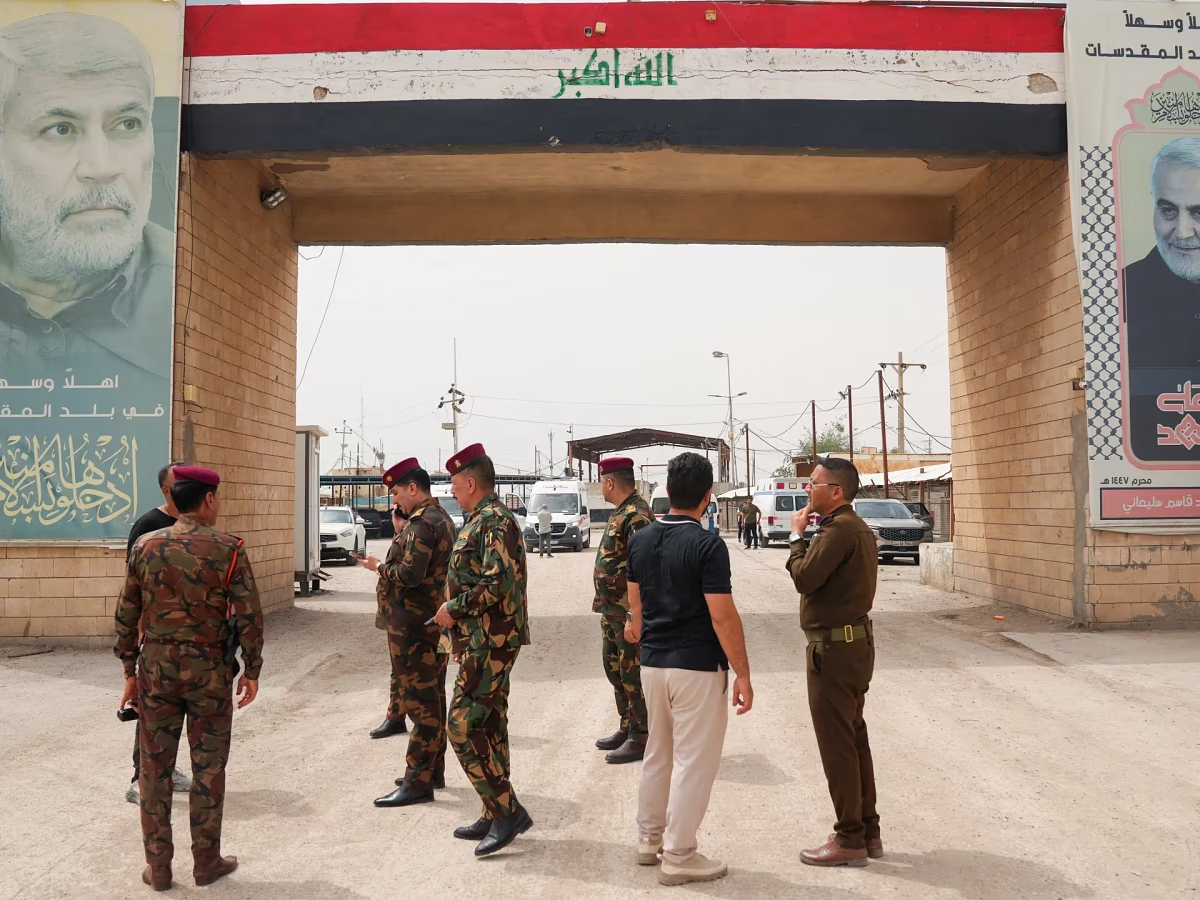
The American-Iranian conflict is no longer confined to traditional military bases, but has moved to a new phase of escalation by targeting civilian and sovereign facilities. Dawn on Thursday witnessed a bombing targeting the Shalamcheh border crossing in Basra Governorate, raising widespread fears of crossings turning into open engagement zones.
This dangerous security development comes at a very sensitive time, as the Iraqi borders are preparing to receive hundreds of thousands of Iranian visitors heading towards Karbala. Political circles in Baghdad fear that this targeting will undermine the policy of balance that the Iraqi government is trying to maintain between Washington and Tehran.
Official sources in the Border Crossings Authority reported that work at the Shalamcheh crossing was temporarily halted for three hours immediately after the American strike. This halt came at the request of the Iranian side to assess the security situation, before commercial and civilian traffic resumed normally later.
In a swift reaction, the Abdali border crossing, linking Iraq and the State of Kuwait, was subjected to an Iranian strike, described as a direct response to the Shalamcheh bombing. No precise details were available about the extent of the damage on the Kuwaiti side, as Iraqi authorities considered information regarding this crossing to be within the jurisdiction of the Kuwaiti side.
Observers believe that including border crossings in the military target bank represents a fundamental shift in the rules of engagement adopted by the two parties. These crossings are not limited to their economic function, but are vital logistical and political contact points connecting Iraq to its regional and international surroundings.
For his part, Iraqi MP Ahmed Al-Sharmani warned of the serious repercussions of this escalation on the country's security and economic stability. Al-Sharmani stressed that any disruption in the work of the crossings would negatively affect the flow of visitors and trade, pointing out that the current war indicators do not suggest its imminent decline.
In a related context, Mohammed Hassan Al-Saadi, a leader in the National Wisdom Movement, considered the targeting of crossings a clear violation of the sovereignty of independent states. Al-Saadi called for the necessity of launching a serious dialogue between the United States and Iran to spare the region the scourges of conflict, stressing that these areas are not legitimate military targets.
These political stances reflect growing concern within the Coordination Framework and Iraqi forces about the country turning into an arena for settling international scores. Baghdad is striving to establish its role as a regional mediator, but the targeting of crossings puts these diplomatic efforts to a real and difficult test.
On the economic front, experts downplayed the immediate long-term impact on trade, given the existence of alternative crossings that Iraq can rely on. Economist Abdul Rahman Al-Mashhadani explained that crossings such as Badra, Mandali, and Al-Munthiriya are capable of compensating for the shortfall if the Shalamcheh crossing is permanently disrupted.
However, Al-Mashhadani indicated that the purpose of targeting these corridors may be strategic to cut off supply and funding lines associated with armed factions. These crossings have faced American accusations for years of being corridors for smuggling hard currency and weapons, making them a constant target in the maximum pressure strategy.
The volume of trade exchange between Iraq and Iran is estimated at about 8 billion dollars annually, with Iraq heavily relying on importing food and construction materials. Any threat to this economic partnership could lead to disruptions in local Iraqi markets and an increase in the prices of basic goods.
The political message behind the bombing goes beyond merely disrupting transit for limited hours; it aims to demonstrate the fragility of Iranian logistical corridors. The Iraqi government now finds itself facing the challenge of protecting its long borders and preventing the conflict from extending into the internal depth, especially with increasing international pressures.
These developments come just weeks after a diplomatic tour by Prime Minister Ali Faleh Al-Zaidi that included Washington and Tehran. It appears that Baghdad's attempts to distance itself from the regional conflict are clashing with a field reality that forces it to be at the heart of the confrontation against its political will.
In conclusion, the Shalamcheh crossing remains a symbol of the close and complex relationship between Iraq and Iran, and its targeting opens the door to unprecedented escalation possibilities. Iraqi decision-makers will have to act quickly to secure border crossings and ensure they do not become weak points exploited by conflicting parties.
Targeting border areas constitutes a violation of state sovereignty and calls for a serious dialogue that preserves the security and stability of the region.
Share your opinion
US-Iranian Escalation on the Iraqi Border: Targeting Crossings Changes Rules of Engagement