






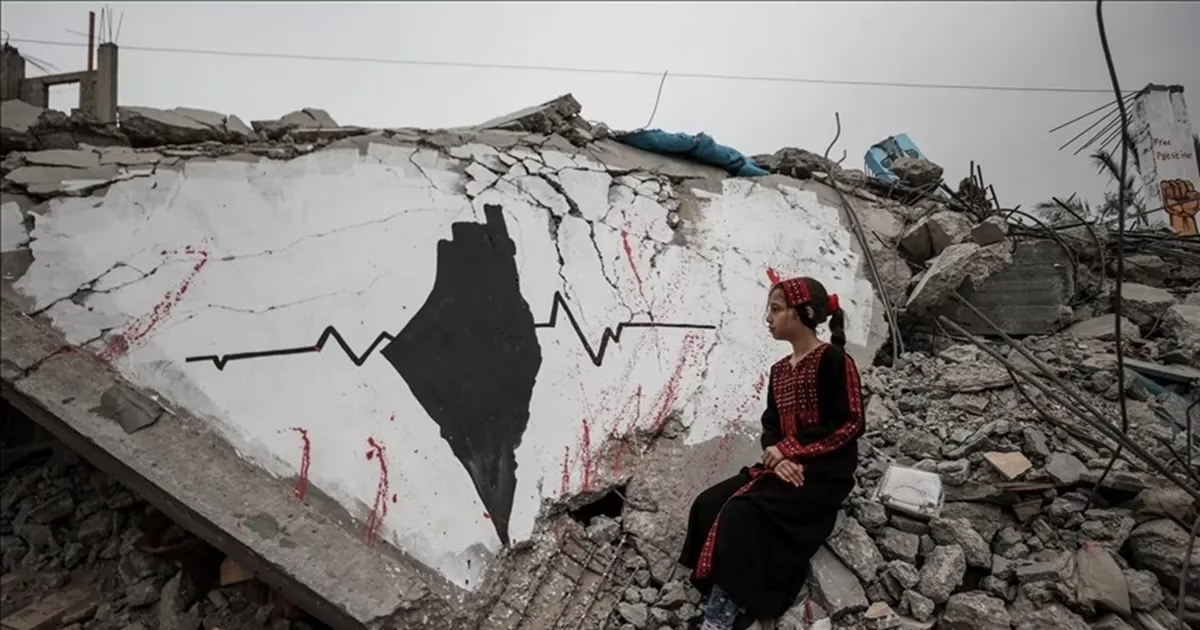
International press reports have highlighted a new strategy pursued by the Israeli occupation authorities in cooperation with the United States, aimed at transforming the issue of Gaza Strip reconstruction into a tool for completing forced displacement plans. This vision relies on imposing urban plans from outside that reject any Palestinian participation, reinforcing the policy of 'urban genocide' that targets the erasure of the physical and moral presence of the indigenous population in the Strip.
Media sources quoted architect Eyal Weizman, founder of 'Forensic Architecture,' as saying that what is happening in Gaza goes beyond military destruction to systematic colonial urban planning. Weizman affirmed that the destruction of hospitals, water and sewage networks, and agricultural lands is not random, but rather a literal application of a slow killing strategy through the destruction of the essential foundations of life, which aligns with international definitions of genocide.
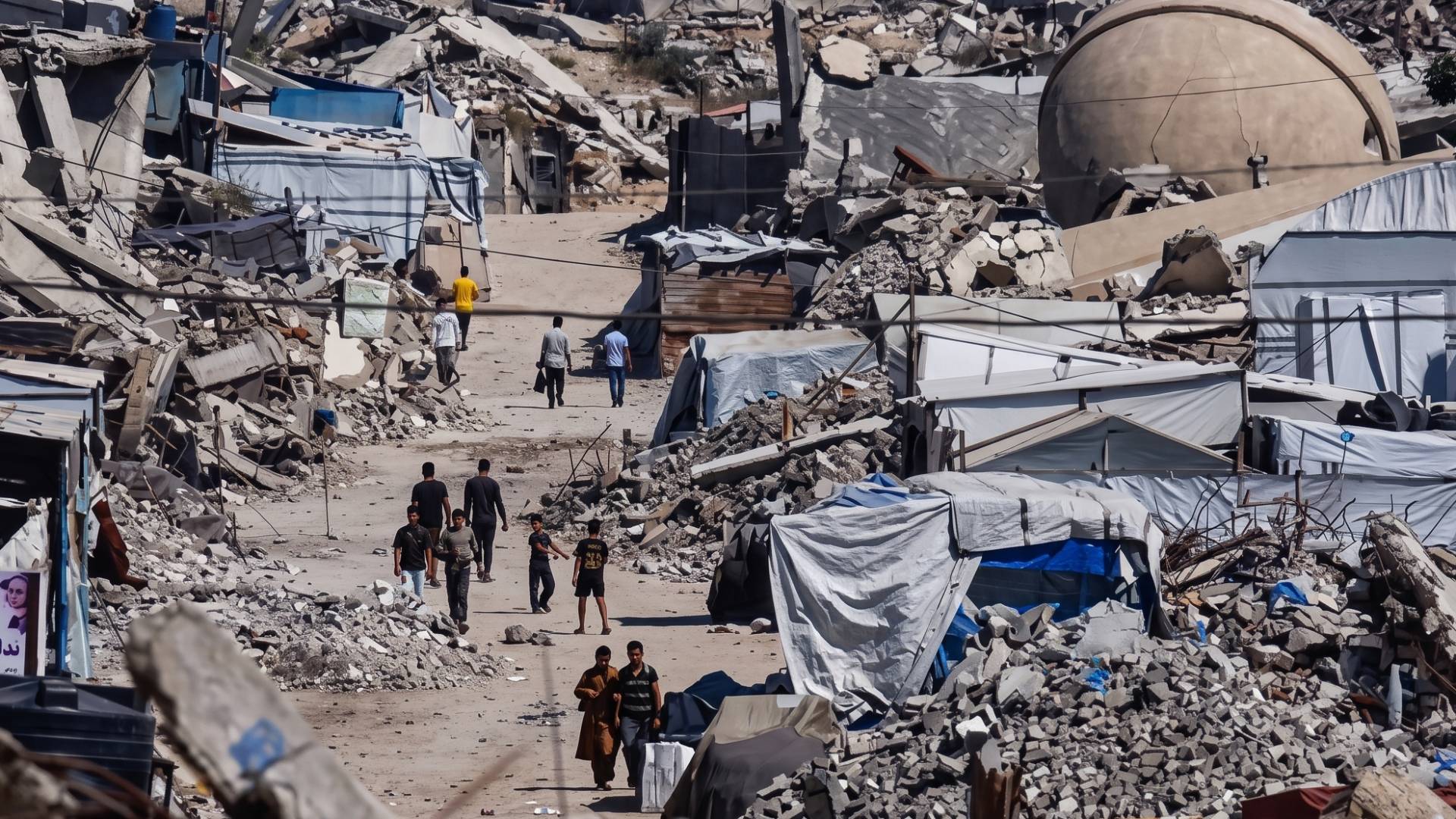
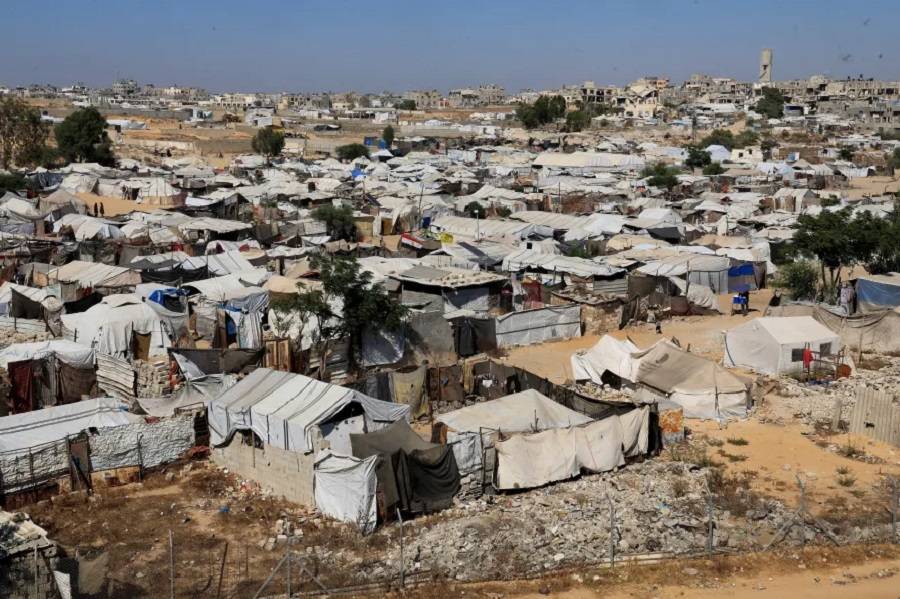
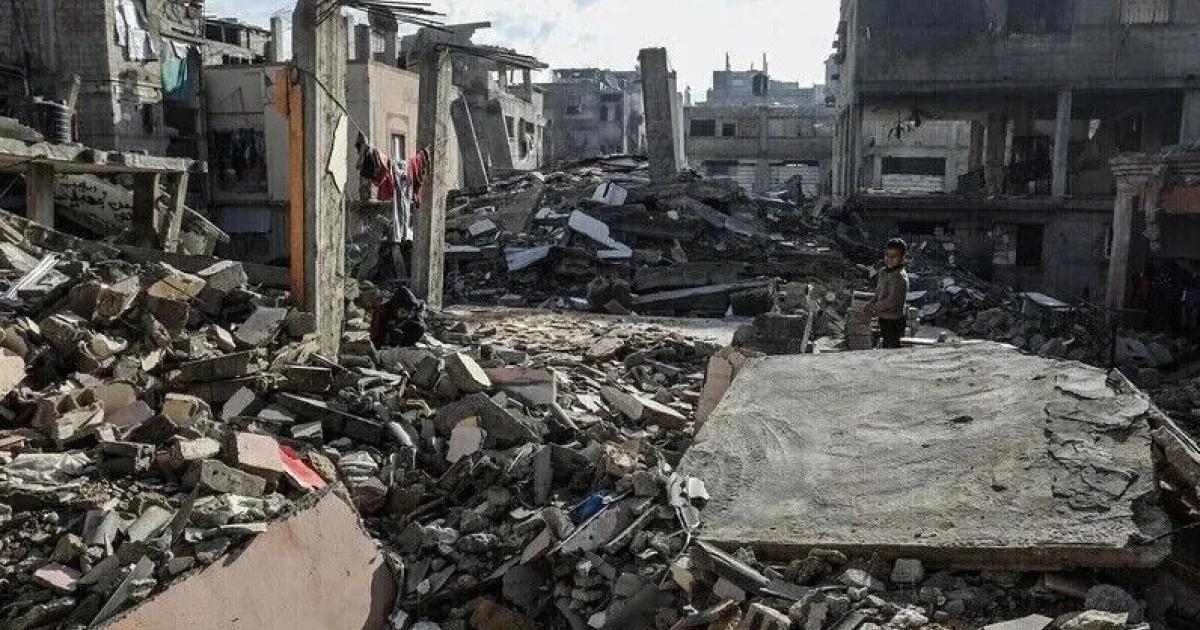
The report indicated that the systematic destruction has pushed Palestinians into narrow, overcrowded pockets that the occupation army describes as 'humanitarian areas,' while in reality they lack the most basic elements of housing and essential services. Heavy machinery and bulldozers have played a pivotal role in obliterating the features of entire cities and villages in Rafah, Beit Hanoun, and Jabalia, transforming vast areas into an uninhabitable environment due to chemical pollution and heavy metals.
Sources touched upon the concept of 'cultural genocide,' which has historically been absent from international agreements under pressure from colonial powers, and is now being applied in Gaza through the targeting of heritage sites, schools, and libraries. This destruction aims not only to eliminate the biological existence of Palestinians but also seeks to sever the social and historical continuity of the Palestinian national group and prevent it from reshaping its identity on its land.
Regarding the field reality, investigations revealed the division of the Gaza Strip into two areas separated by what is known as the 'Yellow Line,' with the occupation army currently controlling more than 54% of the Strip's area. Satellite images have monitored the construction of earthen dams and permanent military installations, in addition to extending electricity and lighting networks, indicating the occupation's intention to transform these points into permanent, not temporary, control centers.
Investigative reports clarified that the occupation has established seven new military sites, some of which were built over completely destroyed cemeteries, in a blatant violation of sanctities and human dignity. These field movements coincide with absolute control over the flow of humanitarian aid, which is used as a political and military pressure tool to push residents towards options of forced migration or facing slow death under the weight of epidemics and health collapse.
On the political front, suspicious real estate development projects have emerged, such as the 'Sunrise Project' proposed by Jared Kushner, which includes building luxury skyscrapers and industrial complexes over the ruins of destroyed cities. These engineering plans precisely follow the military routes carved by the army to divide the Strip, revealing an investment aspect of the displacement plan aimed at transforming Gaza into an investment zone devoid of its indigenous population.
Leaked documents also revealed a pilot project called 'Alternative Safe Communities' being implemented east of Rafah, aiming to cram tens of thousands of displaced people into compounds surrounded by walls and advanced biometric checkpoints. This surveillance system aims to turn Palestinian lives into a large prison, while offering material incentives and facilities to those who decide to 'voluntarily migrate' outside the Strip, in an attempt to empty the land through soft methods.
In contrast to these imposed plans, national Palestinian initiatives, such as the 'Phoenix Gaza Initiative' presented by the Association of Municipalities in cooperation with Palestinian experts and architects, have been completely excluded. The Palestinian vision relies on rebuilding neighborhoods and camps based on accurate property records to preserve the social fabric, which the occupation and its allies reject because it roots the residents in their land.
The report noted that the US administration's description of Gaza as a 'demolition site' reflects a premeditated intention to consider the Strip as empty land requiring radical 'development' that bypasses the existence of the landowners. This approach serves the Israeli vision that sees in the rubble an opportunity to reshape the geography of the Strip to ensure the security of the occupation and its settlement expansion at the expense of Palestinian national rights.
Displaced persons in areas under local administration live in catastrophic conditions, with waste accumulating and sewage flowing between overcrowded tents, portending an imminent environmental and health disaster. Sources confirm that the continued siege and prevention of essential building materials aim to drive the population to a state of absolute despair, making acceptance of external plans the only available 'option of necessity'.
The analytical reading of the scene concluded that the genocide in Gaza is passing through two integrated stages; the first is the comprehensive destruction of the national model through brutal military force, and the second is the imposition of colonial architectural projects. These projects do not aim for reconstruction in its humanitarian sense, but rather aim to legitimize the occupation and permanently change Palestinian demographics to serve the strategic interests of Israel and its allies.
The international community's insistence on ignoring Palestinian urban alternatives contributes to reinforcing the crime of genocide, as Gaza is treated as a laboratory for security and real estate experiments. Experts demand the necessity of empowering Palestinian institutions to lead the reconstruction process to ensure the return of displaced persons to their original homes and preserve the historical identity of the cities and camps that the occupation tried to erase from the map.
In conclusion, the struggle over the future 'shape of Gaza' remains the core of the current political battle, as Palestinians seek to rebuild their lives over the ruins, while the occupation seeks to transform those ruins into a platform for launching a new settlement project. Confronting these plans requires legal and international action that rejects the politicization of reconstruction and affirms the right of the Palestinian people to self-determination in their urban and political future.
Genocide continues in the Strip through a colonial urban planning strategy that implicitly aims to eradicate Palestinian life.


Share your opinion
International Reports Reveal: Gaza Reconstruction Plans a Facade for Completing Forced Displacement and 'Urban Genocide'