







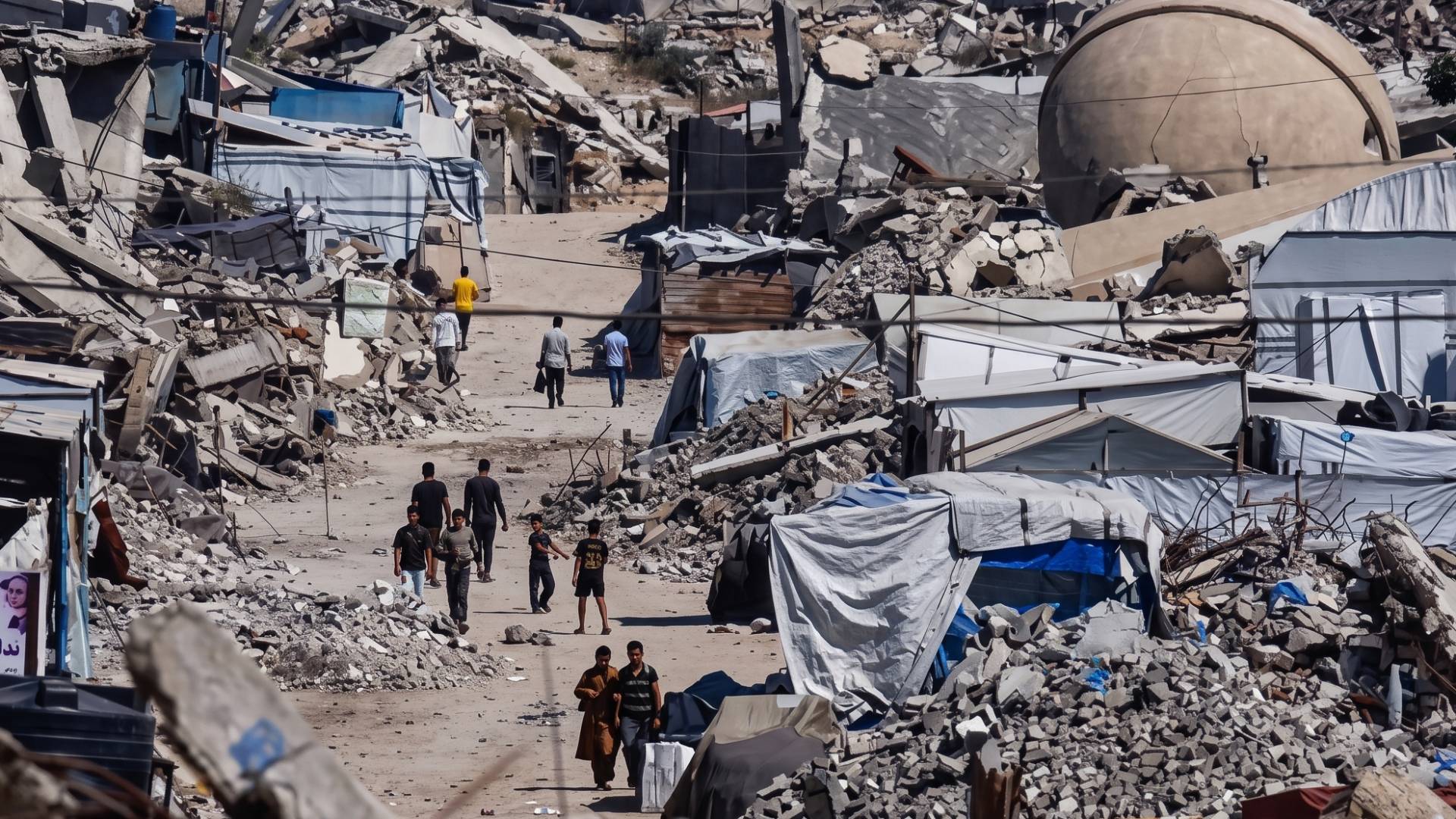
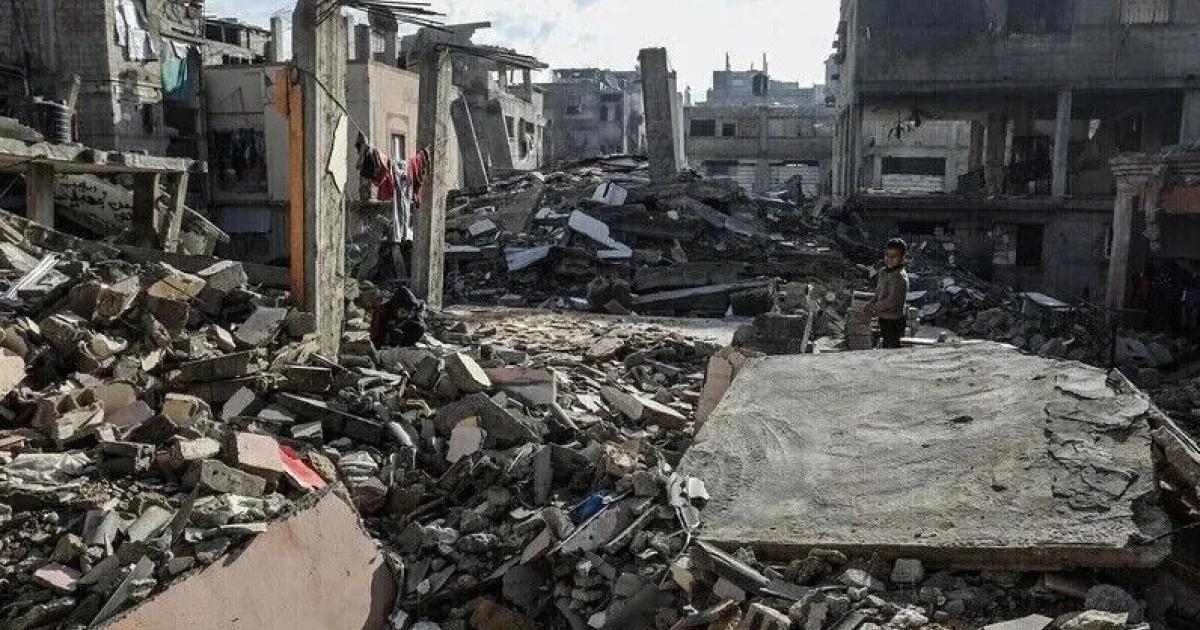
In the dusty alleys of Al-Zaytoun neighborhood, southeast of Gaza City, thousands of Palestinians face a bitter reality beyond endurance, as the ancient neighborhood has turned into an open arena for hunger and thirst. Citizen Jawad Badwan sits in front of the rubble of his house, watching queues of residents carrying small plastic containers on a difficult search for drinking water, which has become a rare commodity.
Badwan describes the situation as bitter, emphasizing that the absence of official bodies and relief organizations has exacerbated the scale of the humanitarian tragedy in the neighborhood. He points out that the most basic citizenship rights are completely missing; no water reaches through networks, no charitable kitchens provide meals, and even a loaf of bread has become out of reach for the steadfast families.
Residents of the neighborhood, especially the youth, are forced to walk long distances to reach distant desalination stations. There, they wait for hours to fill containers that do not exceed 15 liters, a quantity residents describe as insufficient for the needs of a single family for two days in the absence of alternatives.
Despite the many individual initiatives, they remain without tangible results capable of bridging the large gap in needs. Residents confirm that UNRWA is the only entity that has been able to reach and distribute limited hygiene kits, while marginalization remains the master of the situation for the rest of the international and local institutions.
In the eastern part of the neighborhood, dozens of citizens demonstrated near the Salah al-Din al-Ayyubi Mosque intersection in protest against the deteriorating living conditions. Protesters raised banners demanding the repair of sewage networks and the removal of rubble and waste that threaten the spread of epidemics and diseases among the displaced and residents living on the ruins.
The proximity to what is known as the 'Yellow Line' poses a constant security concern for residents and relief teams alike. This sensitive geographical location has made the area vulnerable to continuous targeting, prompting many international organizations to hesitate in sending their teams, leaving residents trapped in a reality that does not resemble the declared truce.
Ibrahim Al-Shamali, a resident of the neighborhood who lost his home, appeals to international organizations to look at Al-Zaytoun neighborhood with humanity. Al-Shamali emphasizes that residents live in complete marginalization, lacking the necessities for a dignified life, demanding the establishment of field hospitals and mobile medical points to serve thousands of sick and wounded.
The demands are not limited to drinking water but extend to include water for washing and personal hygiene to prevent skin diseases. Residents stress that hygiene under these circumstances is not a luxury but a paramount health necessity in an area suffering from overflowing sewage and accumulated solid waste.
For his part, the spokesman for the Civil Defense, Mahmoud Basal, warned of a complex environmental and health catastrophe striking Al-Zaytoun neighborhood. Basal explained that initial estimates indicate that about 90% of the neighborhood's buildings have been destroyed, making it one of the most affected areas during the ongoing Israeli war of extermination on the Strip.
The spokesman revealed the presence of bodies of martyrs still under the rubble in several locations within the neighborhood, where teams are unable to retrieve them due to a lack of heavy equipment. He also warned that the remaining homes are on the verge of collapse, which has already led to recorded deaths due to sudden collapses under the weight of destruction.
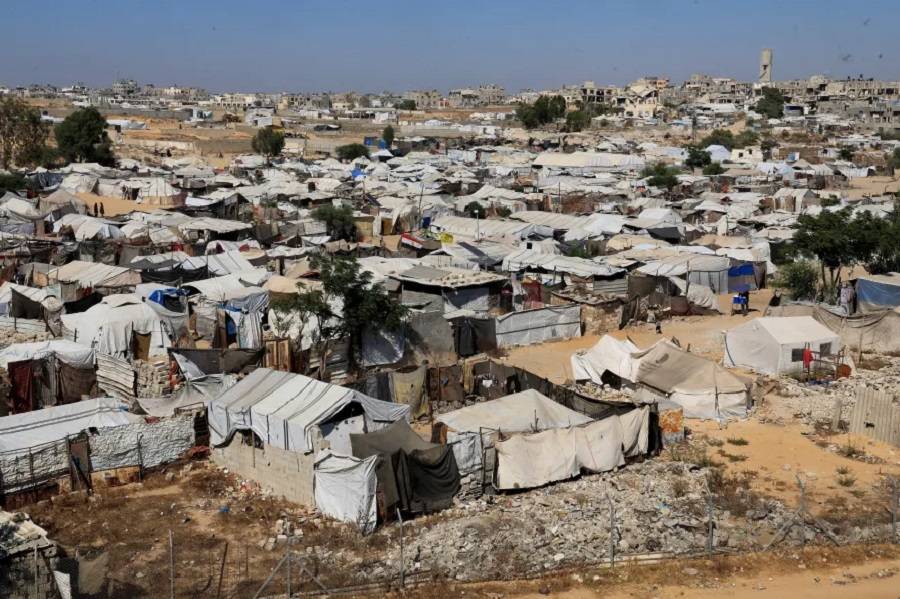
Salim Daloul, 60 years old, estimates the number of residents in their damaged homes in the neighborhood at about 200,000 people. Daloul confirms that these residents refuse to leave their land despite the lack of aid, pointing out that relief convoys sometimes pass by the vicinity of the neighborhood without allocating any food rations to them.
Daloul proposed practical solutions to overcome the security concerns of international institutions by delivering aid to nearby points for residents to receive it themselves. He stressed that the people of Al-Zaytoun need urgent in-kind and financial support to strengthen their steadfastness in the face of shells that continue to fall on them intermittently.
This suffering comes at a time when statistics indicate the martyrdom of about 72,000 Palestinians and the injury of another 172,000 since the start of the aggression. Despite the ceasefire agreement in effect since October 2025, daily Israeli violations prevent sufficient aid from reaching 2.4 million people living in tragic conditions.
Al-Zaytoun neighborhood remains a stark example of Palestinian steadfastness in the face of the war machine and humanitarian marginalization. While residents await a water tanker or a medical point, they continue to write their story of survival on the ruins, demanding that the world not leave them forgotten on the margins of geography and outside the calculations of international relief.
Our suffering lies in the scarcity of water; there is no official body authorized to visit the neighborhood, even though it is considered one of the oldest and most densely populated neighborhoods in Gaza City.
Share your opinion
Al-Zaytoun neighborhood in Gaza: Steadfastness amidst the rubble of destruction and a daily battle to secure a drop of water